
A Practical Guide Based on Business Type, Turnover & Activity
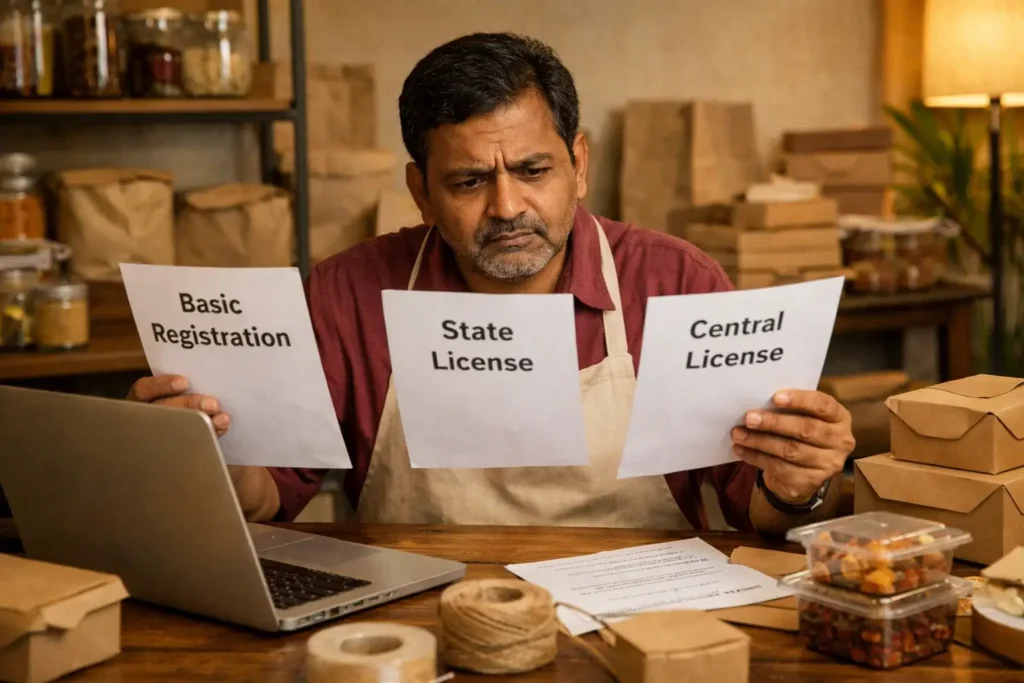
Every food-related business in India needs an FSSAI license
Every food-related business in India needs an FSSAI registration, however, the problem here is that getting an FSSAI license isn’t the hard part—the difficult bit is in deciding which license to choose.
If we take the example of a home kitchen earning ₹50,000/month, a cloud kitchen expanding and even a multi-state food brand, it is clear that they all can’t fall under the same compliance category.
The new rules in April 2026 have made the decision easy—assuming you know what you are doing about types of businesses, turnover and activities involved in running such businesses.
What Exactly is FSSAI for Your Business
FSSAI compliance is not some formality that you need to fulfil for your business.
On the contrary,
- It sets the scale at which you can function.
- It decides if you can expand into other areas , especially multiple states
- It determines your reputation with your clients and platforms like Zomato, Swiggy, Amazon, etc.
- Any kind of risk you may face in case of any inspection or audit.
Simply put, your FSSAI license defines your business maturity level.
Who Needs FSSAI Registration in India?
Anyone engaged in food operations needs it. Some examples include:
- Producers & processors of food
- Cloud kitchens & home kitchens
- Restaurants, cafes, caterers
- Sellers & grocery shops
- Wholesalers & distributors
- Senders & storers
- Exporters & importers
- Online food sellers
Key insight:
FSSAI registration criterion is not just the kind of business but also depends on turnover and size .

FSSAI Registration Types (2026 Format)
Under new thresholds (from April 2026), FSSAI registration types are as follows:
| Type | Turnover | Who Needs It? | Example |
|---|---|---|---|
| Basic Registration | Upto ₹1.5 Cr | Small food firms | Home kitchen, tea stall |
| State License | ₹1.5-50 Cr | Medium-sized firms (within one state) | Restaurant chain (one state) |
| Central License | Over ₹50 Cr or special categories | Larger firms (across states) | Food brand sold across India |
1. Basic Registration
Best for:
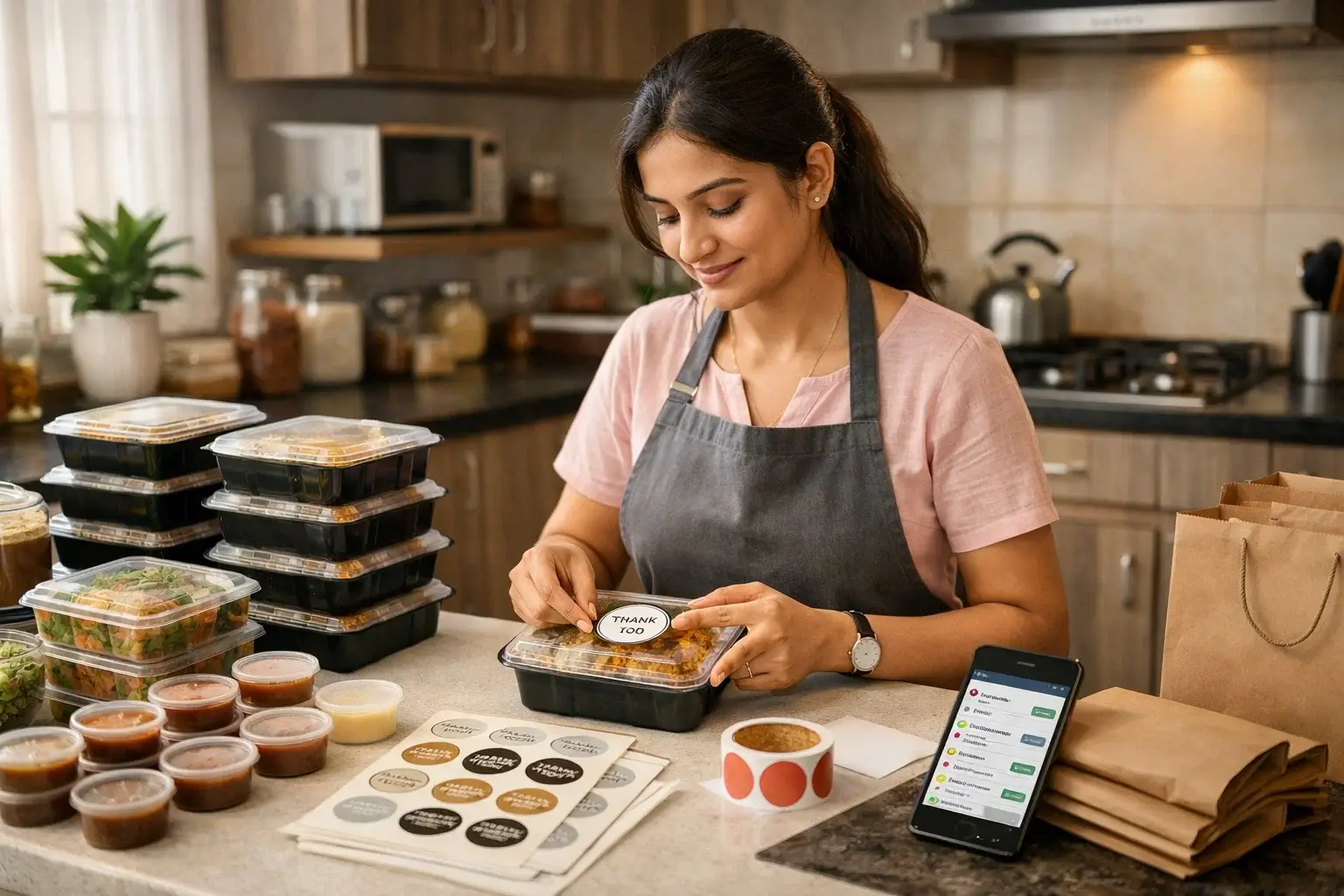
- Household food business
- Small sellers
- Emerging ventures for market testing
Scenario:
If you have a cloud kitchen at home making ₹10-15 lakhs per year → Basic license is enough.
2. State License
Needed if:
- The business exceeds ₹1.5 Cr turnover
- The business is confined to a single state only
Example:
Restaurant making ₹3 Cr per year in Delhi → State License.
3. Central License
Compulsory when:
- Your business turnover is more than ₹50 Cr
- OR your business operates in multiple states
- OR your business deals with import/export of products
Example:
Packaged food products that are sold through Amazon across India → Central License.
How Do You Decide Which FSSAI License Your Business Requires?
It’s at this point most businesses get stuck. The decision needs to be scenario-specific:
-
Homemaking kitchen/cottage tiffin services
→ Basic Registration -
One restaurant/café (for growing business)
→ State License -
Cloud kitchen operating in multiple cities
→ State License to Central (as your venture grows) -
A food product brand sold across India/importing ingredients
→ Central License -
Street vendor registered with the local authorities
→ Registered (does not need an additional FSSAI registration in certain instances)
Practical Takeaway:
Begin small, but decide your license based on where your business is headed.
Most businesses tend to overlook this stage of their venture. This is precisely why businesses seek structured advisory assistance such as JackRabbit Consultants.
Business Activity versus License Type
Certain activities might determine your licensing needs other than the revenue turnover:
| Business Activity | Possible Licence Type |
|---|---|
| Home kitchen/cloud kitchen | Basic → State |
| Restaurant/Café | State |
| Food processing unit | State → Central (depending on the size) |
| Trader/distributor | State/Central |
| Export/import operations | Central |
| E-commerce food vendor | State/Central |
| Storage/warehouse | State/Central |
Required Documents
Common Documents (For all Applicants)
- ID proof (Aadhaar/PAN)
- Proof of business address
- Passport-sized photograph
- Menu of food products
Extra Documents (for State & Central Licences)
- Business registration document
- Building plan of premises
- Equipment list
- Water quality test report
- NOC (where applicable)
It is essential to ensure your documents are well organized and complete since most applications face delays because of missing information.
Licensing Process
- Apply through FoSCoS website
-
Select from:
- Form A – Basic Registration
- Form B – State/Central Licence
- Upload documents
- Inspection process (where needed)
- Approval
Time to get approved:
- 7-30 days for registration
- 30-60 days for licences
Cost and Validity (2026 Edition)
| Type of License | Cost of License | Validity |
|---|---|---|
| Basic Registration | ₹100/year | Perpetual |
| State License | ₹2,000-₹5,000/year | Perpetual |
| Central License | ₹7,500/year | Perpetual |
Important point to note:
The license will not expire, but yearly payments and filing are mandatory.
Post Registration Requirements
Registering is just the first step.
You have to:
- Display FSSAI Number at the premises and on packaging
- Conform to hygiene and safety norms
- Keep records
- File yearly returns
- Prepare for inspections
Non-compliance post-registration is one of the biggest risks. Most enterprises take “License mil gaya kaam ho gaya” literally, and that is wrong.
Compliance is simple when you have a good system and conduct regular audits; this is what consulting firms like Jackrabbit Consultants specialize in helping enterprises achieve.
When Upgrading your License Is Mandatory
Upgrading is required under any of these circumstances:
- Turnover exceeds limit
- Business expands to other states
- Introduction of new products
- Increase in manufacturing scale
Illustration:
Home kitchen turnover rises from ₹10 Lakh to ₹2 Crore -> Must move from Basic Registration to State License.
Delaying upgrade can lead to penalties and operational restrictions.
Penalties & Threats
| Problem | Penalty |
|---|---|
| Running without license | Up to ₹5 lakh + jail term |
| Not registering (small firm) | Up to ₹25,000 |
| Filing return overdue | ₹100 per day |
| Non-compliance during inspection | Suspension/Cancellation |
Being compliant is not an option—It affects your right to operate
Getting the proper FSSAI license in India is not an arbitrary choice; it has far-reaching implications for your food business operations, scalability, and reputation. Choosing wisely from the outset will save you time, frustration, and trouble further down the road.