
Startups in growth stage may encounter difficulties with hiring as well.
It is natural for employees to expect competitive pay, which may be challenging for a startup to match.
It is in this situation that ESOPs for startups come in handy.
Unfortunately, the majority of entrepreneurs consider the idea of giving employees equity without being aware of taxation, dilution, valuation issues, compliance needs, and even expectations from potential investors.
Many poorly organized ESOP programs turn out to cause complications for fundraising, due diligence, employee departures, and taxes.
This guide will explain how ESOP programs operate for Indian startups in 2026, how ESOPs are taxed, what compliance obligations you need to take into account as a founder, and common pitfalls you should avoid.
Why Offer Employees ESOP Instead of Paying Them More?
With a proper ESOP program, it is possible to deal with quite a few problems faced by a startup at once.
Key reasons why startups offer ESOP:
- To save money in growth periods
- To attract valuable workers despite having little salary budget
- Better retention
- To cultivate ownership mentality
- Make sure your workers have a stake in company success
For many startups, ESOPs are not simply a compensation tool.
They are a long-term talent and growth strategy.
The Process of ESOP Implementation in Startups
Entrepreneurs often think that ESOPs immediately turn their staff into shareholders.
This is not the case.
There are generally four stages of ESOPs implementation:
| Stage | Means |
|---|---|
| Grant | The employee gets the right to purchase shares in the future |
| Vesting | The employee earns this right gradually |
| Exercise | The employee decides to buy the shares |
| Ownership | The shares are allocated and the employee becomes a shareholder |
Example
Let’s say that the startup issues 1,000 ESOPs for 4 years.
Once the shares have vested, the employee exercises his options by paying the exercise price.
With allocation, ownership begins.
It is essential to understand the stages in order to know when certain actions must be taken.
ESOPs vs Direct Equity: An Important Distinction That Founders Miss
Many founders at startup stage confuse ESOP with direct equity.
| ESOP | Direct Equity |
|---|---|
| Ownership happens later | Oneself is an owner right away |
| Subsequent to vesting process | Normally not required without prior agreement |
| Option holder gets ownership later | The share has been allotted |
| Taxation occurs on exercise and sale of shares | May vary based on conditions |
| Effective for retaining employees | Limited in retaining employees |
It becomes more flexible and helps retain founder ownership in the initial period of company formation.
ESOP Taxation Process in India
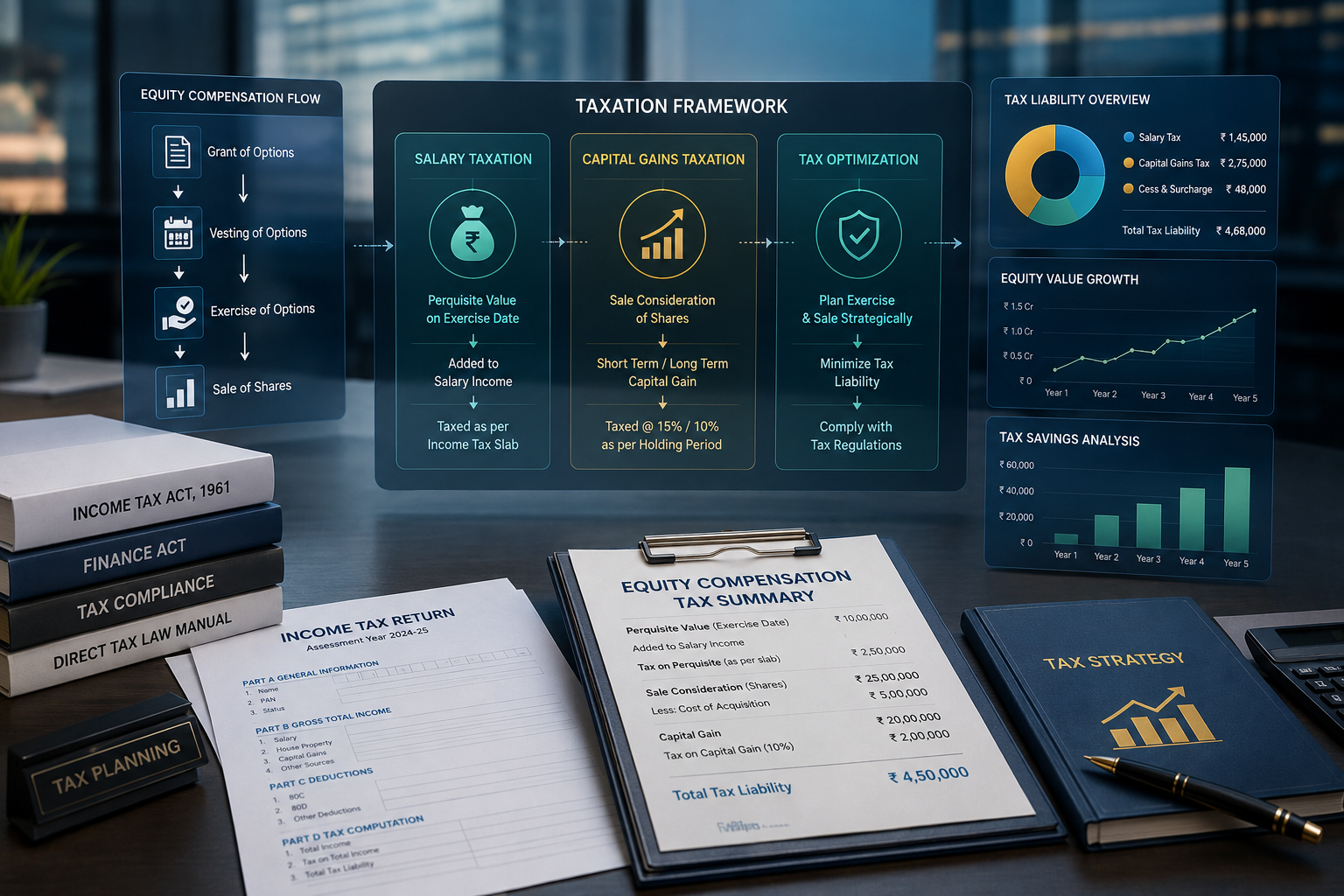
Two-staged taxation process is still used in ESOP taxation India in 2026.
Stage 1: Taxation at Exercise
On exercising the option and obtaining the share, the differential between:
- Fair market value of shares
- Price of exercising share
becomes taxable as salary income.
2. Taxation at Sale
The capital gains tax will come into effect when the employee sells the stock.
| Event | Type of Tax |
|---|---|
| ESOP Exercise | Perquisites tax on salary income |
| Stock Sale | Capital gains tax |
One of the most frequent misunderstandings is that taxation occurs only when the shares are sold.
In fact, the employee may need to pay taxes in relation to the allotment of the shares following their exercise, even if they still haven’t realized the liquidity from them.
Start-up TDS Deferral
Those start-ups that qualify for deferral according to relevant clauses of the provisions are eligible for TDS deferrals.
Founders must understand that just because it is a start-up does not mean they qualify.
Professional opinion should be sought before claiming any deferral rights.
Compliance Requirements for Startups That Need to Create ESOPs
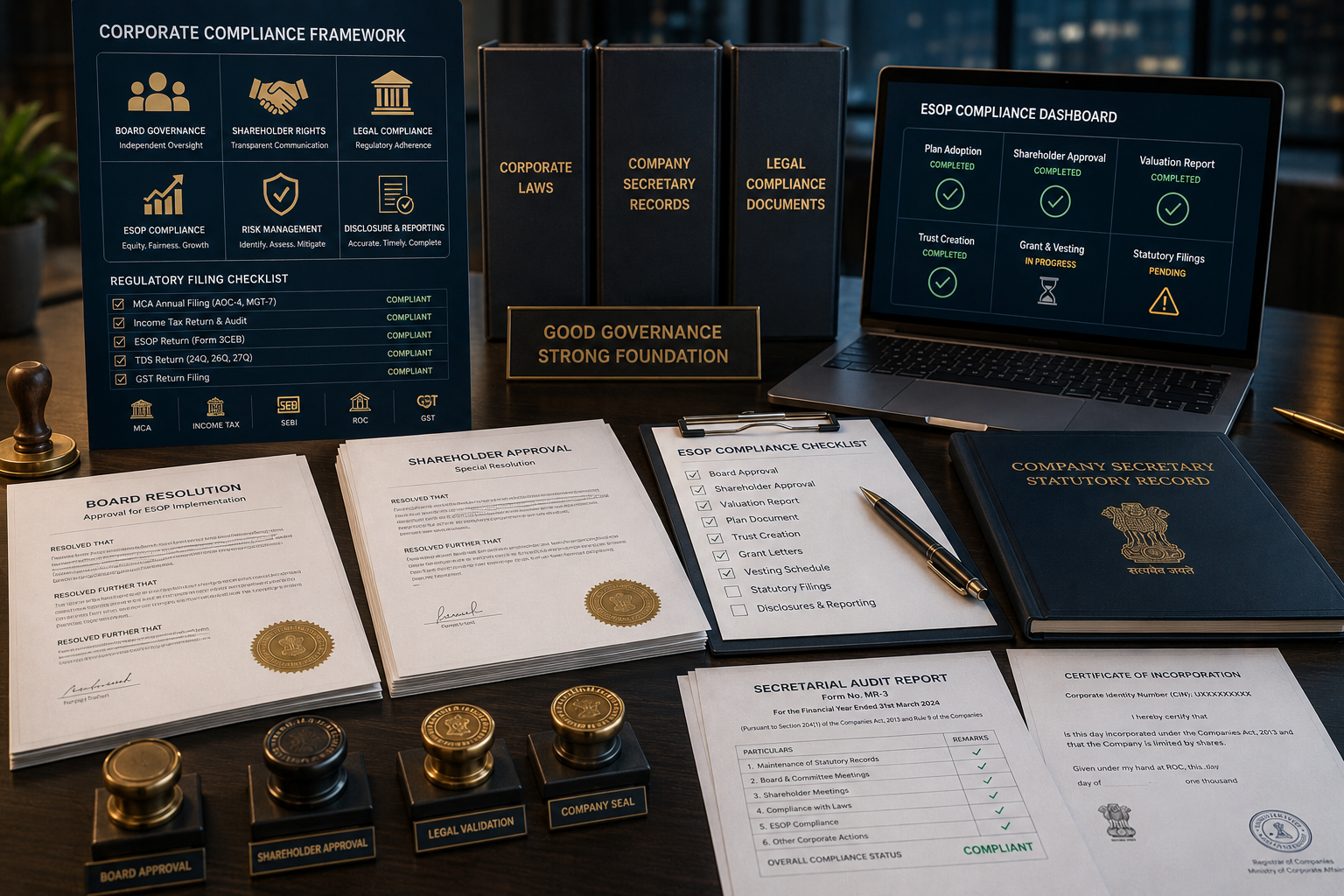
ESOP compliance requires more than making a spreadsheet of employee allocations.
Startups should:
- Obtain board approval of the ESOP scheme
- Get shareholder approval where applicable
- Maintain accurate ESOP policies
- Issue grant letters and maintain exercise logs
- Keep statutory registers
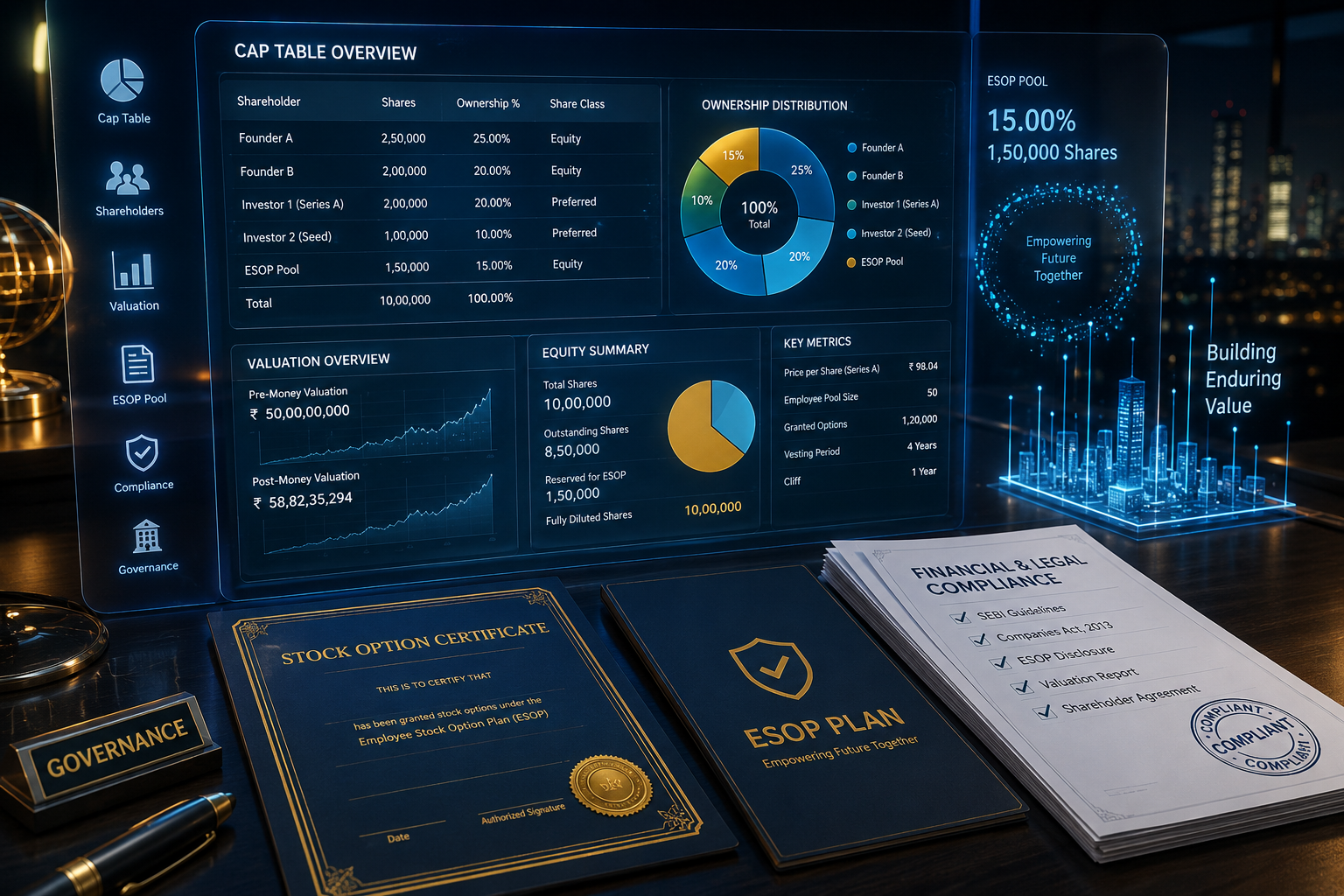
- Update cap tables
- Create valuation reports
- Make tax compliance reports
Lack of proper ESOP documentation can easily be picked by investors when doing due diligence.
Good compliance now avoids costly rectification exercises in the future.
ESOP Pool Creation: How Much Equity to Set Aside?
ESOP pools refer to the number of shares set aside for future employee incentives.
There isn’t a one-size-fits-all figure that works for all startups.
What founders need to do is look at:
- Their future recruitment plans
- Recruitment plans for their senior management team
- Emerging expansion needs
- Anticipated fundraising
- Their current dilution levels
In some cases, ESOP pools are usually analyzed during funding rounds since poorly planned pools will need to be rectified later.
ESOPs Valuation: The Importance of Pricing Compliance
While some of the biggest compliance requirements relating to ESOPs for startups are around valuation.
Impact of Fair Market Value:
- Taxation
- Regulatory Compliance
- Investor confidence
- Future due diligence
Valuation mishaps can result in:
- Incorrectly calculated taxes
- Employees being upset about taxes owed
- Employees being suspicious of company claims
- Employees being misled about value
Entrepreneurs should never consider the valuation process to be simply a box-ticking task.
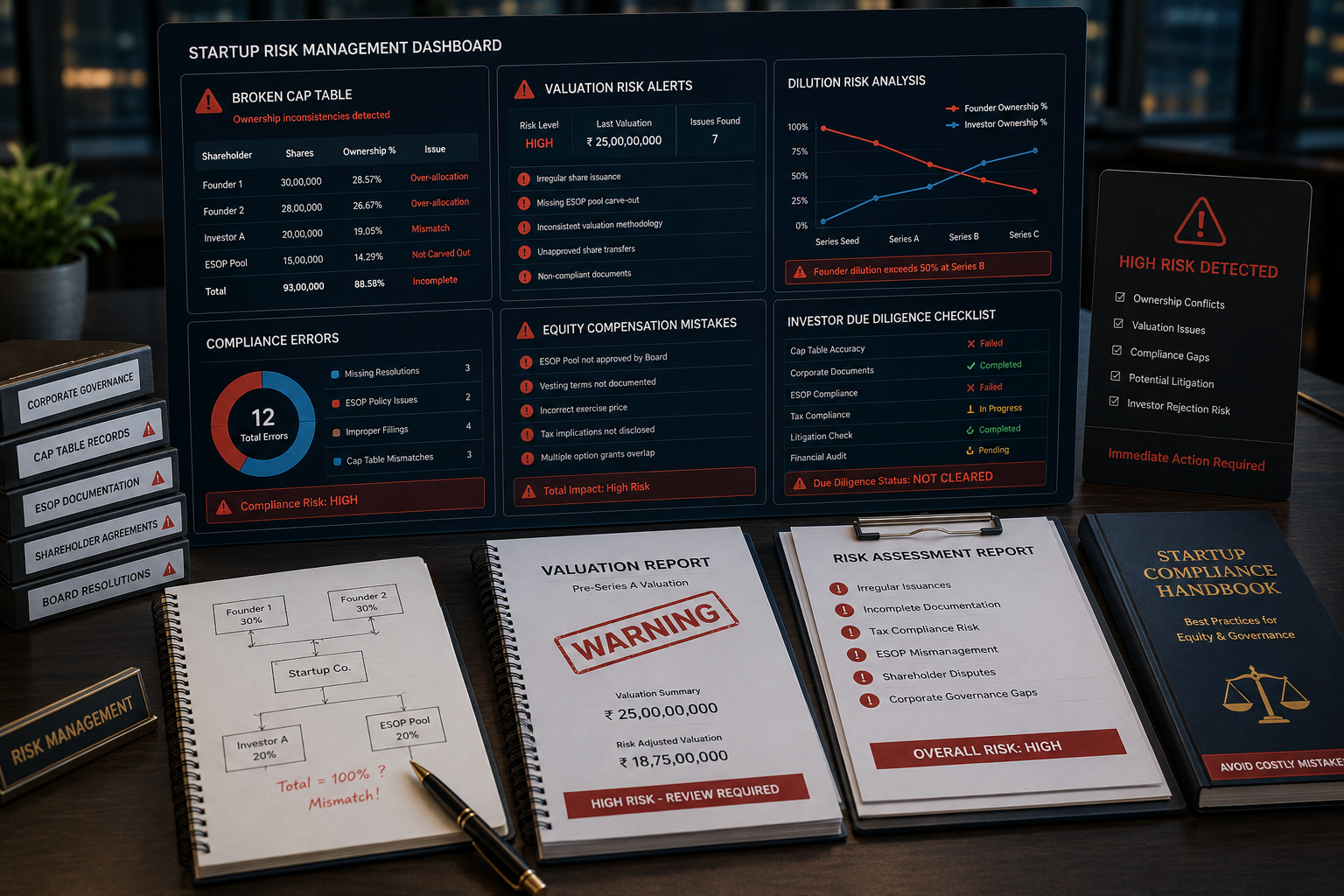
Common ESOP Errors Made by Startup Entrepreneurs
Often, ESOP problems come from entrepreneurs underestimating the complexities involved.
| Error | Consequence |
|---|---|
| Overpromising future value to employees | Broken promises |
| Inadequate vesting schedule confusion | Legal headaches when leaving |
| Documentation errors | Slower fundraising |
| Failure to take taxation into consideration | Costlier than expected for employees |
| Valuation mistakes | Due diligence issues |
| Lack of employee communication | Illogical expectations |
| Neglecting the process of ESOP Compliance | Complicated regulations |
No entrepreneur should ever tell their employees that ESOPs are “wealth for the future” without fully explaining themselves.
Case Study on How the ESOP Plan Caused Issues During Fundraising
Take the example of a startup that is raising Series A funding.
The startup provided the ESOPs in two years without keeping proper records of grants.
Several employees received varied offer letters, exercise clauses, and interpretations of the vesting schedule.
During due diligence from investors:
- The gaps in documentation were highlighted
- The cap table calculations got messed up
- The valuation documents lacked credibility
- The lawyers of the investors asked to fix the issues
Fundraising took much longer because the company had to recreate its records historically.
The issue was not the ESOP plan at all.
It was simply a lack of documentation and poor execution.
Issues That Employees Should Consider Before Joining ESOPs
Employees who are considering accepting employee stock options from startups need to ask certain practical issues.
Such issues include the following:
- Vesting schedule
- Exercise price
- Valuation of the company
- Consequences of resignation
- Liquidity options
- Taxation implications
- Possibility of future dilution of ownership
It is expected that a reputable startup should not have any issue with providing answers to these queries.
Why Professional ESOP Design Helps Startups to Stay Away From Future Issues
Designing ESOPs implies tax, valuation, governance, financing readiness, and expectations management issues.
Due to all of that, many startups resort to hiring professional firms like JackRabbit Consultants when building their ESOP structure.
A professional advisor might be able to help with:
- ESOP structure design
- ESOP structure compliance
- Valuation coordination
- Cap table planning
- Taxation advice
- Governance documentation
And it is important to ensure the sustainable design of ESOPs as well.
Before Starting an ESOP Plan…
An effective ESOP plan for early stage startups needs far more than just share allocation.
It’s important for founders to consider the following:
- Compliance issues associated with ESOP
- Considerations regarding taxation
- Valuations through fair market value
- Communications with employees
- Consequences of dilution
- Documentation requirements
- Expectations from future fundraising
The legal and tax environment for ESOPs for early stage companies in India will not change very much by 2026; however, execution excellence still remains key differentiating factor between good early stage companies and those who end up having unnecessary problems later on.
Many founders learn the hard way that minor errors committed during setting up of ESOPs can become costly mistakes down the line.
Hence, proper planning, valuations, compliance and communications form vital elements of an ESOP plan.
When need arises for extra structuring and compliance assistance, many startups work with consultants like JackRabbit Consultants.