
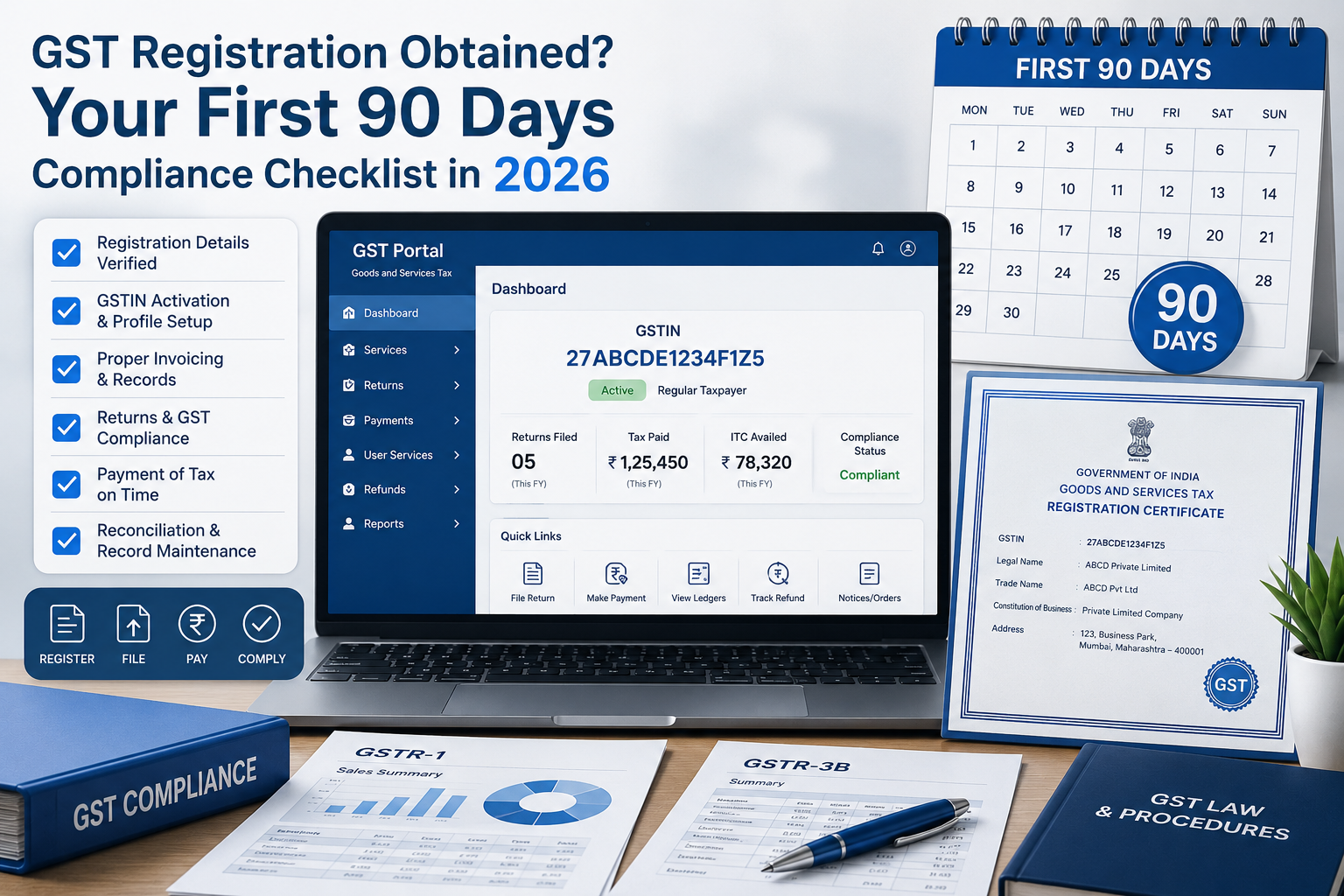
When a business gets its GST registration approval, the owner can download the registration certificate and make the GSTIN active.
But many business owners think that the hard part is done once the registration is approved .GST Compliance is needed.
Actually, the truth is that some of the most frequent GST notices are received after registration – not during the application process.
Once you get your GST registration, the first 90 days are super important.
Missing this window of opportunity could lead to all sorts of problems.
Common mistakes include forgetting to file return documents like the GSTR-1 or GSTR-3B, thinking you don’t need to file anything if there are no sales, and issuing invoices without all the needed GST information.
Some folks claim Input Tax Credit without having the right papers, while others deal with mismatch issues between their accounts and GST returns.
On top of that, ignoring messages from the GST portal doesn’t help either.
It’s important to know that GST demands continuous compliance right from the start.
Dragging your feet could lead to hefty fines, interest charges, and even the suspension or cancellation of your registration.
So, keeping up with those duties is a must from day one.
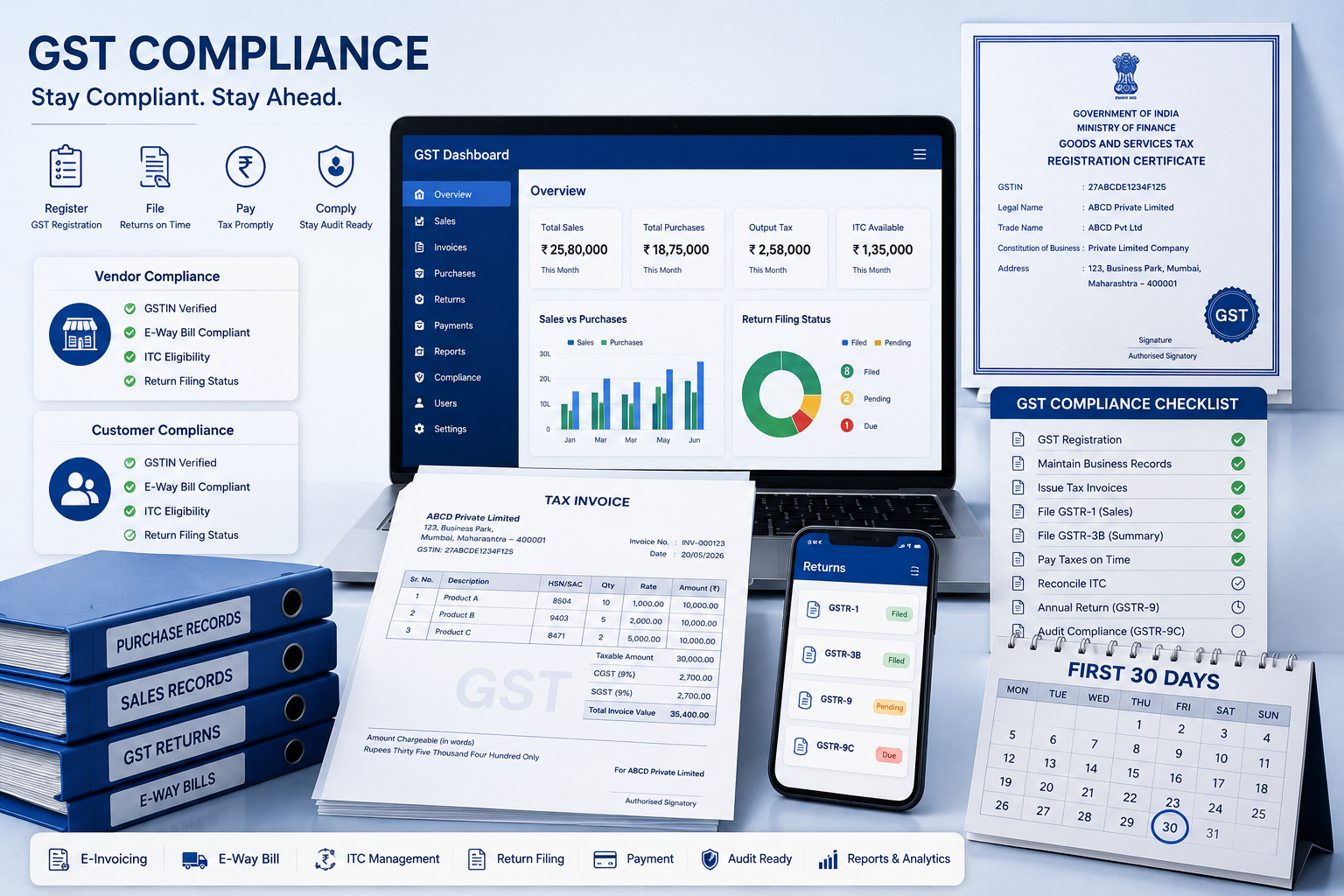
The First 30 Days After GST Registration: Critical Setup Tasks
The first month should focus on creating a compliance-ready system.
| Task | Why It Matters |
|---|---|
| Verify GST registration details | Incorrect legal name, address, or business information may require amendment through Form REG-14 |
| Update invoice templates | GST-compliant invoices are mandatory for taxable supplies |
| Configure accounting software | Ensures GST reporting is accurate from day one |
| Inform vendors and customers | Prevents GSTIN mismatches and invoice errors |
| Align bank records | Business records should match GST registration details |
| Create document storage process | Essential for future audits and reconciliations |
| Register on GST portal regularly | Monitor notices, filings, and compliance status |
| Update and validate bank account details on the GST portal within the prescribed timeline | GST rules require newly registered taxpayers to furnish and validate bank account details after registration. Delays can impact compliance status and may lead to restrictions on GST-related activities and future portal actions. |
Businesses should verify that the GST registration certificate reflects correct business information.
Any required amendment should generally be addressed promptly through the GST portal.
Invoice Compliance After GST Registration
Invoice compliance is a major oversight for businesses that are new to GST registration.
To do it right, you need to make sure your GST invoice has certain details:
- Invoice number
- Date
- Supplier’s name and GSTIN
- Customer’s GSTIN if needed
- Description of what was sold
- HSN or SAC codes
- Taxable amount
- GST rates
- CGST, SGST, or IGST totals
- Place of supply when necessary
For instance, a marketing firm might issue an invoice for ₹50,000 but skip adding the customer’s GSTIN.
Problems pop up because of this mistake:
- The client can run into trouble claiming ITC
- The invoice might need fixing
- It complicates things during return filings
To save time and headaches, getting the invoice accurate from the start makes sense since it’ll keep future compliance simple.
When Do You Need to File Your First GST Return?
Lots of new taxpayers wonder when they have to file their first GST return after registering.
Well, the answer depends on their specific situation, but here’s what most regular folks face:
They need to file GSTR-1 which reports all outgoing supplies.
Along with that, GSTR-3B, a summary return for paying taxes, is due too.
If you’re a composition taxpayer, you’ve got CMP-08 for quarterly payments and GSTR-4 once a year at the end of the period.
Filing nil returns is super important, even if you didn’t make any sales.
Many new businesses think they don’t need to file anything in this case, but that’s where the trouble starts.
These businesses get hit with notices because they just ignored filing.
So, not submitting anything can land you in hot water:
- You’ll pay late fees and interest
- You’ll receive warning notices
- You may run into bigger issues related to your registration
The GST Compliance Checklist for Days 31–60
The second month is about checking things over and making sure everything’s correct.
Action Checklist
- Look at all the invoices from the first month
- Double-check the GST rates
- Match up sales records with your accounting program
- See if vendors follow GST rules
- Confirm ITC eligibility
- Compare purchase logs with GST statements
- Get GSTR-1 filing info ready
- Crunch numbers for GSTR-3B tax liability
- Check the GST portal for any alerts
- Fix invoicing mistakes right away
At this point, it’s smart to set up a regular monthly routine instead of just dealing with GST stuff every three months.
The GST Compliance Checklist for Days 61–90
By the third month, your compliance efforts should be pretty much standard operating procedure.
Focus Areas
- File all necessary returns by when they’re due
- Track GST liability carefully — keep clear records of output GST collected, ITC available, net tax owed, and taxes already paid
- Maintain tidy sales and purchase invoice files, along with credit notes, debit notes, and GST payment challans
- Keep filed returns in order
Even though you probably won’t get audited right away, having everything neat and organized from the start will help you avoid problems down the line.
GST Compliance in the Third Month
In the third month, GST compliance should start to fit into your daily operations smoothly.
Make sure all returns are filed on time, and keep track of your output GST, input tax credits, net tax payable, and any taxes you’ve already paid.
Organize sales and purchase invoices, credit and debit notes, and GST payment challans.
It might seem early, but having everything audit-ready from the beginning will save hassle down the line.
Plus, keeping things tidy makes your life easier when you’re reviewing your own records too.
Common GST Notices After Registration
Not every GST notice means you’ve done something wrong.
A lot are just because the system thinks there’s a mismatch somewhere.
Here are some common ones:
| Notice Type | Reason |
|---|---|
| Non-filing notice | You didn’t submit GSTR-1 or GSTR-3B |
| Return mismatch alert | The numbers you reported don’t add up |
| ITC mismatch communication | The tax credit you claimed doesn’t match records |
| Registration verification query | Your registration details are incomplete or inconsistent |
| Compliance reminder | You have pending returns that need filing |
To avoid most of these notices, file on time and do your reconciliations regularly.
For example, a new consulting firm got into trouble after only a few months.
They made GST-compliant invoices and collected the tax from their clients.
However, the owner thought they only needed to file returns at year-end.
So, no GSTR-3B was submitted for two months.
This led to all sorts of problems – the GST portal flagged them, and they started racking up late fees.
Though it got fixed, they ended up spending extra money and dealing with unnecessary admin stuff.
Their mistake? Thinking compliance wasn’t an ongoing thing after registration.
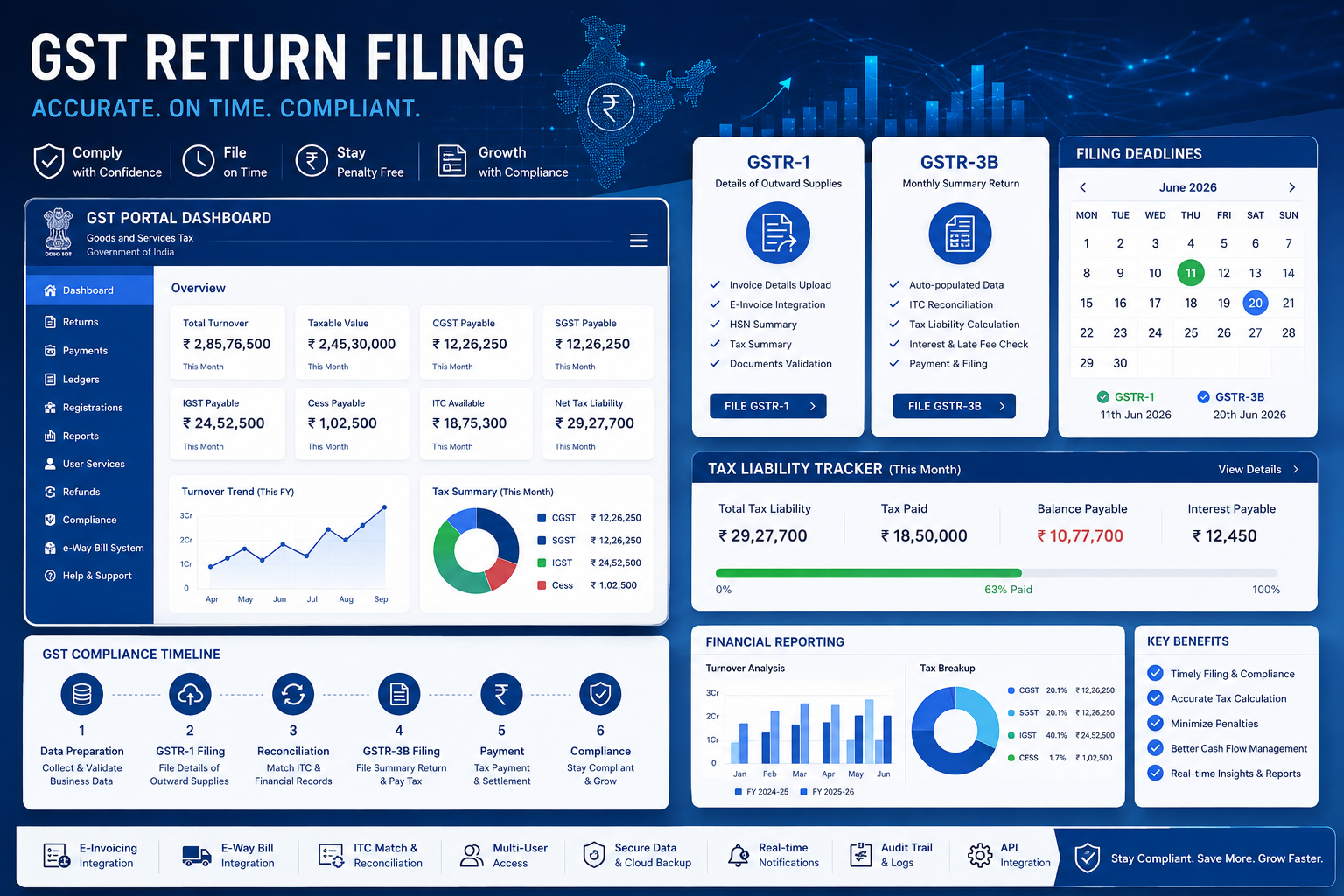
Record-Keeping Requirements Businesses Often Ignore
Many businesses are focused on filing returns but often overlook documentation.
It’s important to keep:
- GST invoices issued
- Purchase invoices received
- Expense documentation
- Payment records
- GST returns filed
- Reconciliation reports
- Tax payment challans
- E-way bill records (where applicable)
- E-invoice records (where applicable)
Proper record keeping really comes in handy during departmental verification, audits, or when responding to notices.
How Professional GST Reviews Help New Businesses Stay Compliant
A lot of businesses opt for periodic GST reviews in their initial months post-registration.
These reviews help spot:
- Invoice errors
- ITC mismatches
- Return filing issues
- Discrepancies in GST liability
- Gaps in record-keeping
Firms like JackRabbit Consultants assist with GST return filing, reconciliations, invoice compliance checks, and support with notices.
The goal isn’t just about filing returns; it’s making sure the business stays compliant as it expands.
Before Your First GST Notice Arrives…
When you get GST registered, start complying right away—don’t wait for that first notice to come.
Scrutinize those invoices and make sure to file your returns on time.
Keep an eye on your Input Tax Credit eligibility and maintain neat records.
It’s important to reconcile transactions often too.
Typically, many issues pop up in the first quarter due to assumptions rather than the actual complexity.
By setting up solid GST practices early on, businesses tend to be better off.
They usually:
- Dodge notices
- Smooth out cash flow
- Handle future inspections with ease
For added peace of mind, lots of companies opt for regular checks from pros like JackRabbit Consultants.
These experts help ensure everything stays in line with current GST rules.