
Why Business still Misunderstand IP (And pay for it Later)
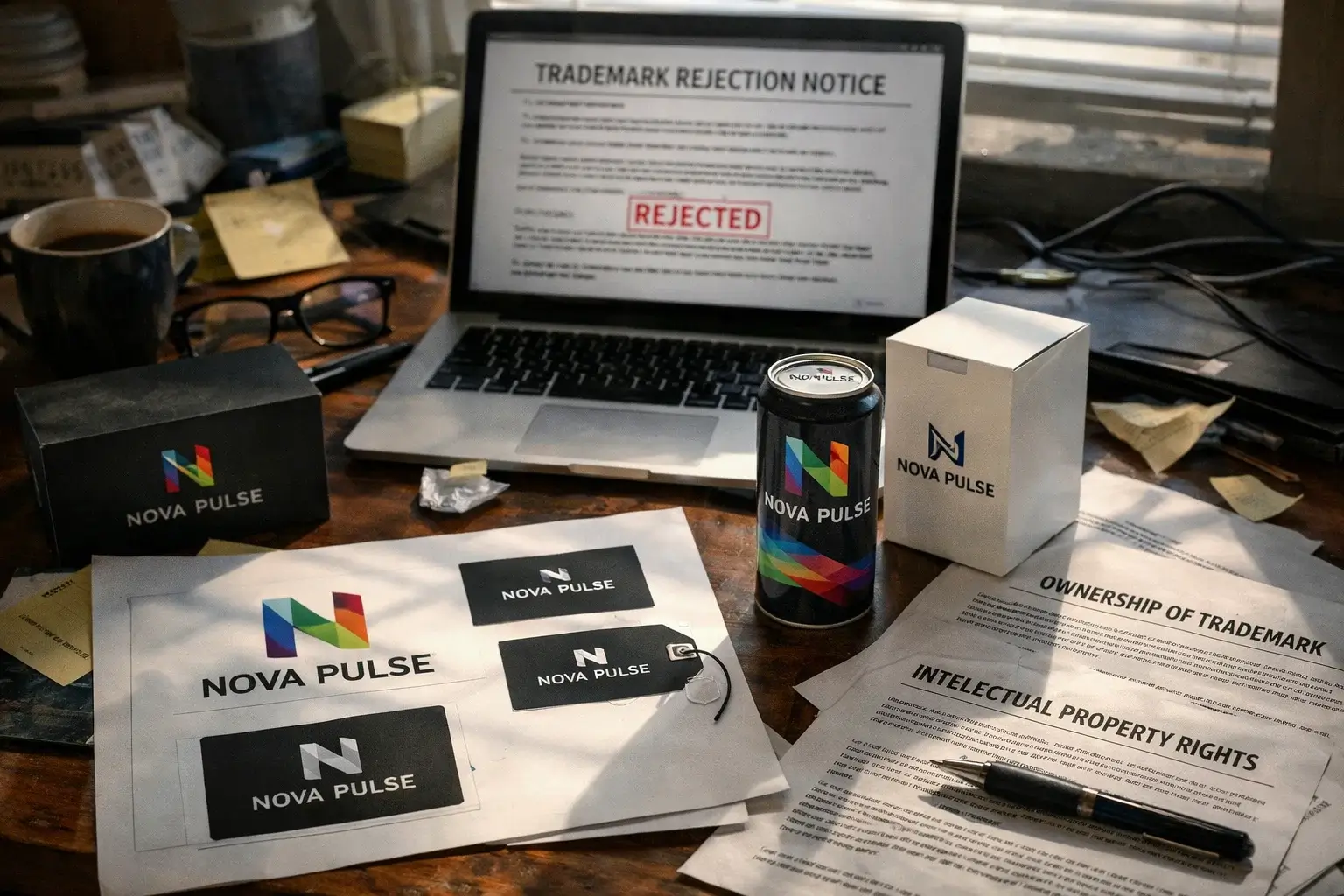
Almost every business thinks that it has ‘protected’ its brand/idea till it faces the legal threat, copycatting or rejection of its trademark application. The problem is not lack of effort but ignorance about intellectual property laws in India.
By 2026, the rules will be clear and the penalties high; startups will receive additional support. Nevertheless, founders, companies and agencies still fall prey to the same misconceptions which often cost them dearly.
The Reasons Behind Misconceptions and What They Cost Businesses
Business owners seldom make IP-related mistakes because of a lack of information but rather because of certain incorrect beliefs.
Some typical misbeliefs are:
-
“Our brand name is registered, therefore we are protected.“
→ Trademark ≠ protection for the business -
“We designed the logo, so it belongs to us.”
→ Ownership of creative products is regulated by contracts, not by effort -
“The idea came to us first.”
→ In India, ideas cannot be protected by IP rights -
“Later, once we are big enough, we will protect IP”
→ Lack of prompt actions may cause losing IP protection
In reality
IP rights in India are precise, technical, and category-specific. If you choose the wrong type—or skip steps—you don’t have protection. You have a false sense of security.
Business Assets That Are Considered Intellectual Property
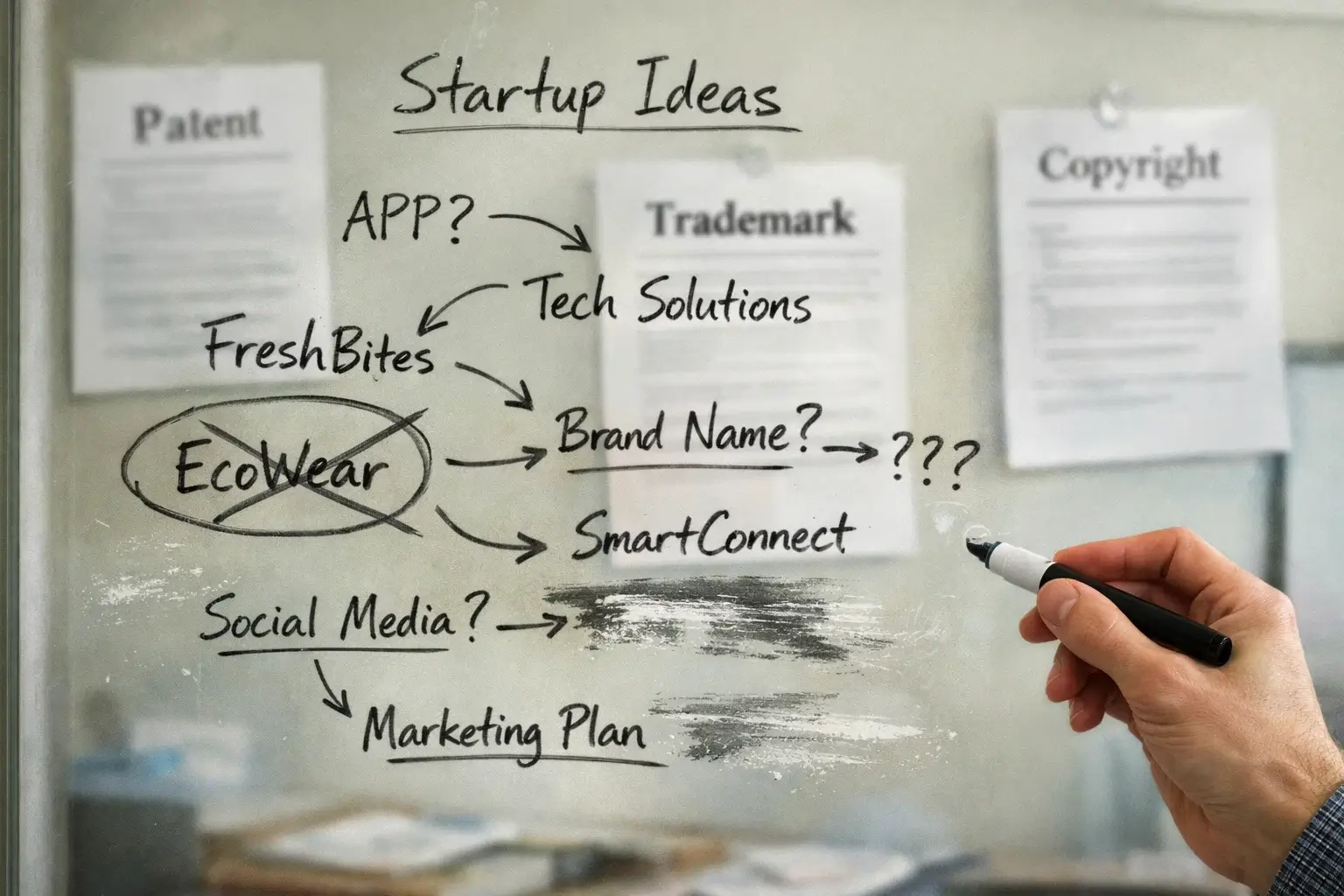 intellectual property types patent trademark copyright confusion”>
Don’t use textbooks; focus on business assets:
1. Inventions (patents)
- A novel item, technology or technique
- Sample invention: unique SaaS algorithm or manufacturing method
2. Brand identity (trademarks)
- Nickname, slogan, design and even sounds
- Sample brand identity: your company name or product brand
3. Artistic creation (copyrights)
- Everything you create for your website
- Sample creative creation: your user interface design or blog posts
4. Secret business information (trade secrets)
- Company techniques, strategies or internal information
- Sample trade secret: pricing model or growth strategy of your company
Business error?
Focusing on one category (trademarking) while ignoring others.
Patents vs Trademarks vs Copyrights: The Most Common Misunderstandings
Picking a wrong IP type is one of the most costly errors.
| Type of IP | Protected Items | Sample Item | Biggest Error |
|---|---|---|---|
| Patents | Inventions or technological solutions | Specific algorithms | Attempting to patent an idea |
| Trademarks | Company or product brands | Logo, names | Thinking it covers products’ designs |
| Copyrights | Original works on websites | Videos, texts, graphics | Failing to copyright works |
| Trade Secrets | Internal methods or formulas | Secrets in product | Not using NDA |
Important point:
Incorrect IP = unprotected IP

The Myth Behind the “Idea Protection” That Traps Startups
This is what trips up most startups at their inception.
There is no such thing as idea protection in India.
You can only protect:
- How you build it
- How you brand it
- How you execute it
For example:
- Food delivery app ≠ Protectable
- Delivery Algorithm (unique) = Patent (provided it is patentable)
- Name of brand = Trademark
- App design = Copyright
Consequences of this misconception are:
- Having founders keep their ideas under lock and key
- or even worse, putting the ideas out there unprotected
Misconception Regarding Registration: Know What Must be Done & What Doesn’t Need It
Yet another critical aspect that entrepreneurs tend to neglect when considering IP protection measures:
Must Register:
- Trademark
- Patent
No Need for Registration (Though Advised):
- Copyright
Critical nuance (2026 context):
- Copyright Rules 2025 will demand use of structured digital payment systems
- Trademark abuse will be penalized according to turnover (Jan Vishwas Act, 2023)
- Penalty for violation of Patent rules has been changed to monetary fine instead of imprisonment
Implication of this:
- The system is more commercially-driven but also monetarily stringent
Problems of Ownership That Companies Overlook
Even when companies generate intellectual property, they do not always own it.
Risk Factors:
- work done by employees
- designed by freelancers
- sites developed by agencies
Without legal paperwork:
- authorship lies with creator
- NOT with the company
This results in:
- lawsuits
- restrictions on scalability
- impossible to sell/license IP
Proactive businesses address this by having:
- ownership clauses
- non-disclosure agreements
- well-defined contracts
How Businesses End Up Losing IP Rights
IP protection is NOT just “set-and-done.”
Companies typically lose IP rights because of:
- failure to renew trademarks
- lack of infringement action
- simultaneous filings
- delayed patent application
The repercussions include:
- brand copying by competitors
- litigation
- destruction of brand identity
It’s particularly true in India.
Do nothing; lose your rights.
What Happens When IP Infringement Takes Place in India
Make it practical.
Scenario:
A party infringes upon your IPrights (logo or product).
What you can do:
- Send out legal notices.
- File a civil lawsuit (injunction+damages).
- In case of trademarks/copyright, criminal proceedings are available.
Reality by 2026:
Courts granting huge awards (over ₹100 Crore) for severe violations; Patent disputes remain civil in nature. Trademark penalties now include commercial turnover.
So yes, enforcement gets better — on condition that IP is well-structured.
The Practical Process to Protect Your IP
This is when smart business owners move from reaction to planning.
How?

Steps for effective IP protection.
-
1.First, decide what you wish to protect.
- brand, products, content, systems
-
Then pick right IP
- not everything is a trademark.
-
Register early
- most important for patents/trademarks
-
Use Contracts
- with employees, freelance writers, and agencies.
-
Monitor use
- (online/offline).
-
Renew And Enforce:
- IP requires maintenance.
Remember, IP needs regular care.
Businesses who cooperate with advisory firms such as JackRabbit Consultants don’t fall into these common traps since the approach is preventive.
Insight from Experts (How Things Really Work)
In actual cases, IP problems don’t happen due to lack of protection.
These occur due to:
- The selection of improper protection
- And failure to establish legal ownership
Even for well-capitalized startups, there are instances of:
- Trademarks being rejected
- Product copies
- Legal conflicts
Professional assistance, like dealing with consultants from JackRabbit Consultants, usually ensures that such problems don’t become costly later on.
In the Indian context, IP doesn’t just mean legalities—it’s a business resource. The distinction between a safeguarded company and an exposed one lies in knowing how to protect your interests effectively.