
MSMEs in India struggle with delayed payments despite defined timelines
The process involves delivering goods/services, issuing the invoice, and receiving payments within set timelines. However, in practice, MSMEs in India struggle to receive payments even after 60, 90, or 120 days . The article gives a practical solution for MSME delayed payment recovery.
Consequently, this problem affects cash flows, blocks working capital, and creates compliance pressure—especially in 2026, where MSME delayed payments may lead to legal consequences.
Although there exists a strict requirement that payments must be made within 45 days, enforcement was historically weak. This has now changed, as buyers of goods/services face higher financial and tax-related costs for delays.
Why Do MSMEs Experience Payment Delays in 2026?
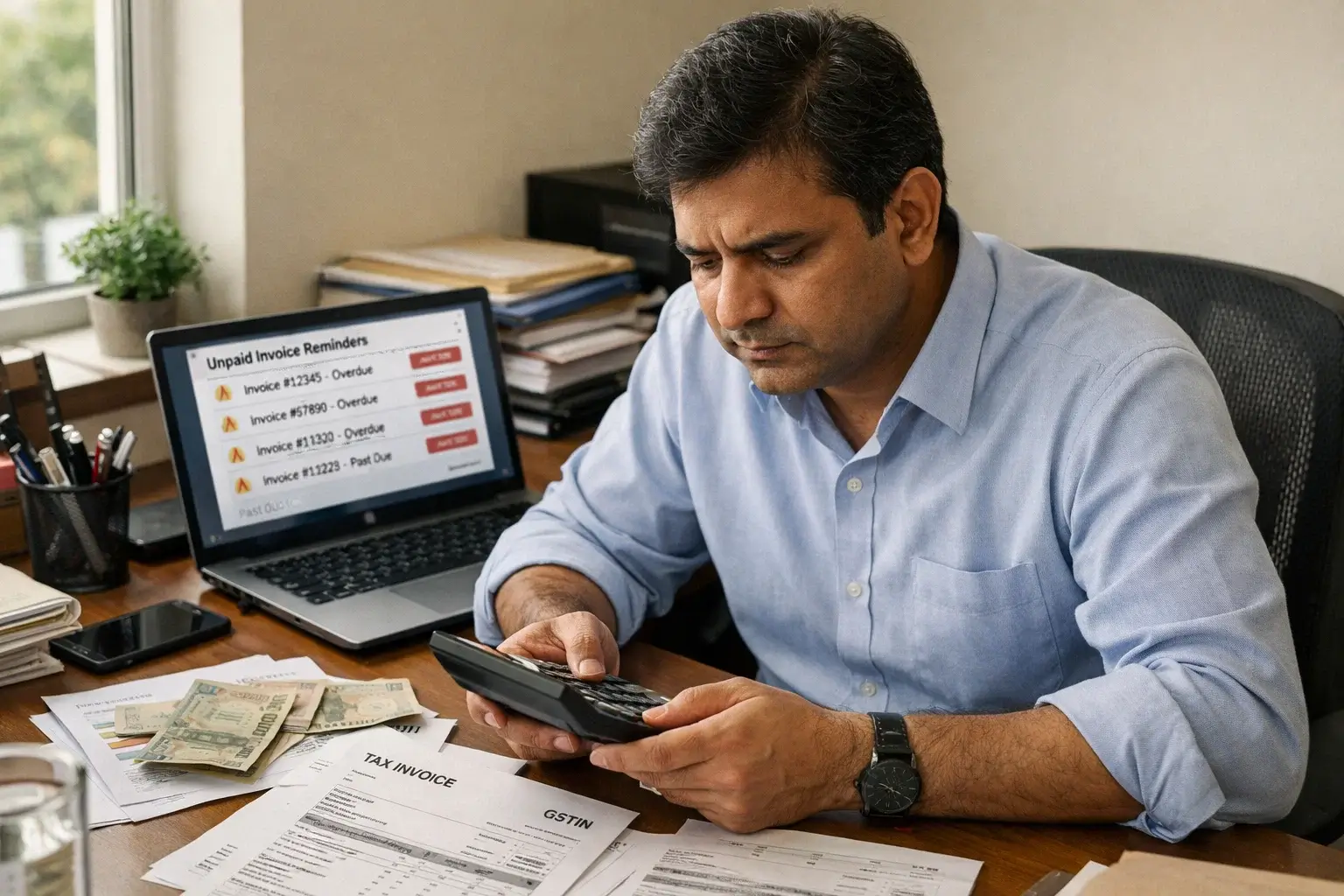
Despite having clear legal frameworks, several practical challenges continue to cause payment delays:
- MSMEs depend heavily on a few large clients for business
- Weak contract terms and lack of strong enforcement actions
- Fear of losing clients when raising disputes
- Lack of awareness about available legal remedies
- Incomplete documentation and irregular follow-ups
Ultimately, the issue is not the absence of laws, but the lack of effective enforcement.
Core Practical Observation
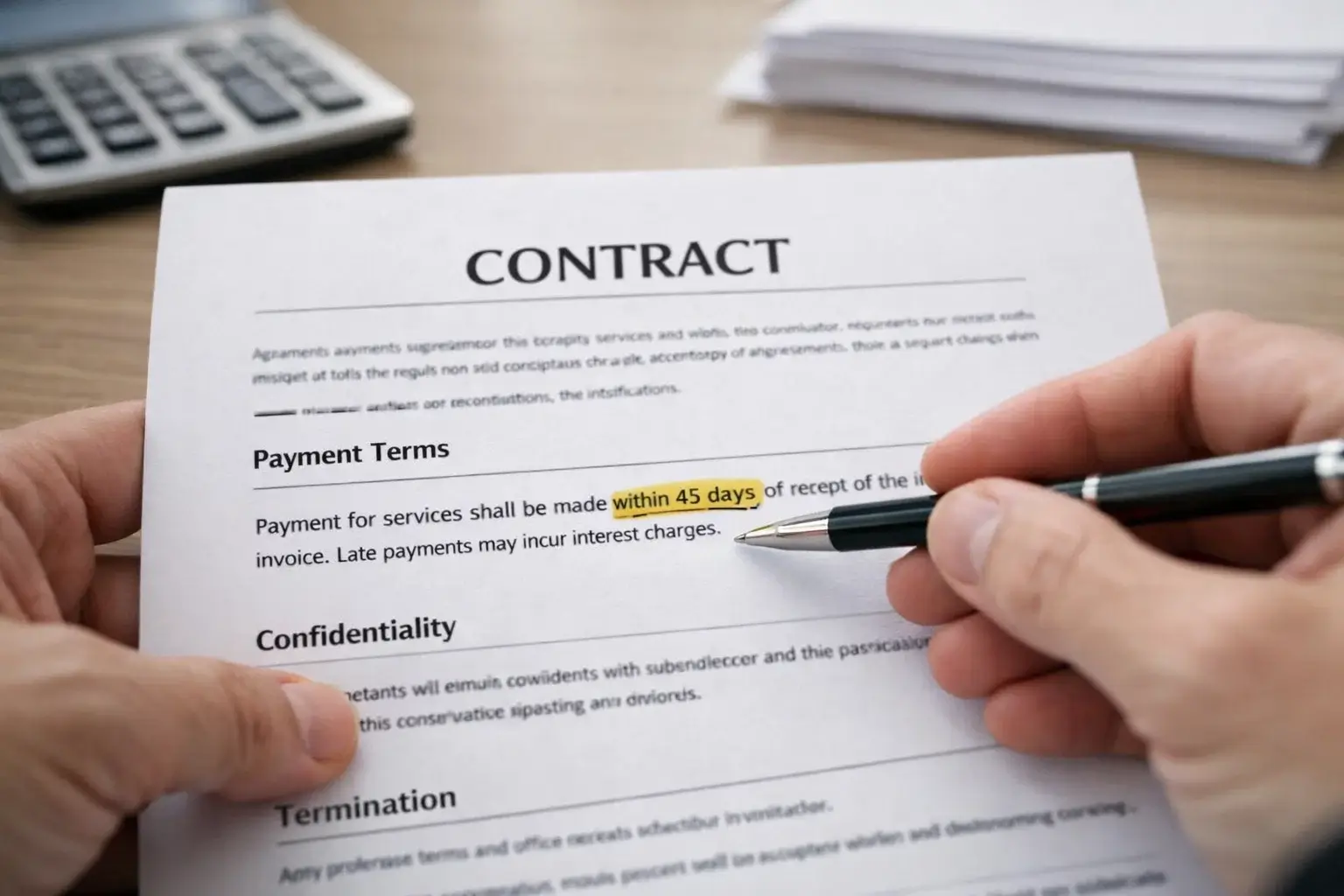
Even when the contract specifies 60 days or 90 days, it is legally valid only up to 45 days in the case of MSMEs.
Interest on Delayed Payments – The Most Overlooked Authority
Here comes the financial strength of the law:
- Interest must be paid compulsorily
- Interest Rate = 3 times RBI bank rate
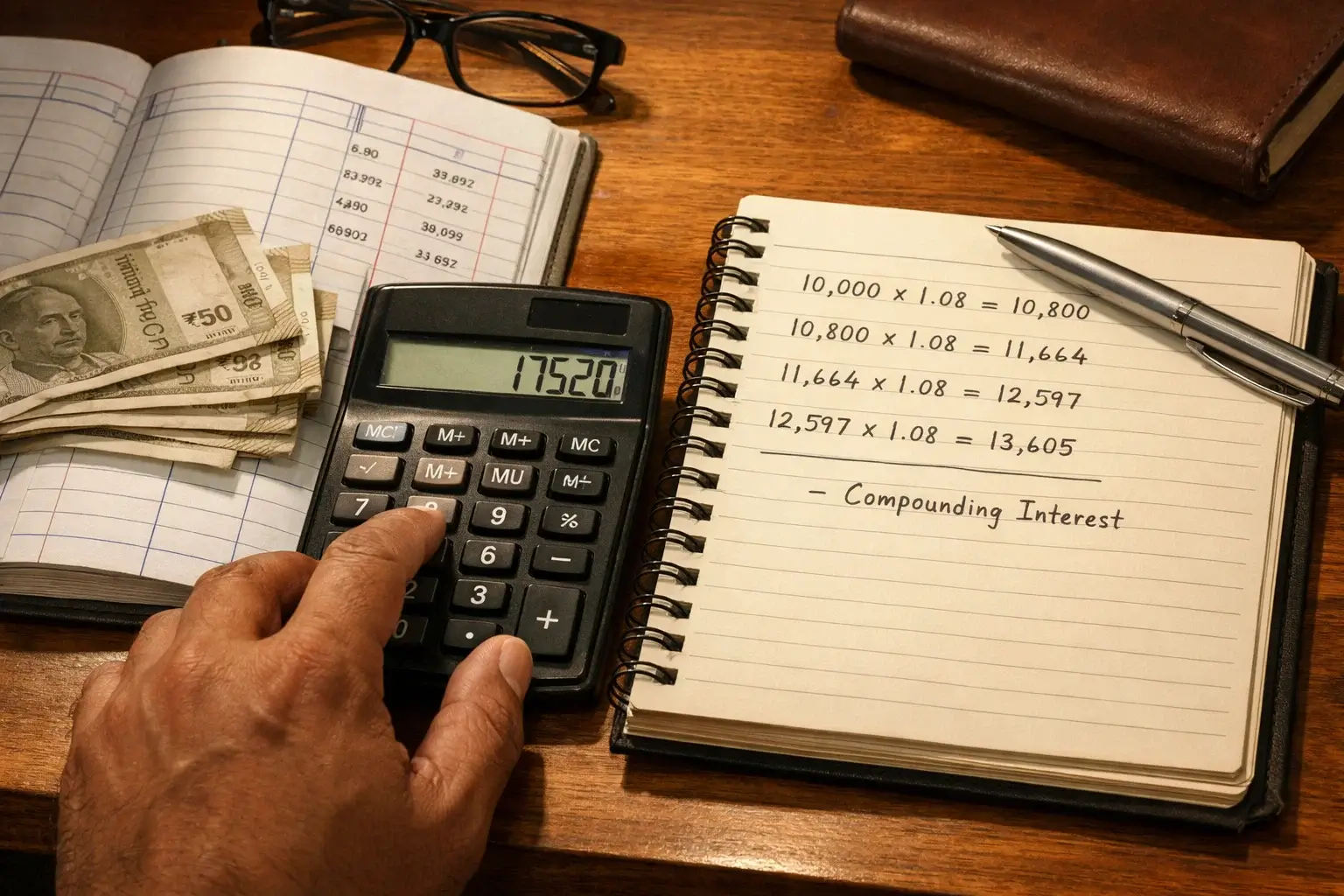
- It is compound interest (monthly compounding)
What Conditions Will Attract the Interest?
- Immediately after the due date (15th / 45th day)
- No separate agreement is required
- It overrides contract provisions
Reality Check
MSMEs rarely claim this interest due to lack of awareness or fear of losing customers. However, it is a critical financial protection mechanism.
The Business Reality
Late payment is not just “late money” — it creates a chain reaction:
1. Breakdown in cash flow
- Operating costs increase
- Funds remain blocked
- Borrowing requirements rise
2. Pressure on working capital
- Sales cycle gets disrupted
- Delayed payments to vendors
3. GST Liability
- Tax must be paid despite delayed payment
- Creates a dual financial burden
- Taxes are paid even when income is not received
This results in one of the most severe financial impacts on MSMEs.
Scenario Illustrating the Situation
Consider the following example:
- MSME invoices: ₹5,00,000
- GST: approximately ₹90,000
- Payment received after 45 days
Consequences
- MSME has already paid GST → cash drain
- No income received → liquidity problem
- Legal interest starts accumulating
- Working capital cycle gets disrupted
In the Long Term
- The burden of interest liability increases
- Business may require loans to sustain operations
MSME Delayed payment is not just a legal issue—it can become an existential threat to the business.
Why MSMEs Don’t Escalate the Problem
Despite having strong legal protection, most MSMEs avoid escalation due to:
- Fear of reputation damage and losing long-term clients
- Lack of clarity about the legal procedures
- Perception of slow legal processes
- No structured system to track receivables
In reality, the mechanisms to address MSME delayed payments are more accessible than ever, but awareness remains low.

Practical Solutions for Recovery (Actionable Solutions)
A. MSME Samadhaan Portal
- Government-backed platform
- Specifically designed for MSME payment disputes
- Online filing system
- No legal notice required
After filing:
- Case is referred to the Facilitation Council
- Conciliation → Arbitration if required
B. Facilitation Council Mechanism
- Formal process under the MSME Act
- Faster than traditional court litigation
- Average resolution time: ~90 days
Key Advantage:
- Buyer must deposit 75% of the award amount before filing an appeal
C. Structured Approach to Recovery
Before initiating legal escalation:
- Send a formal demand letter
- Clearly calculate:
- Principal amount
- Applicable interest charges
Maintain proper documentation and records.
In many cases, structured follow-ups alone result in recovery in 2026 due to increased compliance pressure.
Typical Non-Compliance Errors by MSMEs
- Missing MSME (Udyam) registration
- Unclear payment terms in invoices
- Absence of a formal agreement
- Poor documentation (delivery proof, emails, etc.)
- No system to track receivables
- Ignoring structured reminders
These gaps weaken an otherwise strong legal position.
Many MSMEs struggle not because recovery is impossible, but because the process is unstructured. With guidance from professionals such as JackRabbit Consultants , businesses can approach recovery more strategically rather than reactively.
Steps Businesses May Take for Protection
1. Specify Due Date in Contract
- Must always be clearly defined in writing
- Should not exceed 45 days
2. Insert Clause Regarding Interest
- Interest provision is legally applicable by default
- Including it explicitly strengthens negotiation power
3. Maintain Adequate Documentation
- Invoice
- Work Order
- Delivery Proof
- Communication Records
4. Monitor Receivables Effectively
- Use a structured tracking system
- Review at intervals: 30 / 45 / 60 days
5. React at the Right Time
- Avoid waiting for 90–120 days
- Take timely and calculated action
Professional Insight (Practical Approach)
In many cases, MSME delayed payments are not purely legal issues. They often arise due to:
- Inadequate documentation
- Weak follow-up mechanisms
- Poor financial discipline
In practice, businesses that work with structured financial advisors like JackRabbit Consultants are better equipped to manage delayed payments because they implement proper receivable tracking, compliance systems, and escalation strategies.
.With a strong compliance framework in place, receivables recovery becomes significantly faster, predictable, and less stressful.
Conclusion
Late payments are not just an operational challenge; they directly impact cash flow, taxation, and long-term business sustainability.
In 2026, stronger compliance standards and penalties imposed on buyers have shifted the balance, giving MSMEs a stronger position than before.
The key differentiator now lies in how businesses operate. Those that actively manage their receivables and understand their legal rights are significantly better positioned for stability and growth.