

In the present regulatory framework, the aspect of compliance related to Micro and Small Enterprises (MSMEs) has emerged as an important aspect for organizations functioning in India. MSME Form 1 Return, also called the MSME-1 Return, is a regulatory requirement aimed at ensuring discipline in the payment of dues to MSME vendors through the transparent declaration of delays.
Considering the amendments introduced in the structure of the report, the disclosures, and the interpretation of the payment regulations, the present form of MSME Form 1 is no longer just a simple compliance aspect but is intricately linked with financial reporting, audit, accounting, and regulatory requirements.
Organizations functioning through structured advisory systems, like those of Jackrabbit – Financial Consultants, generally ensure the inclusion of MSME compliance as part of their financial control mechanisms.
Concept, Scope, and Regulatory Objective of MSME Form 1
MSME Form 1 is a half-yearly return filed with the Registrar of Companies (ROC) in accordance with Section 405 of the Companies Act, 2013, read in conjunction with the MSME Development Act, 2006.
The form aims at collecting information regarding:
- Outstanding dues payable to Micro and Small Enterprises
- Delays in payment beyond a stipulated period
- Transaction-specific payment patterns
- Justification for the delay in payment
The rationale for this form is:
- Maintaining liquidity for MSMEs
- Preventing excessive credit culture
- Improving transparency in corporate payment systems
- Regulatory oversight on payment discipline
The rationale for filing this form is triggered when payments are made after 45 days from the date of acceptance/delivery of goods and services.
Statutory Framework and Legal Provisions
MSME Form 1 is subject to the following provisions, which collectively govern the said form:
MSME Development Act, 2006
This Act stipulates the basic rules applicable to MSME transactions. The rules are as follows:
Payment shall be made:
As agreed upon; or
- Within 15 days in the absence of an agreement.
- Maximum credit period: 45 days
This Act has stipulated the payment of interest in the event of a delay.
Section 405 of the Companies Act, 2013
This section grants the Central Government the following powers:
- Request information from companies
- Require the filing of specific returns
- Enforce the imposition of penalties
MSME Form 1 has been notified under this section.
Specified Companies (Furnishing of Information…), Order, 2019
This Order:
- Introduces MSME Form 1
- Defines “specified companies”
- Prescribes the filing requirement of half-yearly
Interest Liability on Delayed Payments
- Rate: At three times the bank rate declared by the RBI
- Nature: Compounding type of interest
- Applicability: Automatically applicable in case of delayed payments
Key Update Applicable in 2026 (MCA V3 Reporting Expansion)
The new MSME-1 reporting system will require companies to declare information about their transactions in the following areas:
- Payments made within 45 days
- Payments made after 45 days
- Dues outstanding within 45 days
- Dues outstanding after 45 days
Applicability of MSME Form 1 – Detailed and Structured Interpretation
Applicability has to be considered from three critical dimensions: entity, supplier classification, and payment timeline.
Entity Level Applicability
- Applicable to all companies registered under the Companies Act 2013.
- Includes:
- Private Limited Companies
- Public Limited Companies
- Listed and unlisted companies
Not applicable to:
- Proprietorship Firms
- Partnership Firms
- LLP Firms
Supplier Classification Requirement
- The supplier must be registered as:
- Micro Enterprise
- Small Enterprise
- Valid Udyam Registration must be provided in support of the above.
As per the revised classification applicable from April 1st, 2025, and applicable in 2026:
- Micro Enterprise:
- Investment must be within Rs. 2.5 Crore
- Turnover must be within Rs. 10 Crore
- Small Enterprise:
- Investment must be within Rs. 25 Crore
- Turnover must be within Rs. 100 Crore
Medium Enterprises will not be covered in MSME Form 1.

Transaction Level Condition
- Company must have received goods or services from MSME suppliers
- Payment must be more than 45 days from acceptance or deemed acceptance
“Deemed acceptance” shall apply when no objection is raised within 15 days of receipt.
Reporting Obligation Trigger
The reporting obligation to file MSME Form 1 will trigger when:
- Any payment remains outstanding for more than 45 days, or
- Payment has been made after the 45-day period in the reporting half-year
This reporting obligation will not depend on:
- Amount
- Number of transactions
- Frequency
Cases Where Filing is Not Required
- No transactions with MSME suppliers
- All payments made within 45 days
- Suppliers not classified as Micro or Small enterprises
- No outstanding dues beyond prescribed timelines
Identification of MSME Suppliers – Comprehensive Compliance Methodology
Identification of MSME suppliers is an important aspect of compliance, and incorrect identification would lead to errors in reporting.
Verification Through Udyam Registration
The MSME status will hold true only if the supplier is registered on the Udyam portal.
The information needed for verification includes:
- Udyam Registration Number (URN)
- Classification of the Enterprise
- Registration Validity Period
- Structured Vendor Onboarding Process
Companies must have mandatory processes for onboarding vendors:
- Vendor declaration of being an MSME enterprise
- Collection of Udyam Registration Certificate
- PAN and GST verification
- Documentation of contractual payment terms
Creation of MSME Vendor Master Database
A centralized system would involve the following:
- Vendor Name
- PAN and GST Details
- Udyam Registration Number
- Enterprises would be classified
- Nature of Supply would be considered
Periodic Vendor Validation
- MSME status would be reviewed periodically
- Turnover and investment may change over time
- A fresh certificate would be obtained
Integration with Accounting Systems
- Vendor would be tagged as an MSME in the ERP/accounting system
- A system would be put in place to automatically track MSME vendors’ invoices
- A separate ageing analysis would be done for MSME vendors
Typically, structured compliance systems such as the one implemented by Jackrabbit – Financial Consultants would involve the integration of vendor identification with accounting systems to avoid classification errors.
Due Dates and Filing Schedule
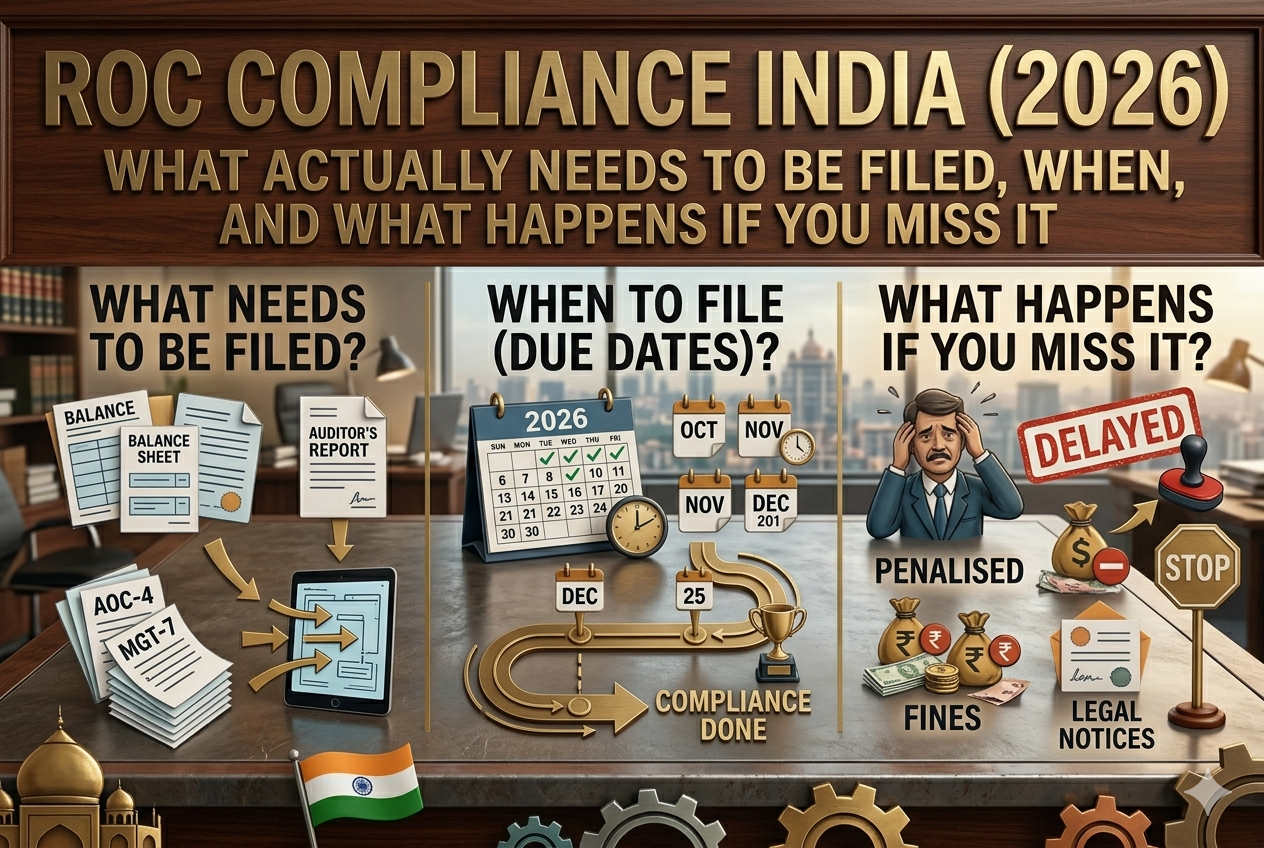
MSME Form 1 is required to be filed on a half-yearly basis with specific due dates as follows:
| Reporting Date | Due Date |
| April to September | 31st October |
| October to March | 30th April |
The filing of the form is to be done within 30 days from the end of the half-yearly period. To make compliance more efficient, it is advised to adopt a structured system for keeping track of due dates.
One can refer to a detailed compliance schedule to monitor MSME due dates along with other compliance due dates.

Information and Disclosures Required in MSME Form 1
The information required to be disclosed in MSME Form 1 is as follows, with specific information at various levels, such as company, supplier, transaction, and delay levels.
Company-Level Information
- Corporate Identification Number (CIN)
- Company Name and Address
- PAN and Email
Supplier-Level Information
- Name of MSME Supplier
- PAN
- Udyam Registration Number
- Enterprise Classification
Transaction-Level Information
- Invoice Number and Date
- Amount Payable
- Amount Outstanding
Delay-Specific Information
- Due Date of Payment
- Number of Days Delayed
- Reason for Delay
Importance of Accuracy in MSME Reporting
Accuracy in MSME Form 1 filing is important as it is linked with the regulatory system.
Regulatory Validation
- Data can be validated by the ROC authorities.
- Data can be cross-checked with the MCA data.
Audit Consistency
- The information provided can be matched with the financial statements.
- Inconsistency in the information provided can lead to audit observations.
Compliance Risk Management
- Inaccuracy in the information provided can be treated as non-compliance.
- Inaccuracy in the information provided can lead to notices.
Documentation Support
- All the information provided should be supported with documents.
- Reasons for delay should be documented properly.

Penalties for Non-Compliance
As per Section 405(4) of the Companies Act, 2013:
- Company – ₹20,000
- Officer in Default – ₹20,000 each
- Continuing Default – ₹1,000 per day
- Maximum Penalty – ₹3,00,000
Non-compliance also invites regulatory and compliance risks.
Filing Process – Detailed Procedural Framework
The filing process follows a structured format consisting of several steps:
Vendor Identification and Classification
- Identification of Vendor Data
- Verification of MSME Status using Udyam Registration
- Proper Vendor Classification
Data Extraction from Accounting Records
- Identification and Extraction of Data
- Identification of MSME Transactions
Determination of Payment Due Dates
- Computation of Due Dates based on Agreement or Limit
- Computation of Ageing of Payables
Identification of Delayed Payments
- Computation of Due Dates and Actual Payment Date
- Identification of Delayed Payments > 45 Days
Preparation of Reporting Data
- Compilation of a structured dataset consisting of the following information:
- Vendor Information
- Invoice Information
- Delay Period
- Outstanding Amount
Data Validation and Reconciliation
- Cross-verification with the books of accounts
- Ensuring accuracy and completeness
- Consistency with financial information
Form Preparation and Entry
- Login to the MCA portal and access MSME Form 1
- Enter the information accurately
Digital Authentication
- Form to be digitally signed by the Director/CFO/Company Secretary
Filing and Record Maintenance
- Upload the form on the MCA portal
- Obtain the SRN acknowledgement
Common Compliance Errors and Control Gaps
Incorrect MSME Classification
- Non-verification of Udyam Registration
- Reliance on assumptions without supporting documentation
Inadequate Payment Tracking Systems
- Non-tracking of invoices
- Non-tracking of ageing
Incomplete Data Reporting
- Non-availability of supplier information
- Non-availability of invoice information
Mismatch with Financial Records
- Differences between the information furnished in the MSME Form and the books of account
- Errors detected during the audit
Weak Documentation Practices
- Lack of documentation
- Lack of justification for delays
Delays in Filing
- Failure to comply with the statutory due date
- Rushed filing resulting in errors
Absence of Internal Compliance Controls
- Lack of definition of responsibility for ensuring MSME compliance
- Lack of validation
Integrated Compliance Approach for MSME Reporting
For effective MSME compliance, the key is:
- Accurate vendor identification systems
- Automated systems for tracking payment due dates
- Strong documentation practices
- Timely and accurate reporting
Businesses that use structured advisory systems, like Jackrabbit – Financial Consultants, generally use process-driven compliance systems.
Conclusion
The MSME Form 1 is an essential compliance requirement that demonstrates the company’s financial discipline in terms of its adherence to various regulatory requirements pertaining to Micro and Small Enterprises.
A scientific approach in terms of vendor classification, tracking payments, and reporting is essential in order to comply with various regulatory requirements.
The MSME form is not just about compliance in a compliance-driven world; it’s about corporate governance and financial accountability.