
Input Tax Credit (ITC) in India – 2026
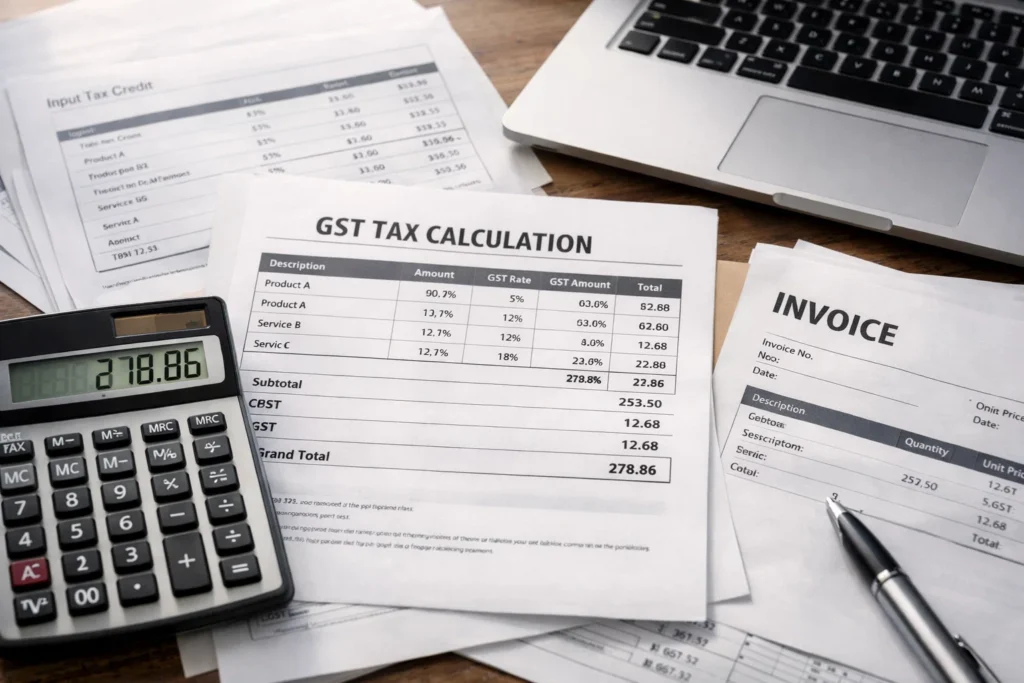
As of April 2026, Input Tax Credit (ITC) has emerged as a highly system-oriented and compliance-oriented framework with respect to GST. No more does it remain a relatively simpler form of tax treatment, as its scope involves strict legalities, return-matching and technological verifications.
- Issues a provision for set-off of input tax against output tax liabilities
- Helps maintain tax-neutrality and prevents the cascading effect of taxes
- Affects working capital management directly
- Maintains strict conditions on a statutory and procedural basis
As a result of regular changes and enhanced compliance, ITC has shifted from being a mere assumption or provisional to becoming a highly data-oriented process (based on GSTR-2B). As a consequence, businesses are required to have robust processes and reconciliations, which are best provided by experts like Jackrabbit Financial Consultants.
Statutory Framework for ITC (Up till April 2026)
There exist a series of laws governing the entire framework relating to ITC:
Primary Statutory Provisions under the CGST Act
- Section 16
- Drafting the eligibility conditions
- Mandatory compliance requirements under this section
- Timing aspects for taking Input Tax Credit
- Section 17
- The aspect of apportionment of ITC
- Blocked ITC as per Section 17(5)
- Section 18
- The special cases of ITC
- Transitional case from exempt to taxable supply
- Section 19 & 20
- Job Work Transactions ITC
- The Input Service Distributor Mechanism
- Section 41 ( As amended)
- Assessable ITC on self-assessment basis
- Retrograde in case of default by the supplier
Key Rules under CGST Rules
| Rule | Description | Impact |
| Rule 36 | Conditions and Documentation related to ITC | Limitation on Excessive Claims |
| Rule 37 | Negative payment to supllier | Reversal is mandatory after 180 days |
| Rule 42 | ITC relating to mixed-use inputs | Proportional Reversal |
| Rule 43 | ITC on capital goods | Long – term reversal |
| Rule 44 | Reverse of ITC upon cancellation | Reversal applies to stocks and capital goods |
Major Shifts in 2026 Compliance
- Total dependence on GSTR-2B for claiming Input Tax Credit
- Presentation of no provisional claim on ITC
- Automatic notices based on reconciliations
- STRICT deadline under section 16(4)
- Supplier-dependent claim
- Mis-match detection by AI/Analytics
Eligibility conditions for availing ITC (Section 16 – Elaborated Analysis)
The eligibility for claiming ITC depends on certain conditions that need to be met simultaneously:
1. Holding Proper Tax Document
- Examples of proper documents:
- Tax invoice
- Debit note
- Bill of entry (in the case of import)
- Must-have aspects of an invoice:
- GSTIN of supplier and recipient
- Invoice number and date
- HSN/SAC numbers
- Value of supply and applicable taxes
- A faulty invoice may disentitle the claimant from Input Tax Credit
2. Physical/Constructive Receipt of Goods or Service
- The receipt requirement includes:
- Possession of goods physically
- Constructive receipt (under bill-to-ship-to arrangement)
- Concerning service:
- The completion of the service is mandatory
- When dealing with goods by installments:
- ITC will only apply when the final installment is received
3. Payment of Tax by Supplier
- ITC depends on:
- Supplier filing of GSTR-1
- Supplier filing of GSTR-3B
- Tax paid to the government by supplier
- Consequences of supplier non-compliance include:
- Reversal of ITC
- Liability for interest
Consequently, management of vendor compliance has become important, and companies are employing systems for regular vendor reconciliation or firms like Jackrabbit Financial Consultants for ongoing vendor monitoring.
4. Filing of Returns by Recipient
- Claiming ITC is possible once:
- GSTR-3B return filed
- Consequences of delay include:
- Latency in credit use
- Cross-compliance issues
5. Inclusion in GSTR-2B
- GSTR-2B becomes the final source of eligibility verification
- Characteristics of GSTR-2B:
- Static report (every month)
- Automatically generated using supplier information
- Claim credits only available through 2B
6. Deadline for ITC Claim
| Specific Details | Deadline |
| Invoice / Debit Note | Until 30th Nov of next FY |
| Filing annual Return | Before that |
| Missed ITC | Permanent Denial |
Restrictions and Control over Advanced ITC (2026)
Restriction through GSTR-2B-Based Process
- Input Tax Credit can be claimed against:
- “Eligible ITC” from GSTR-2B
- System issues:
- ITC not eligible
- Blocked ITC
- Discrepancies could lead to automatic investigation
Dependence on Supplier Risk Factors
- ITC is influenced by:
- Non filing by supplier
- Default by supplier
- Fake invoicing by networks
- Companies have to incorporate:
- Assessment of suppliers
- Compliance review
180-day Rule for Payment (Rule 37)
- Required conditions include:
- Payment to supplier within 180 days
- Consequences of non-compliance include:
- Reversal of ITC
- Liability for Interest
- Input Tax Credit re-claiming allowed only upon payment
System-Controlled Compliance Checks
- GST portal employs:
- AI-based mismatch detection system
- Trilateral data matching (GSTR-1, 3B, E-way bills)
- Risk alert raised for:
- Excess ITC Claims
- Unusual patterns

Blocked Credits under Section 17(5) – A Comprehensive Explanation
Disallowed inputs are total disallowances, irrespective of business use (unless otherwise mentioned):
Summary Table of Blocked Credits
| Category | Credit Status | Exceptions |
| Motor Vehicle | Blocked | Transport , training ,resale |
| Food & Beverages | Blocked | Further supply , statutory requiremnet |
| Club Membership | Blocked | No exception |
| Works Contract | Blocked | Plant & Machinery |
| Personal Use | Blocked | No exception |
| Employee Benefits | Blocked | Statutory Obligation |
| Construction | Blocked | If capitalized |
Detailed Classification
Motor Vehicles and Motor Conveyance Block
- Applicable to passenger vehicles
- Allowable ITC in limited circumstances
Food, Catering and Hospitality Block
- Include the following services:
- FOOD & BEVERAGES
- OUTDOOR CATERING
Membership and Entertainment Block
- Include clubs, gymnasiums, wellness centres
- Classified as non-business expense
Works Contract and Construction Block
- Not allowed Input Tax Credit when used for:
- Construction of immovable property
- Capitalized in books
Personal Consumption Block
- Absolute block on Input Tax Credit
Employee Expense Block
- Includes :
- Dividends and bonuses
- Other personal expenses
ITC Reversal Methodology (Diligent Compliance Protocol)
Rule 42 – Input (Except Capital Goods)
- Constitution for multiple inputs usage
- Implies:
- Differentiation between exempt and taxable utilization
- Monthly reversal of Input Tax Credit on a provisional basis
- Adjustment annually
Rule 43 – Capital Goods
- Recovery period is five years
- Monthly reversal of ITC when exempted
Rule 37 – Failure to Pay
- After 180 days from due date
- Computation of interest is compulsory
- Reimbursement of ITC post payment
Rule 44 – Special Case
- Enforced at :
- Revocation of GST Registration
- Shifting to Composition Scheme
- Reversal of ITC on:
- Stock
- Capital goods
High Risk Areas In ITC Compliance (2026)
Structural Risks
- Issuing ITC without 2B consideration
- Credit classification error
- Not able to identify the blocked credits
Vendor Risks
- Non-filer vendors
- Suspected/fake GSTINs
- Inconsistent data
Procedural Risks
- Time limitations not adhered
- Wrong reversal done
- Returns mismatch
System Based Risks
- Artificial Intelligence based alerts raised
- E-way bill mismatch against invoices
- GSTR-1 and GSTR-3B mismatch

Departmental Controls, Actions & Penalties
Reversal Of ITC
- Forced ITC Reversal where ITC is not eligible for claiming
- With interest @18% p.a.
Penalties
- Penalties u/s 122:
- Misclassification of ITC
- Suspected fraud transaction
ITC Blocking Rule (86A)
- Temporary blockage of use of ITC
- In case of:
- Suspected fraud
- Fictitious invoice
Audits & Investigation
- GST Audit
- Scrutiny Notice by Department
- Data Analysis
Compliance Strategy for ITC (2026)
Control Measures for ITC Compliance
- Monthly reconciliation of GSTR-2B
- Vendor compliance measures
- Correct documentation
- On-time return submission
System Improvements for Internal Compliance
- Accounting system integration
- GST reconciliation
- Logging and audit trails
Risk Mitigation Strategy
- Identification of risky vendors
- Payment ITC audits
- Supervision and monitoring
There is an increasing tendency among organizations to seek professional advisory services of companies like Jackrabbit Financial Consultants that manage end-to-end ITC process life cycle, achieving compliance precision and reducing financial risk.
Importance of ITC in Financial Management Strategy
ITC impacts:
- Working capital management
- Tax liabilities
- Profit margins
Wrong management of ITC causes:
- Funds loss
- Legal exposure
- Low efficiency
Conclusion
The Indian Tax Collection (ITC) is currently functioning in a very controlled, digitized, and compliance-driven environment. With the change from flexibility to rigorous verification, it has become imperative for businesses to establish themselves with processes-based, technology-driven, and professional ITC systems.
Proper understanding of the law, reconciliation, and compliance management are the basic necessities today. Those businesses that can establish controls through proper structure and guidance from specialists like Jackrabbit Financial Consultants can reap maximum benefits from their credit eligibility and financial sustainability.