

As the 31 July 2026 Income Tax Return filing deadline approaches, many taxpayers leave their filing until the final few days. While modern e-filing utilities have made the process easier, rushing to submit the return often results in overlooked income, mismatched tax credits, incomplete documentation, or simple data entry errors.
These seemingly minor mistakes can later lead to refund delays, additional tax liability, reconciliation issues, or notices from the Income Tax Department. Fortunately, most of these problems are avoidable with a careful review before clicking Submit.
This practical guide highlights the most common ITR filing mistakes taxpayers make during last-minute ITR filing and explains the checks that should be completed before filing an accurate Income Tax Return. The focus is not merely on meeting the deadline, but on filing a return that is complete, consistent, and properly verified.
Reasons Why Filing of ITR at the Last Minute Needs Special Consideration
Brief Answer: Filing of ITR at the last minute makes taxpayers more susceptible to errors that could otherwise have been avoided, as they often try to complete and submit their return hurriedly.
In the final week to file ITR, taxpayers may:
- Rely on pre-populated information without checking it
- Fail to check AIS and Form 26AS
- Exclude incomes from different sources
- Use the wrong ITR form
- Exclude tax payable
- Fail to verify before submitting
Although filing the return on the last day of the due date is legal, there is no need to file hurriedly at the cost of accuracy. Taking some extra time to go through your return can help avoid unnecessary compliance problems later.
Mistake #1 – Filing Without Comparing AIS and Form 26AS
Short Answer: Prior to filing the Income Tax Return, check for mismatches between the information provided in your Income Tax Return and the Annual Information Statement (AIS) and Form 26AS to identify missed income or TDS discrepancies.
The AIS and Form 26AS work as valuable reconciliation statements. These records contain information relating to salary, interest income, dividend income, TDS, TCS, financial transactions, and other reported information.
If there is a mismatch between the information reflected in these records and your return, or if you claim an incorrect tax credit in your return, it could lead to further checks or delays in processing your refund.
These mismatches usually include:
- Income earned from fixed deposit interest
- Income from dividends
- TDS deductions by banks
- Mutual fund transactions
- Salary information
- Information about foreign assets, if any
Prior to filing:
- Get the latest AIS statement.
- Check it against Form 26AS.
- Check both against your supporting documents.
- Find out the reason behind any discrepancy before filing.
Mistake #2 – Inclusion of Salary from One Employer Only
A taxpayer must report his/her salary from all the employers from whom salary is received during the fiscal year.
Incorporation of only the latest Form 16 and not reporting salary from any earlier employer is one of the most frequent mistakes in ITR filing.
This scenario is generally encountered when:
- You have changed your job in FY 2025–26.
- You have received several Form 16s.
- Salary is segregated among various employers.
The possible consequences of this mistake are:
- Calculated taxable income will be incorrect.
- Tax liability will be incorrect.
- Mismatch in TDS.
- Consequences related to reconciliation, if any.
Do not depend only on your latest Form 16. You should verify the salary amount from:
- All Forms 16 that you have received.
- AIS
- Form 26AS
- Salary slip, wherever applicable.
Report the total salary amount correctly before filing your return.
Mistake #3 – Failure to Consider Interest, Dividends or Other Incomes
Taxpayers tend to pay attention to salary income alone without remembering other incomes that could be taxable in nature from banks, investments, freelancing and properties.
During last-minute ITR filing, minor income streams are often ignored since they are found in different accounts or organizations.
Typical Minor Income Streams to Remember
| Type of Income | Why It Gets Ignored |
|---|---|
| Interest income from fixed deposits | Noticed by the bank but forgotten during filing of tax returns |
| Interest income from savings account | Feels negligible to the taxpayers |
| Dividend income | Received from several companies or mutual funds |
| Freelance income | Temporary assignments and lack of maintaining separately |
| Rental income | False impression that small rent is exempt from reporting |
Even ignoring modest incomes might lead to inconsistency with AIS and Form 26AS.
A simple way of overcoming the error is to consider:
- Bank statements
- Interest statements
- Statements from investments
- Dividend statements
- Rental incomes
- Freelance earnings
Mistake #4 – Incorrect Claim of TDS Credit
Only claim the TDS credit which is reported against your PAN as per the tax records available.
TDS helps you to save money, but making the incorrect claim will lead to delay in processing or verification.
Reasons for the discrepancy in TDS credits may be:
- Having higher TDS than the records
- Making incorrect manual entries
- Forgetting about the TDS deducted by banks or the employer
- Not matching Form 16 with Form 26AS
While preparing your return:
- You need to match all your TDS entries with Form 26AS.
- You should cross-check the employer’s deductions.
- You must check the TDS deduction on bank interest and other sources of income.
- Your figures entered in the return should tally with the official records.
Mistake #5 – Incorrect ITR Form Selected
It is important to select the appropriate ITR form since submitting the return using an incorrect ITR form may make the return invalid or delay its processing.
Various types of Income Tax Return forms have been prescribed based on the type of income earned by different taxpayers.
Incorrect selection of ITR forms results from the fact that:
- Taxpayers believe that one form fits all
- Taxpayers ignore other income sources
- Taxpayers overlook any change in their financial condition
- Taxpayers select the incorrect Assessment Year due to urgency
Prior to submission, make sure that:
- The selected ITR form is relevant to your income.
- The correct Assessment Year has been selected.
- The income under all heads has been accounted for in your return.
Mistake #6 – Not Reviewing Bank Account Information
If your bank account details are inaccurate or outdated, it may affect the time you will get back your income tax refund despite having a successful Income Tax Return.
While most people concentrate on their income, deductions, and taxes, many ignore their bank account details where their refund should go. Even a small mistake in the bank account details, such as the account number or IFSC code, can lead to unnecessary delays.
Before filing your Income Tax Return:
- Review your bank account number.
- Check the IFSC code.
- Make sure that the correct bank account is selected for refund.
- Check your personal information that has been auto-filled.
A quick review of your banking details helps ensure that any eligible refund reaches the intended account without unnecessary complications.
Mistake #7 – Overlooking Tax Payable Prior to Filing
Brief Answer: Always make sure if there is any tax payable on self-assessment prior to filing.
Some taxpayers feel that tax deducted from their salary or other sources by their employer or bank fully settles their tax. But some tax may still be payable depending upon:
- Interest income
- Dividend income
- Profit on capital gain
- Payment from different sources (different employers)
- Freelance income or professional income
- Inadequate tax deduction at source
Prior to filing:
- Make sure the final tax computation.
- See whether there is any tax payable on self-assessment.
- Synchronize tax deducted with tax payable.
- Ensure the final figures match your reported income.
Reconciling tax payable before submission helps reduce post-filing interest, correction requests, and processing delays.
Mistake #8 – Failure to Do E-Verification
Income Tax Return filing is just a small part of the overall procedure. The completion of e-verification is equally important.
Taxpayers often feel as though the filing procedure is complete when they click on “Submit.” But the return has to also be e-verified within the stipulated period to be regarded as a properly filed return.
E-verification may be done through:
- Aadhaar OTP
- Net Banking
- E-verification through other means
Before leaving the Income Tax portal website:
- Ensure that you have successfully filed your return.
- E-verify your return.
- Save the acknowledgement of your filing.
Not doing this last step will unnecessarily complicate matters despite everything else being proper and correct.
Mistake #9 – Filing Without Reviewing Supporting Documents
When cross-verifying your supporting documents prior to filing, you ensure that the figures mentioned in your returns are complete and consistent.
Instead of depending solely on pre-filled data, verify the figures in your returns using your personal documents.
Essential Documents Checklist
| Document | Reason for Its Verification |
|---|---|
| Form 16 | Verify income from salary and TDS deducted by the employer |
| AIS | Verify your financial data |
| Form 26AS | Verify TDS, TCS, and tax credit |
| Bank Statements | Verify your interest income and other financial transactions |
| Interest Certificates | Verify interest income from deposits |
| Investment Documents | Verify investments made to claim deductions |
| Capital Gains Statement (wherever applicable) | Verify capital gains and investment transactions |
Reviewing these documents together significantly reduces the possibility of omissions or reporting inconsistencies before submission.
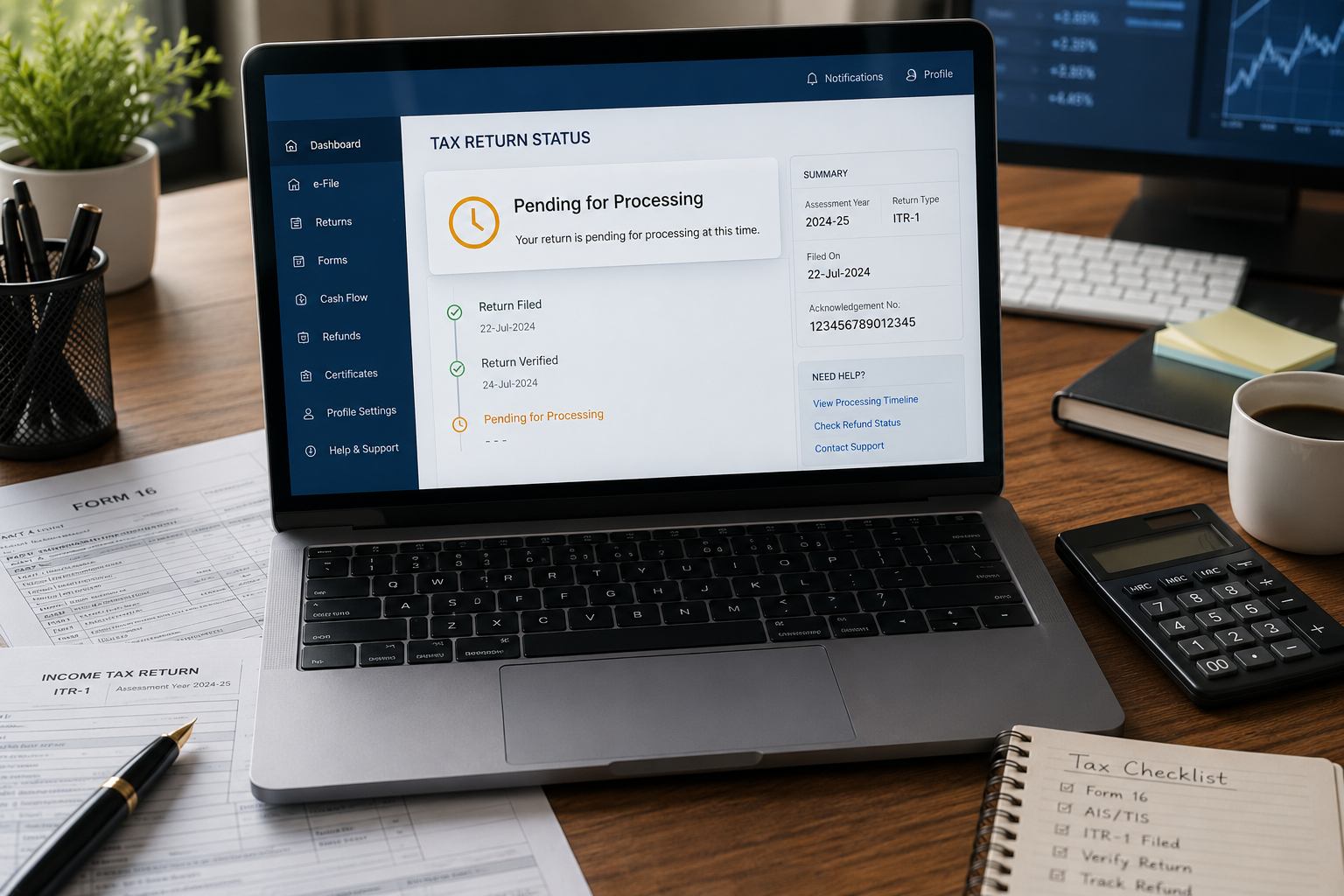
Final Checklist Before Submitting
Before submitting your Income Tax Return, go through this simple checklist:
- Check the salary income details of all employers.
- Compare your Income Tax Return with the latest AIS statement.
- Verify the TDS amounts against Form 26AS.
- Include all your sources of taxable income, such as interest and dividends.
- Recheck the deductions and exemptions claimed.
- Check if self-assessment tax is due.
- Confirm the PAN, Aadhaar, address and banking details.
- Select the right ITR form for filing.
- Do the e-verification after filing.
- Keep the acknowledgement copy and related documents safely.
It will take just a few minutes to complete this checklist but may save you from many hassles.
Example: A Hasty Submission Error That Might Have Been Easily Avoided
Suppose there is a case where a salaried individual submits his Income Tax Return on 30 July 2026.
While filling out the form, the taxpayer discloses his salary from the present organization but fails to disclose the following:
- Interest earned on fixed deposits
- The salary obtained from the former employer within the same financial year
- Mismatch in TDS as found in Form 26AS
The submission is rushed through without a final verification or reconciliation with AIS.
As a result, at a later stage, more corrections will be required, which could result in delays. A thorough analysis of Form 16, AIS, Form 26AS and bank statements prior to submission would have easily identified these discrepancies.
When Professional Review Becomes Necessary Before the Deadline
Most simple returns can normally be completed on an independent basis through proper review. But, professional help becomes relevant when there are complexities involved in the return.
These complexities may include:
- Diversified incomes
- Income from business or profession
- Capital gains dealings
- Income from foreign source or foreign investments
- Differences in AIS/Form 26AS
- Tax reconciliations
In such cases, most of the taxpayers seek a professional review of their returns before filing by professionals such as JackRabbit Consultants.
Professional review will help in:
- Review of return
- Verification of AIS
- TDS review
- Check income consistency
- Filing guidance
- Others
It is important not only to comply with the deadline but to avoid any avoidable mistakes through proper review.
Before You File Your Income Tax Return…
Last minutes before 31 July 2026 may cause unnecessary panic, however, the key point to keep in mind is that all the information you provide should be accurate.
Before submitting your return, please make sure to:
- Ensure each source of income is correct.
- Get your AIS reconciled and check Form 26AS.
- Check Form 16.
- Make sure bank account and other personal information is correct.
- Find out if you owe money.
- Do e-verification.
- Keep your acknowledgement.
Most of the problems after filing occur not due to the taxpayer’s delay with filling in the ITR, but because they rush with filing without performing these last steps.
In addition, during the last few days before the deadline, many people prefer to have their returns checked by professionals such as JackRabbit Consultants in case of reconciliation, several sources of income or complicated taxes’ filling.
Therefore, the main goal for you is not to file your ITR before 31 July 2026, but to submit accurate and checked Income Tax Return.