
Income Tax Calculator FY 2026-27
Calculate your income tax liability under both old and new tax regimes for Tax Year 2026-27.
Quick Tax Summary FY 2026-27
| Particulars | Details |
|---|---|
| Financial Year | FY 2026-27 |
| Tax Year | 2026-2027 |
| Default Regime | New Tax Regime |
| Standard Deduction (New Regime) | ₹75,000 |
| Tax rebate under Section 156 | Up to ₹60,000 |
| Health & Education Cess | 4% |
New Tax Regime Slab Rates FY 2026-27
| Income Tax Slabs | Tax Rate |
|---|---|
| Up to ₹4 lakh | Nil |
| ₹4 lakh – ₹8 lakh | 5% |
| ₹8 lakh – ₹12 lakh | 10% |
| ₹12 lakh – ₹16 lakh | 15% |
| ₹16 lakh – ₹20 lakh | 20% |
| ₹20 lakh – ₹24 lakh | 25% |
| Above ₹24 lakh | 30% |
Try this new income tax calculator FY 2026-27 to compute your tax liability under both old and new tax regimes.
Learn about your Tax liability, get insights into Tax rebate under Section 156, find out the latest income tax slab, and select the favorable tax regime to file your ITR.
The provisions of the Income-tax Act, 2025 shall be effective from 1 April 2026 onwards with reference to Tax Year 2026-27 and the subsequent year.
Quick Tax FY 2026-27 at a glance
| Particulars | Details |
|---|---|
| Financial Year | FY 2026-27 |
| Tax Year | 2026-2027 |
| Default Regime | New Tax Regime |
| Standard Deduction (New Regime) | ₹75,000 |
| Tax rebate under Section 156 (New Regime) | Up to ₹60,000 |
| Effective Zero Tax Benefit | Up to ₹12 lakh taxable income* |
| Health & Education Cess | 4% |
| ITR Filing Due Dates | As per applicable CBDT notifications for Tax Year 2026-27 |
*Applicable only on income taxable under normal slab rates.
Income Tax Slab Rates FY 2026-27
Slab Rates Under New Tax Regime
| Income Tax Slabs | Tax Rate |
|---|---|
| Up to ₹4 lakh | Nil |
| ₹4 lakh - ₹8 lakh | 5% |
| ₹8 lakh - ₹12 lakh | 10% |
| ₹12 lakh - ₹16 lakh | 15% |
| ₹16 lakh - ₹20 lakh | 20% |
| ₹20 lakh - ₹24 lakh | 25% |
| Above ₹24 lakh | 30% |
Old Tax Regime Slab Rates
| Tax Rate on Income | Tax Slabs |
|---|---|
| 0% | Up to ₹2.5 lakh |
| 5% | ₹2.5 lakh - ₹5 lakh |
| 20% | ₹5 lakh - ₹10 lakh |
| 30% | More than ₹10 lakh |
Introduction to the New Tax Regime
The new tax regime under Section 202 of the Income-tax Act, 2025 has lower slab rates along with minimal deductions and exemptions.
The new tax regime remains the default option since 1 April 2026.
The New Tax Regime is Ideal For:
- Salaried individuals who have lesser deductions
- Part-time workers having simple incomes
- Professionals who are not into major investments
- Those who do not get HRA and other benefits through loans
The Old Tax Regime Still Provides Benefits Like:
- Section 123
- Section 126
- HRA Exemption
- Home loan interest deduction
Zero Effective Tax Up to ₹12 Lakhs – Details
In the new system of taxation, if one qualifies for it, they can effectively pay zero taxes by availing themselves of Tax rebate u/s 156.
This rebate can be claimed only if the income falls under ordinary slabs.
If it is under special rate such as capital gain or gaming income, this rebate will not be available.
Example Calculation
| Particulars | Amount |
|---|---|
| Gross Salary | ₹12,75,000 |
| Less: Standard Deduction | ₹75,000 |
| Taxable Income | ₹12,00,000 |
Taxable Income Calculation
| Slabs | Tax |
|---|---|
| Up to ₹4 lakhs | Nil |
| ₹4 lakhs – ₹8 lakhs | ₹20,000 |
| ₹8 lakhs – ₹12 lakhs | ₹40,000 |
| Total Tax | ₹60,000 |
| Less: Tax Rebate u/s 156 | ₹60,000 |
| Effective Tax | Zero |
*It applies only on income taxable under ordinary slab rates.
Senior Citizen Tax Slabs in India
Senior Citizens (Aged between 60 to 80 Years)
| Income Slabs | Tax Rates |
|---|---|
| Up to ₹3 lakhs | Nil |
| ₹3 lakhs – ₹5 lakhs | 5% |
| ₹5 lakhs – ₹10 lakhs | 20% |
| Above ₹10 lakhs | 30% |
Residents Super Senior Citizens (Above 80 years of age)
| Income Tax Slabs | Tax Rate |
|---|---|
| Upto ₹5 Lakh | Nil |
| ₹5 lakh to ₹10 lakh | 20% |
| Above ₹10 Lakh | 30% |
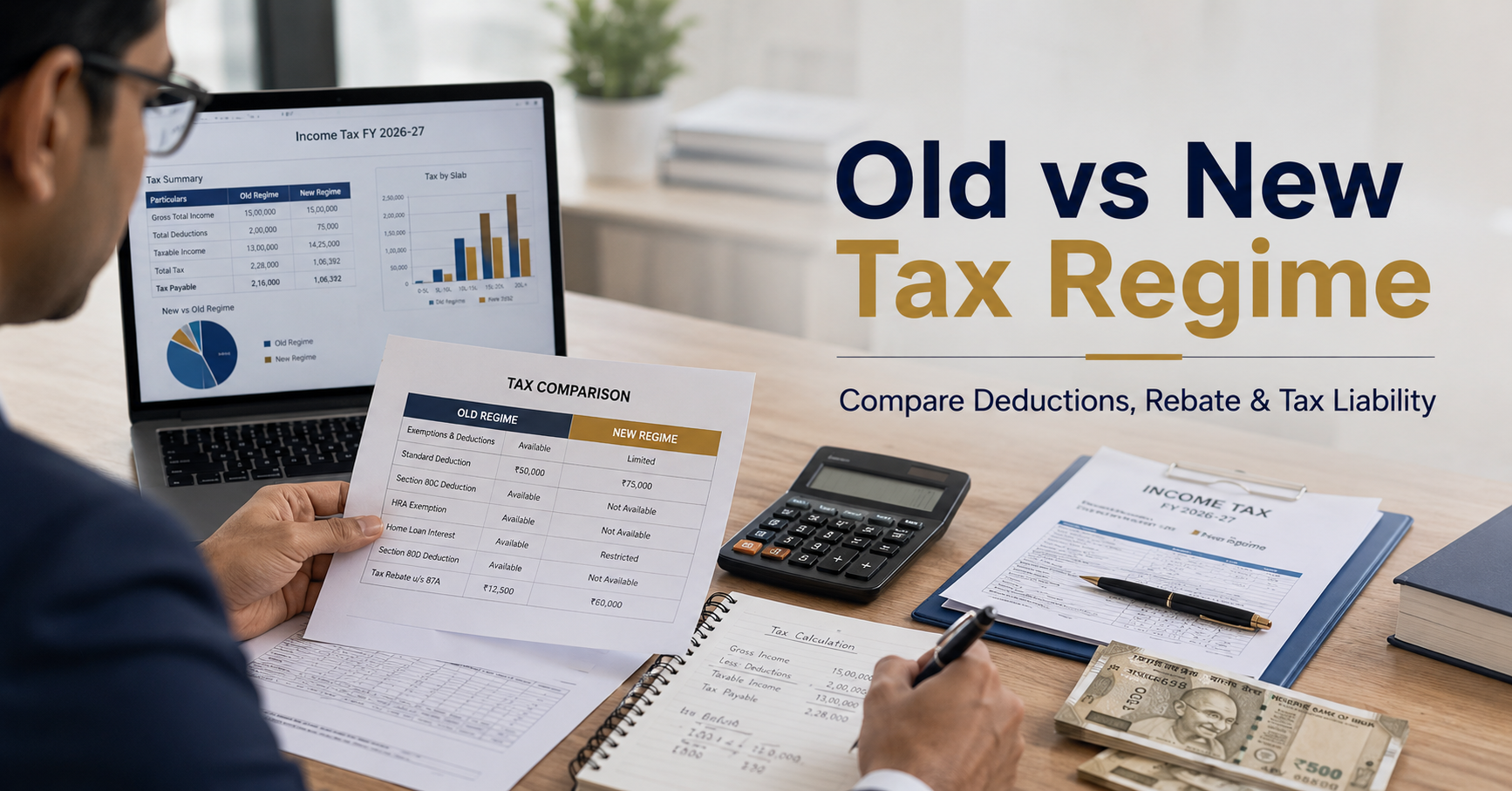
Tax Benefits Under Old vs. New Regime
| Tax Benefit | Old Regime | New Regime |
|---|---|---|
| Section 156 Rebate | ₹12,500 | ₹60,000 |
| Standard Deduction | ₹50,000 | ₹75,000 |
| Section 123 Deduction | Allowed | Not allowed |
| HRA exemption | Allowed | Not allowed |
| Deduction on Home Loan | Allowed | Limited to 50% of the total income from all sources |
| Section 126 Deduction | Allowed | Not allowed |
| Section 124 (NPS deduction) | Fully allowed | Contribution by employer only |
| Set off for House property loss | Allowed | Not allowed |
How Much Tax Will You Have to Pay? – Salary Wise Comparison
| Taxable Income | New Regime Tax | Old Regime Tax | Saving |
|---|---|---|---|
| ₹8 lakh | Effective nil tax* | ₹75,400 | ₹75,400 |
| ₹10 lakh | Effective nil tax* | ₹1,17,000 | ₹1,17,000 |
| ₹12 lakh | Effective nil tax* | ₹1,79,400 | ₹1,79,400 |
| ₹13 lakh | ₹78,000 | ₹2,10,600 | ₹1,32,600 |
*Applicable only on income taxable under ordinary slab rates.
How To Calculate Your Income Tax Using Income Tax Calculator?
You can use this method to know how much tax you will have to pay for the fiscal year 2026-27:
Step 1: Select the Financial Year
Step 2: Select Age Group
Step 3: Input Salary Income
Step 4: Input Other Sources of Income
- Interest Income
- Rent Income
- Freelancer Income
- Stock Gains
Step 5: Input Deductions
- Section 123
- Section 126
- Home Loan Interest
- Section 124 (NPS)
Step 6: For Comparison Purposes, Calculate Tax under Both Regimes before choosing the Filing Option.
Step 7: Calculate Total Tax Liability
This calculator will help you to easily calculate the benefits of both regimes and choose the most advantageous one.
Example of Calculation of Income Tax FY 2026-27
Example:
Ms. Neha has:
- Salary Income: ₹15 lakh
- Savings Interest: ₹7,000
- Freelance Income: ₹50,000
- Home Loan Interest: ₹1.5 lakh
Comparative Tax Calculations of Ms. Neha in Both Regimes
| Particulars | Old Regime | New Regime |
|---|---|---|
| Salary Income | ₹15,00,000 | ₹15,00,000 |
| Standard Deduction | ₹50,000 | ₹75,000 |
| Taxable Salary | ₹14,50,000 | ₹14,25,000 |
| Freelance Income | ₹50,000 | ₹50,000 |
Surcharge and Health & Education Cess
If taxable income is above ₹50 lakh, then Surcharge becomes applicable.
| Income Range | Old Tax Regime | New Tax Regime |
|---|---|---|
| ₹50-₹100 Lakh | 10% | 10% |
| ₹100-₹200 Lakh | 15% | 15% |
| ₹200-₹500 Lakh | 25% | 25% |
| Above ₹500 Lakh | 37% | 25% |
An Additional Health & Education Cess @4% of Total Tax Payable will be levied.
Which Tax Regime is better?
New Tax Regime May Be Better For Those:
- If You Don't have Major Deductions
- If You Do Not Have Home Loan Advantages
- If You Want to Avoid Complicated Calculations
- If Your Salary Structure is Simple
Old Tax Regime May be Better For Those:
- If You get Exemption Under HRA
- If You Make Big Section 123 Investments
- If You Pay Interest on Home Loans
- If You Take Benefit Under Section 126
Taxpayers nowadays are very particular while comparing both tax regimes prior to return filing.
There are many firms such as JackRabbit Consultants which assist salaried persons, consultants, freelancers, and businessmen in knowing their effective tax liability before ITR filing.
ITR Filing Schedule FY 2026-27
You may also go through the complete ITR filing schedule, key deadlines, and compliance roadmap as follows:
The section numbers referred to in this write-up are as per the Income-tax Act, 2025 which will be effective w.e.f 1st April 2026.
The tax slabs, rebates, and surcharge rates have been taken into consideration as per the tax year provisions of 2026-27 post Budget 2026.
Before Submitting Your ITR…
Before filing ITR for the tax year 2026-27, you may compare both the tax regimes rather than considering the slab rates alone.
Several factors such as deductions, salary details, home loan information, freelancing income, and investments may have an impact on your total tax burden.
JackRabbit Consultants helps with:
- Tax computation
- New & old regime comparison
- ITR filing assistance
- Tax planning for freelancers
- Business taxation advice
- Salary tax advice