
A startup’s founder wishes to leave the growing firm.
A shareholder buys an equity stake in a closely held firm.
A business owned by a family wants to pass down its control to the next generation.
In all these cases, the transfer of the shares of a private limited company has to be done within a specified legal and compliance framework.
Although share transfer may seem simple, improper documentation, failure to get required approvals, stamp duty, and updates on statutory registers can cause serious issues when doing audits, fund raising, due diligence, or business acquisition.
This guide provides you with detailed information about share transfer processes, documents, board approval, and compliance requirements for private limited companies in India in 2026.
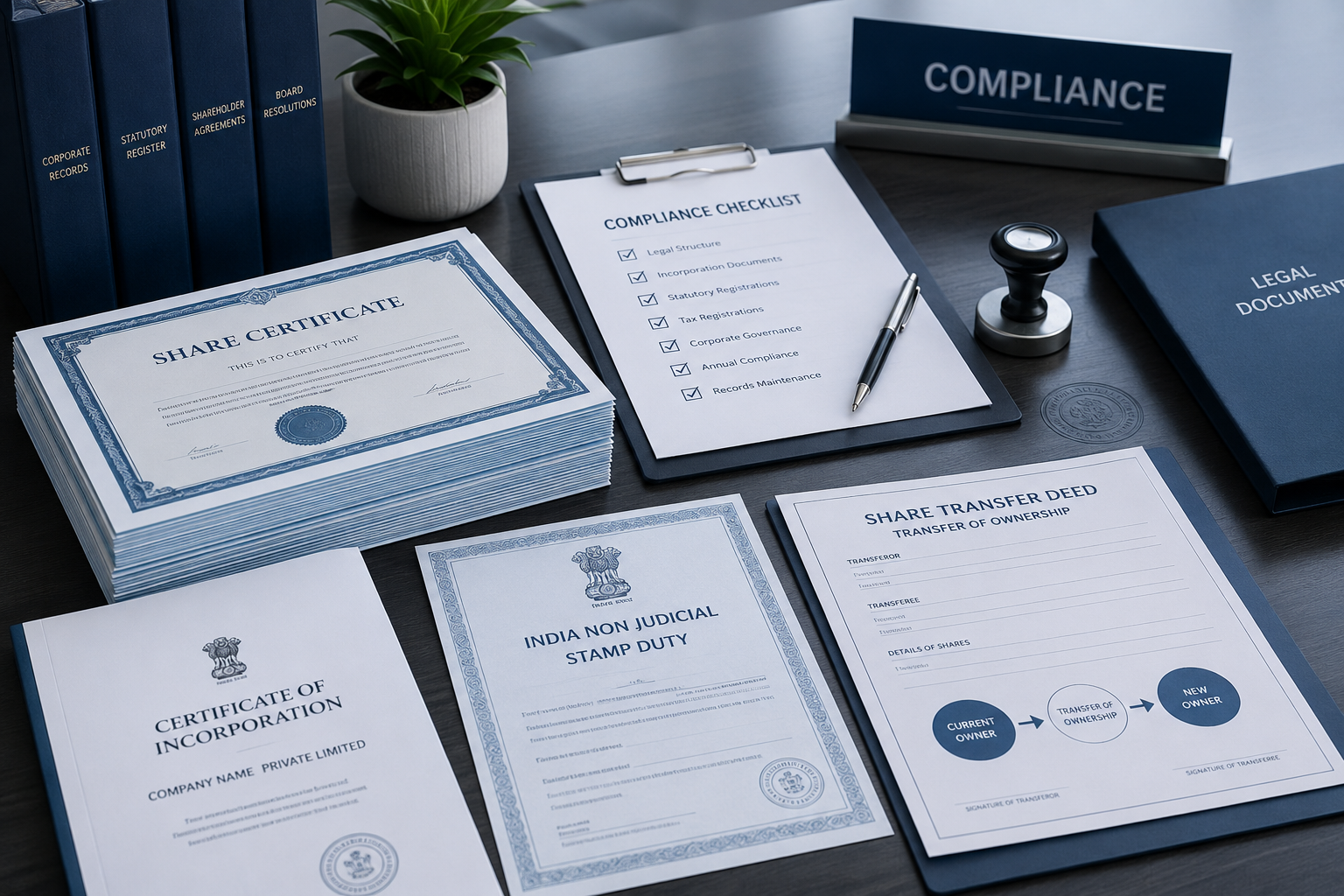
When Shares Are Normally Transferred in Private Limited Companies
Shares can be transferred in the following circumstances:
Founder Exit
The founder can choose to transfer all or some of the shares to other founders, shareholders, or any other person.
Investor Involvement
Shareholders normally sell shares to private investors, angel investors, or strategic partners.
Family Succession
The transfer of shares can be done as a part of the succession planning process, estate restructuring, or inheritance process.
Ownership Restructuring
It is common practice for companies to do share restructuring due to tax planning, governance considerations, or business restructuring needs.
Sale of Business Deals
In most business deals, the acquiring party does not buy the assets but the shares from existing stockholders.
Regardless of the reasons, the transfer has to follow legal provisions under company law.
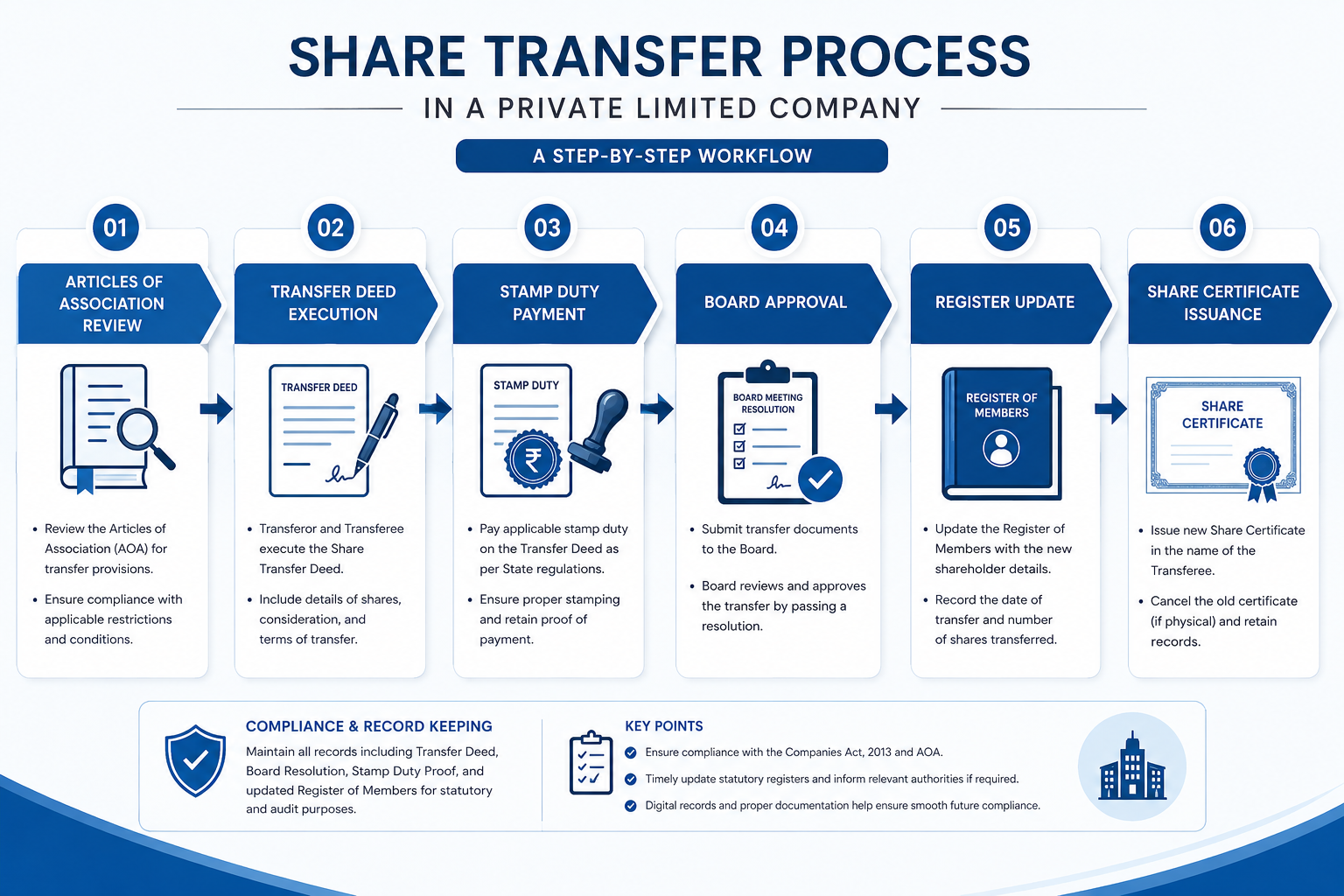
Share Transfer Process – The Sequence of Steps
The share transfer process that complies with all relevant Indian laws usually consists of the following sequence of actions:
1. Checking the Articles of Association
Ensure if any transfer restrictions, shareholder consents, or pre-emption rights exist.
2. Agreeing upon Commercial Parameters
Both the transferor and transferee must come to an agreement regarding:
- Nature and number of shares
- Consideration for the transfer
- Terms of payment
- Date of transfer
3. Sign the Transfer Document
Complete and sign the share transfer document (SH-4 form).
4. Pay Stamp Duty
Ensure stamp duty is paid for the document.
5. Lodging the Transfer Document
Submit the properly executed document along with other required documents and share certificate.
6. Consider the Request by the Board
Consider the transfer request and ensure compliance with the AoA and applicable law.
7. Approve the Share Transfer
A board resolution needs to be prepared approving the transfer.
8. Update the Statutory Records
Update all statutory registers accordingly.
9. Deliver a New Share Certificate
Issue a new share certificate to the transferee and cancel the old one.
This will allow you to make sure that the share transfer is legitimate and enforceable.
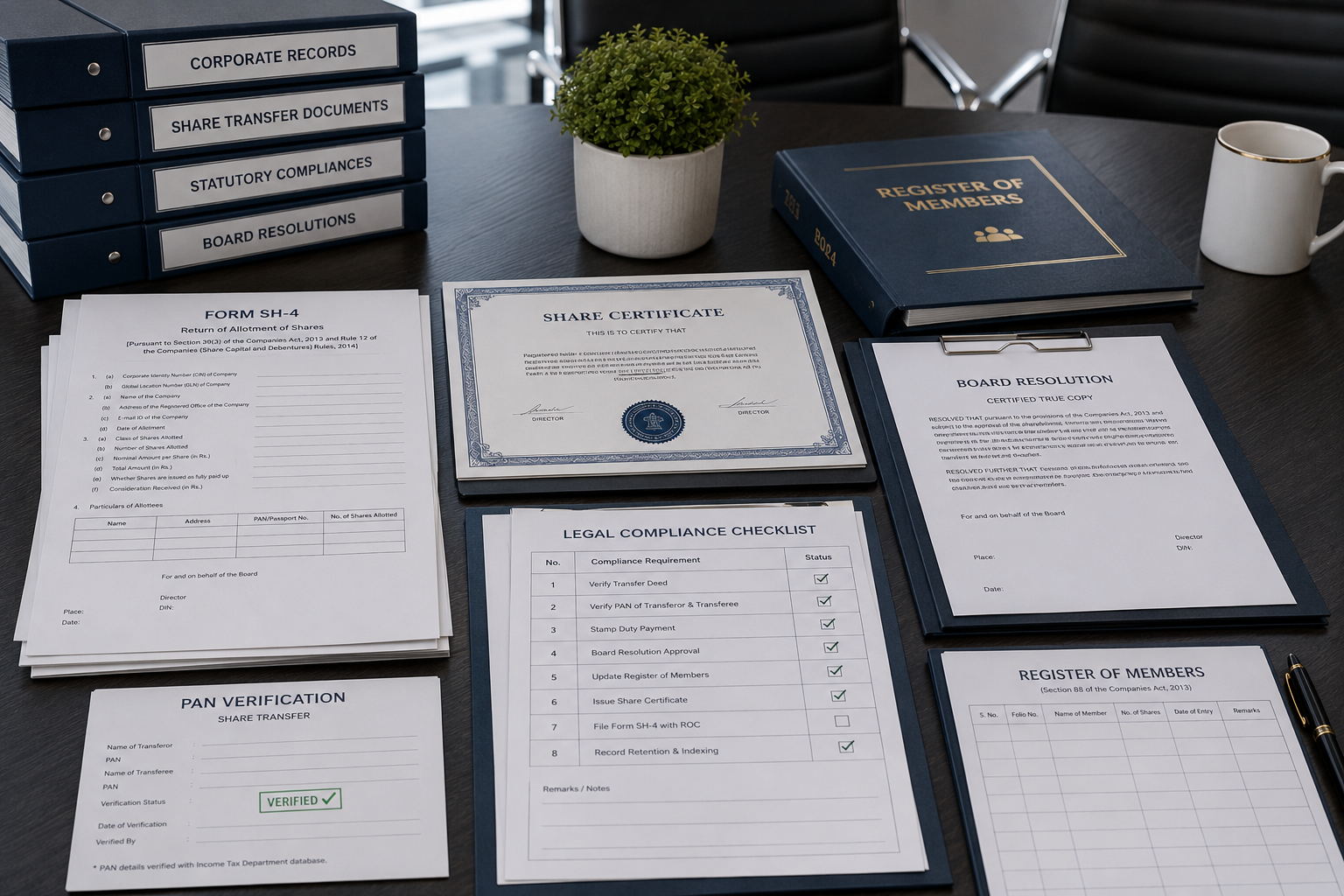
Share Transfer Documents Needed
Some common share transfer documents include:
| Document | Use |
|---|---|
| SH-4 Form (Share Transfer Deed) | Legal document that transfers |
| Share Certificate Copy | Evidence of ownership |
| PAN Details of Parties | Identification purpose |
| Share Purchase Agreement (If any) | Capture business terms |
| Board Resolution | Approval from board |
| Articles of Association | Verification of terms |
| Stamp Duty Payment Proof | Evidence of compliance |
| KYC Documents | ID & record maintenance |
| Gift Deed (In case of gift) | Documents related to gift transfer |
| Succession Documents (In case of transmission) | Legal documents that show proof of rights |
It is important to maintain the proper record keeping of such documents since these documents are often requested by the investor, lender, or acquirer at due diligence stage.
Board Approvals – One of the Areas Most Overlooked
One of the most neglected areas of share transfer documentation is the board of directors.
Even in cases when no specific provisions exist requiring share transfer by shareholder approval, companies must maintain:
- Meeting notice
- Resolutions from board
- Attendance register
- Statutory registers update
- Issuance records of share certificates
It is not uncommon that a company carries out a deal on the commercial side without ensuring proper corporation record keeping.
Later on, it results into serious problems when it comes to:
- Due diligence
- Bank financing
- Business acquisition
Stamp Duty on Share Transfer: Significance
Stamp duty is a mandatory requirement for every share transfer transaction in a private limited company.
In accordance with stamp duty requirements, transfer documents need to pay stamp duty at designated rates.
It is recommended that businesses consider:
- The duty must be paid prior to execution or filing.
- Documents with inadequate stamps may face difficulties in implementation.
- Lack of compliance could cause problems during audit and inspection.
Even though the amount of the duty might be insignificant, failure to pay it creates undue risk.
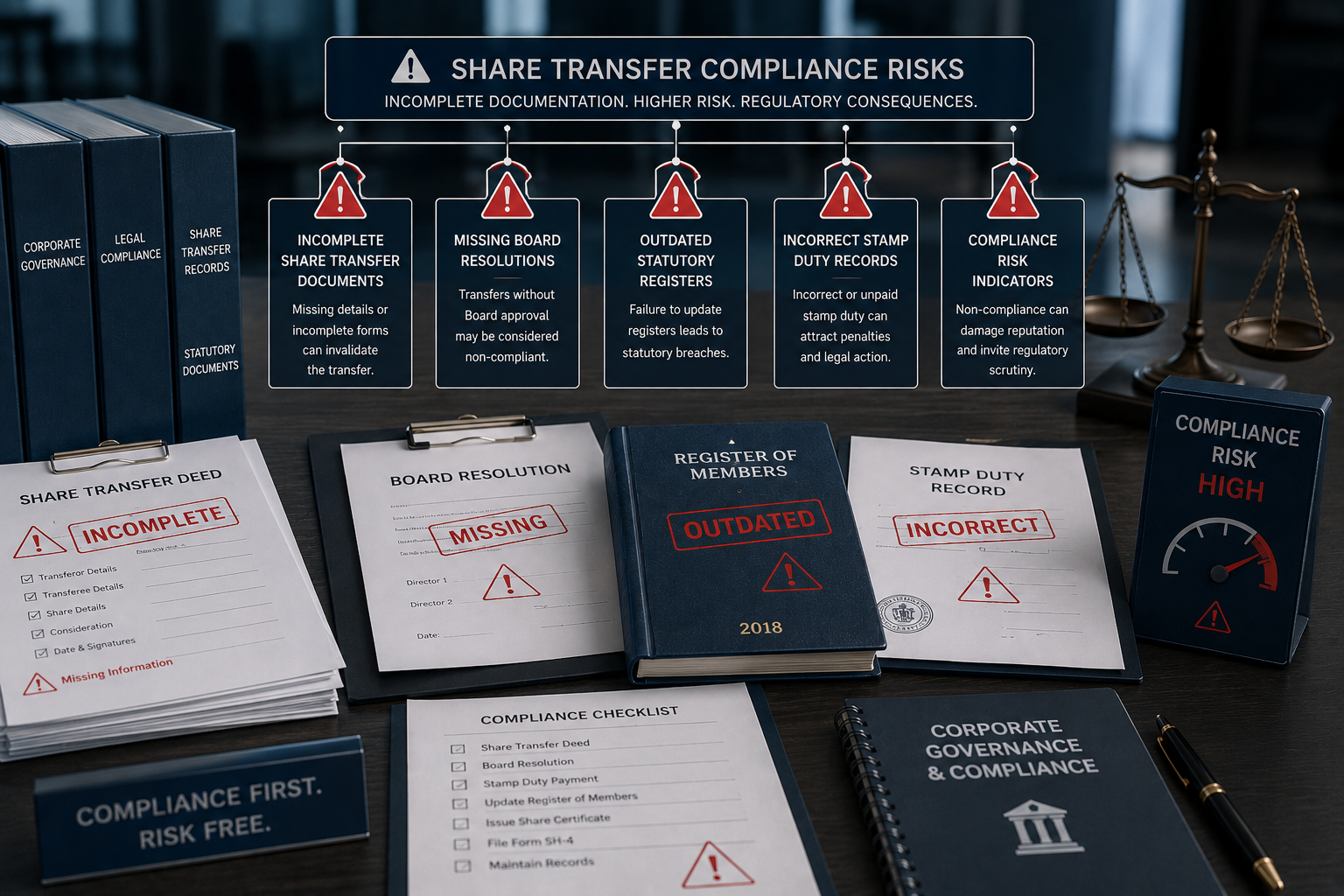
Common Errors in Shares Transfer Transactions That Lead to Future Non-Compliance Issues
| Error | Consequence |
|---|---|
| Neglecting AoA limitations | Disputes concerning validity of transfer |
| Inadequate SH-4 forms | Rejected transfer |
| No Board approvals | Diligence issues |
| Stamp duty non-compliance | Regulatory concerns |
| Failing to update Register of Members | Membership disputes |
| Loss/loss of share certificate | Transaction delay |
| Lack of valuation documents | Tax investigation |
| Poor record keeping | Investor concerns |
The majority of share transfer disputes do not occur due to transfer itself but due to improper documentation.