
WHEN SHIPMENTS ARE DELAYED: WHAT COMPLIANCE FAILURE REALLY MEANS
The shipment arrives on time at the port. The logistics work smoothly. Terms of payment are agreed upon.
But it doesn’t go anywhere.
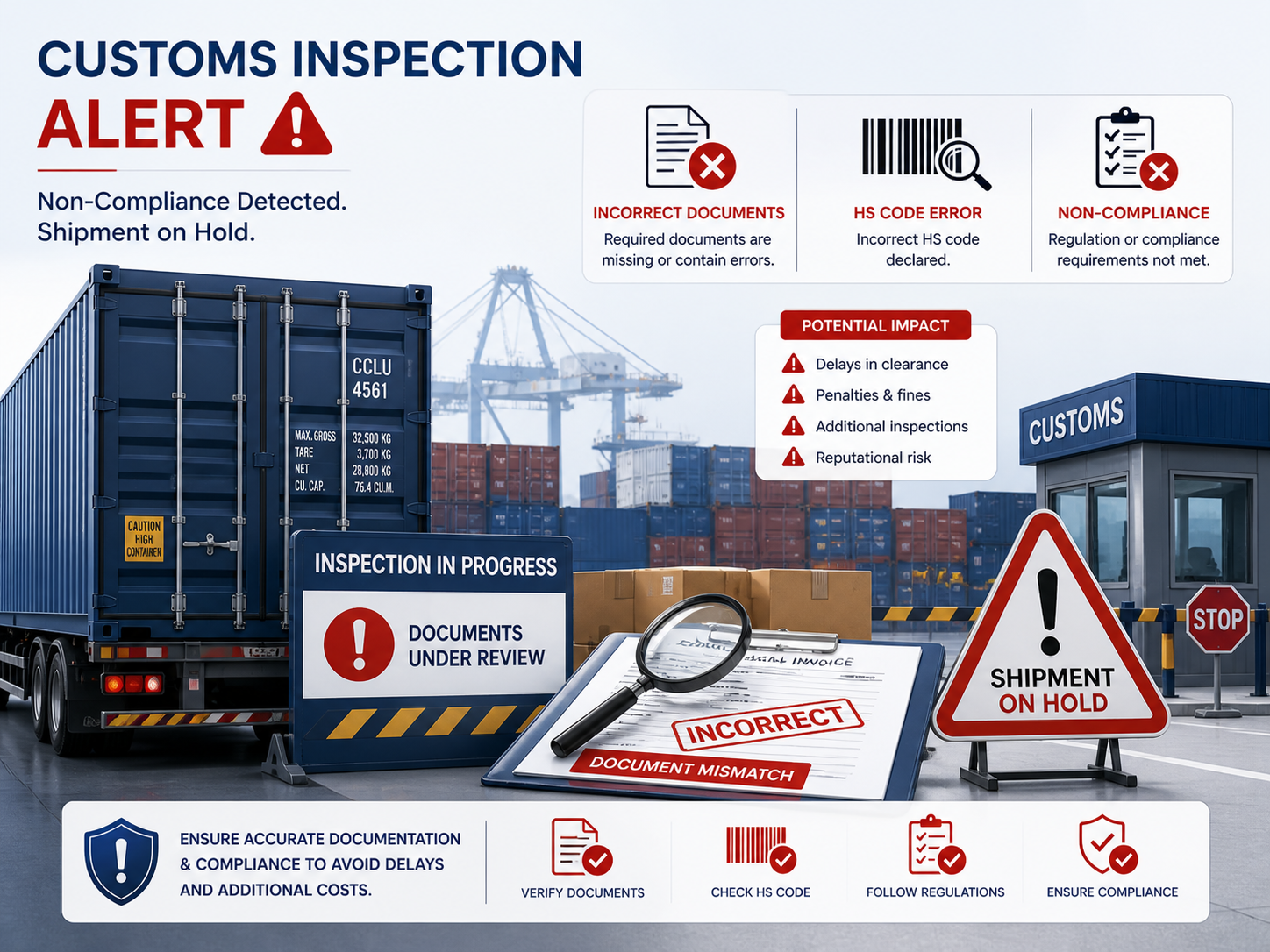
The customs authorities detain it.
There’s no clear reason for that at first. Just delays, mounting fees, and an irate buyer overseas.
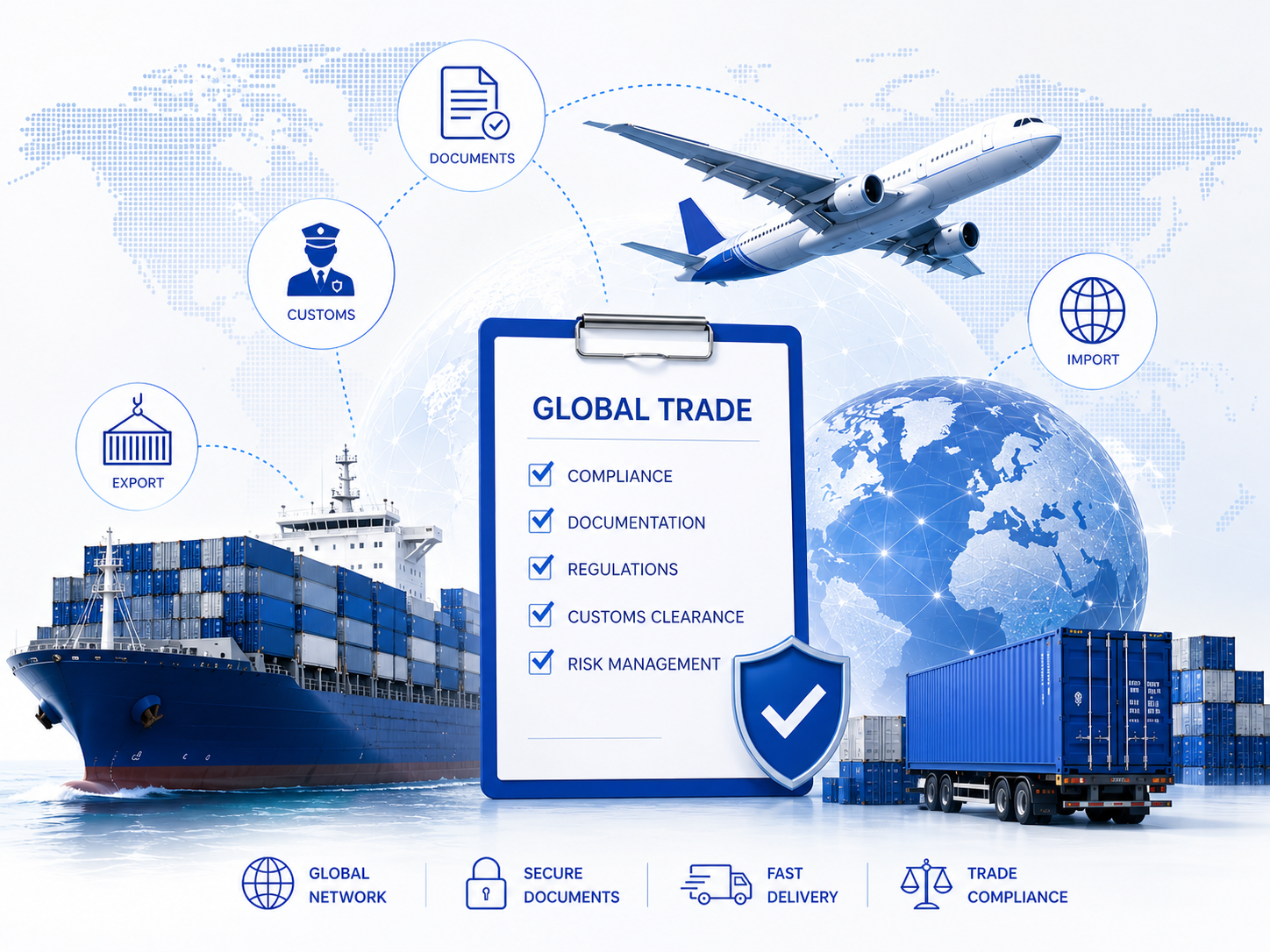
This is where import export compliance India becomes critical for businesses handling international shipments.
This, in the majority of cases, is due not to logistics but to non-compliance.
Common culprits are:
- The difference between invoice and declared value
- Wrong HS code
- Lack of current IEC data
- Incompleteness of paperwork
What are the consequences of this for companies?
- A 5-10 day delay (or more)
- Consequences in terms of money
- Loss of good name abroad
- Lack of working capital
All this can easily be avoided by taking compliance seriously.
IMPORT-EXPORT DOES NOT MEAN SHIPMENTS — IT IS A COMPLIANCE SYSTEM
The typical mindset within businesses goes like this:
“Once the shipments are done, it is all good.”
Actually, international logistics relies much less on movements than on precise documentation and compliance with rules.
Each shipment deals with:
- The DGFT system (IEC code, licensing)
- Customs system (ICEGATE filing)
- RBI rules (payment to foreign companies)
- The tax structure (linkage to GST)
Any small mistake can cause a problem for the whole transaction.
For that reason, the first step of many advisory companies is checking whether there is a proper documentation flow in place – since mistakes usually start at this stage.
IEC CODE: THE KEY TO INTERNATIONAL BUSINESS
The Importer Exporter Code (IEC) is the basis for any international commerce .
Why is it important?
- Necessary for importing and exporting
- Links your PAN and the bank account
- Must be in place for customs or banking purposes
No IEC means:
- You cannot file shipping bills and bills of entry
- No payments can be made abroad
- The whole process stops
Challenges in practice faced by companies:
- Bank linking problems causing validation failure
- Old information about the company
- Lack of annual updating
Many businesses face delays during IEC validation due to minor mismatches in bank or PAN details. In practice, firms like JackRabbit Consultants often resolve these issues early by structuring IEC applications correctly from the start.
Sometimes, even the smallest thing such as a name inconsistency between the bank and PAN causes trouble when validating.This is where structured guidance during IEC setup or modification becomes critical to avoid downstream issues.
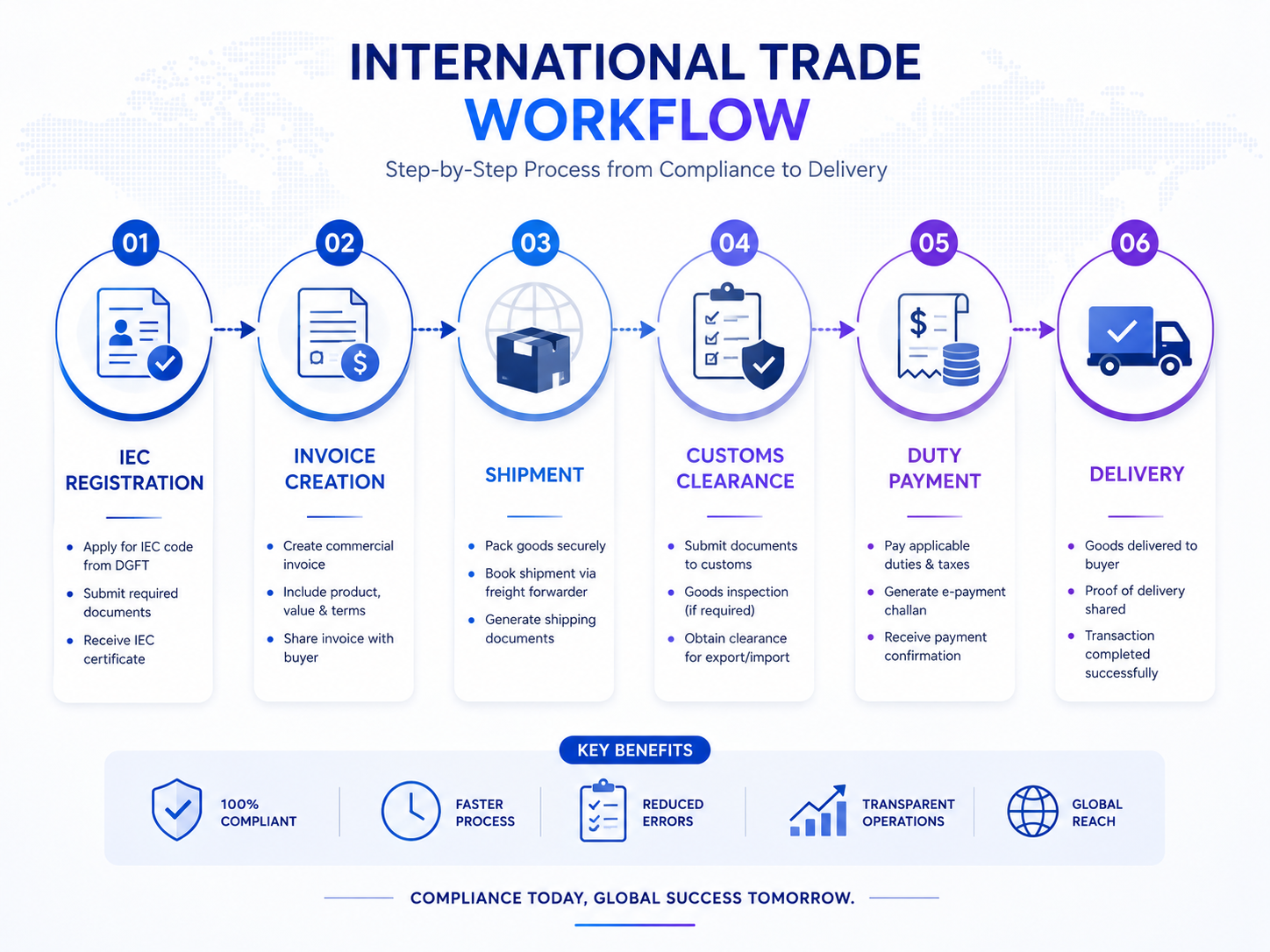
THE REAL WAY AN IMPORT-EXPORT TRANSACTION TAKES PLACE
Understanding the process eliminates the need to rely on assumptions.
Step-by-step process:
-
Issuance of IEC
o Identification of business in DGFT database -
Contract between buyer and supplier
o Negotiation of price and delivery terms -
Preparation of Invoice & Packing List
o Key documents for assessing customs -
Transportation of cargo
o By sea (Bill of Lading) or by air (Air Waybill) -
Customs Clearance
o Processing through ICEGATE -
Computation of Duty
o On the basis of HS code and valuation -
Release of shipment
o Authorization for delivery
At every point, the correctness of documents decides if the procedure goes uninterrupted or faces disruption.
DOCS THAT DECIDE IF YOUR SHIPMENT IS CLEARED
| Document | Reason |
|---|---|
| IEC | Identity for transactions |
| Commercial Invoice | Basis of value and duty |
| Packing List | Physical assessment |
| Bill of Lading / AWB | Evidence of cargo transportation |
| Shipping Bill | Declaration of goods |
Where businesses face challenges:
- Mistakes while copying information
- Contradictory descriptions of products
- Misvaluation of quantity or worth
Many growing businesses rely on external compliance support from firms like JackRabbit Consultants to build proper checklists, review documentation, and reduce operational risk.
Even a small discrepancy is enough to set off alerts in the customs system.
Businesses that adopt document verification procedures – often backed by expert advice – minimize customs clearance problems.
WHERE BUSINESSES FAIL IN CUSTOMS CLEARANCE
Usually, there are three key factors that cause customs delays:
-
Incorrect HS code
- Led to erroneous duty calculation
- Reassessment or penalties may follow
-
Misalignment between invoice and declared value
- Suggesting underinvoicing
-
Lack of proper documentation
- Lack of certificates or improper formats
The important take-away:
The system works on data. No guesses are involved—it detects discrepancies.
IMPORT COMPLIANCE: UNNOTICED PERILS IN THE BUSINESS PROCESS
Importers often overlook import compliance.
Some common issues:
- Incorrect duty calculation
- Buying prohibited products
- Errors in CIF value assessment
Resulting problems:
- Fine or penalty
- Detention of consignment
- Higher landing costs
These issues arise even before the cargo is shipped from the exporter – highlighting the importance of pre-shipment compliance checks.
EXPORT COMPLIANCE: MISTAKES BUSINESS OWNERS ARE MAKING
Export processes are thought to be easier because of zero rating.
This mistake ends up being expensive.
Typical mistakes include:
- Mis-declared exports
- Lack of LUT (making IGST payments unavoidable)
- Lack of coordination between GST and export documentation
Consequences:
- Refunds delayed
- Exposure to penalties
- Cash flow issues
It is essential that businesses make sure their documentation and GST or export filing is aligned for seamless financial management.
A REAL WORLD EXAMPLE: WHEN ONE SMALL MISTAKE HALTS THE WHOLE PROCESS
An exporting business sends shipments valued at ₹12 lakh.
Mistake:
- The invoice mentions ₹12 lakh
- The shipping document mentions ₹10.8 lakh
This is noted by customs.
Outcome:
- Process stopped
- Clarification needed
- Delay by 7 days
Consequences:
- Extra costs
- Displeased buyer
- Difficulties with operations
Such mistakes are very common—and can easily be avoided through a verification process.
COMMON NON-COMPLIANCE ISSUES THAT CAN RESULT IN FINANCIAL LOSSES
- Having wrong HS code classification
- Having missing or mismatching paperwork
- Failure to account for changing regulations
- Lack of coordination among departments
- Failure to update the IEC annually
- Having delayed export payment receipt
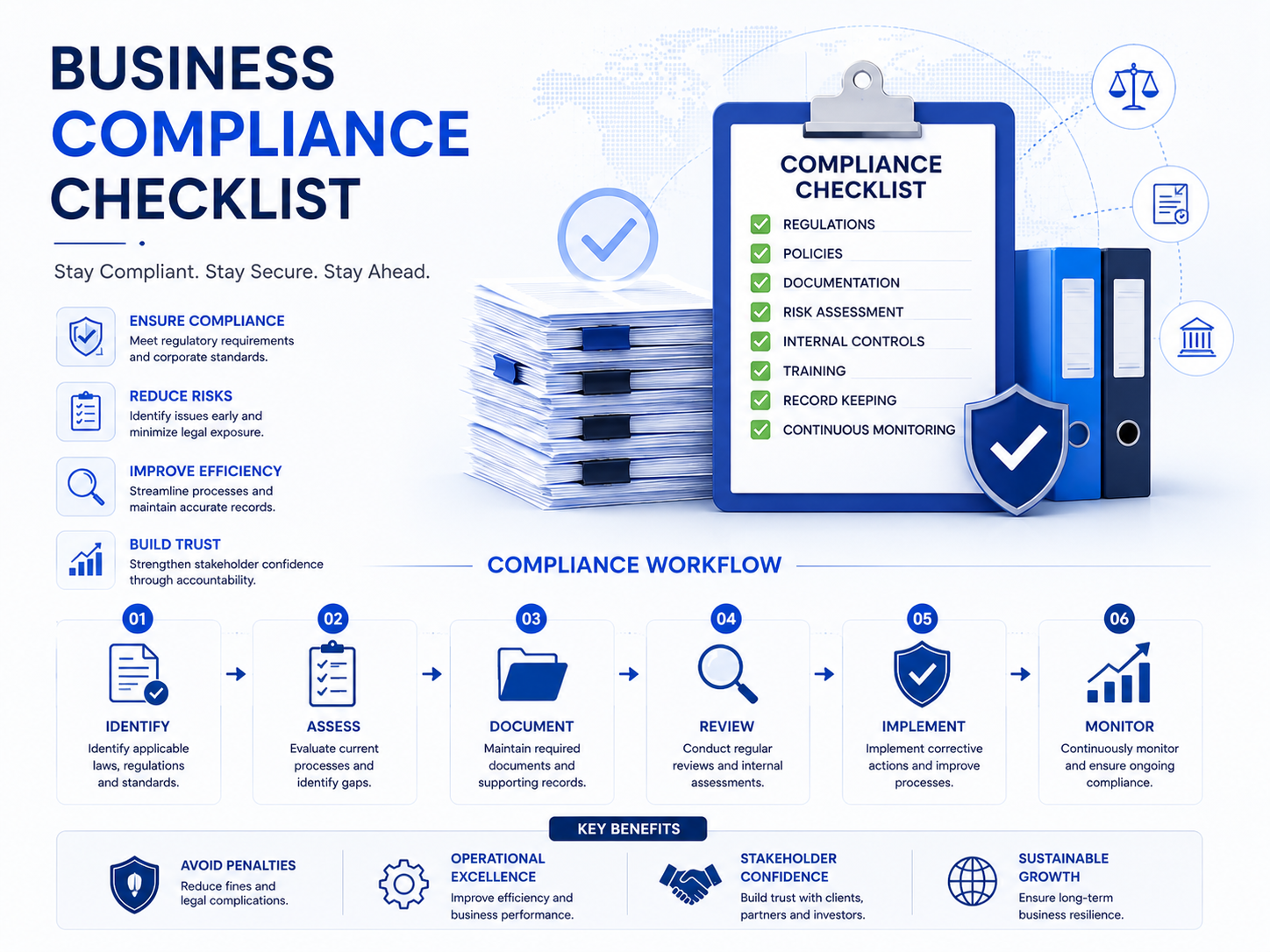
WAYS OF HOW BUSINESSES CAN AVOID THESE ISSUES
-
Document Verification
- Compare and cross-reference:
- Values
- HS codes
- Name and address
-
Compliance Check List
- Standardize procedures concerning:
- Import
- Export
- Documenting
-
Professional Review
- Hiring experienced individuals can assist in identifying risk areas in classification, valuation, and documentation.
-
Process-Focused Approach
- Looking at compliance as an entire process instead of as an activity to be carried out last minute.
Businesses that treat compliance as a structured process rather than a last-minute task significantly reduce financial and operational risks.
CONCLUSION
Import-export activities are not only about exploring foreign markets.
It also requires a streamlined process within regulatory authorities.
Companies that establish robust compliance procedures will:
- Prevent shipment delays
- Eliminate financial risk
- Ensure smooth operations
In international business, quality and consistency are superior to speed.