
Dormant Company Status: A Structured Alternative for Inactive Businesses
The new company starts off with high investor interest, employs a few employees, develops a product prototype – and funding issues start.
The pace of business slows down. Cash flow stops. The owners are no longer trading, yet they also don’t wish to wind up their entity due to potential revival in the future, talks with investors, or intellectual property considerations.
Here is when many directors make a common error.
Some neglect ROC registration completely believing that “an inactive business doesn’t need any compliance.”
Others hurriedly apply for a strike-off without comprehending the ramifications of liquidation for their company.
In actuality, India’s Corporate Law offers a methodical way for companies that wish to halt operations without having to abandon their entity: Dormant Company Status according to Section 455 of the Companies Act, 2013.

When Business Activity Stops — ROC Compliance Does Not
One of the biggest misconceptions among inactive companies is:
“If the company is not operating, ROC compliance automatically stops.”
That assumption creates major compliance exposure.
Even if:
- sales are zero
- employees are inactive
- bank transactions are minimal
- business operations are paused
…the company still legally exists under the Ministry of Corporate Affairs (MCA).
That means regular ROC obligations usually continue, including:
- annual financial filings
- annual returns
- director compliance
- penalty exposure
- late filing fees
Over time, inactive companies that ignore filings often accumulate:
| Compliance Issue | Business Impact |
|---|---|
| Pending ROC filings | Heavy additional fees |
| Non-compliance status | Director risk |
| MCA notices | Legal complications |
| Filing backlog | Expensive restoration |
| Strike-off proceedings | Loss of company existence |
The Benefits that Dormant Company Status Actually Provides
Dormant company cannot be called a “closed company.”
It is an existing company, protected by law, but with simplified obligations concerning its compliance needs.
According to the Companies Act, 2013, in accordance with Section 455, eligible and inactive companies may approach the ROC in order to get their dormant company status if:
- they do not have any ongoing business operations
- they wish to protect themselves legally
- they want to have a possibility to conduct business again in the future
- they wish to avoid having too much extra paperwork
Business Advantages of Dormant Status
On the business side, dormant status will help companies to:
- maintain their corporate identity
- stay owners of their company name
- preserve their structure of intellectual property
- stop facing full-year compliance efforts
- have an option to restart their business in the future
Who Usually Benefits the Most?
Such a solution is especially helpful for:
- ongoing startups
- potential investment platforms
- holding companies
- restructuring companies
- dormant subsidiaries
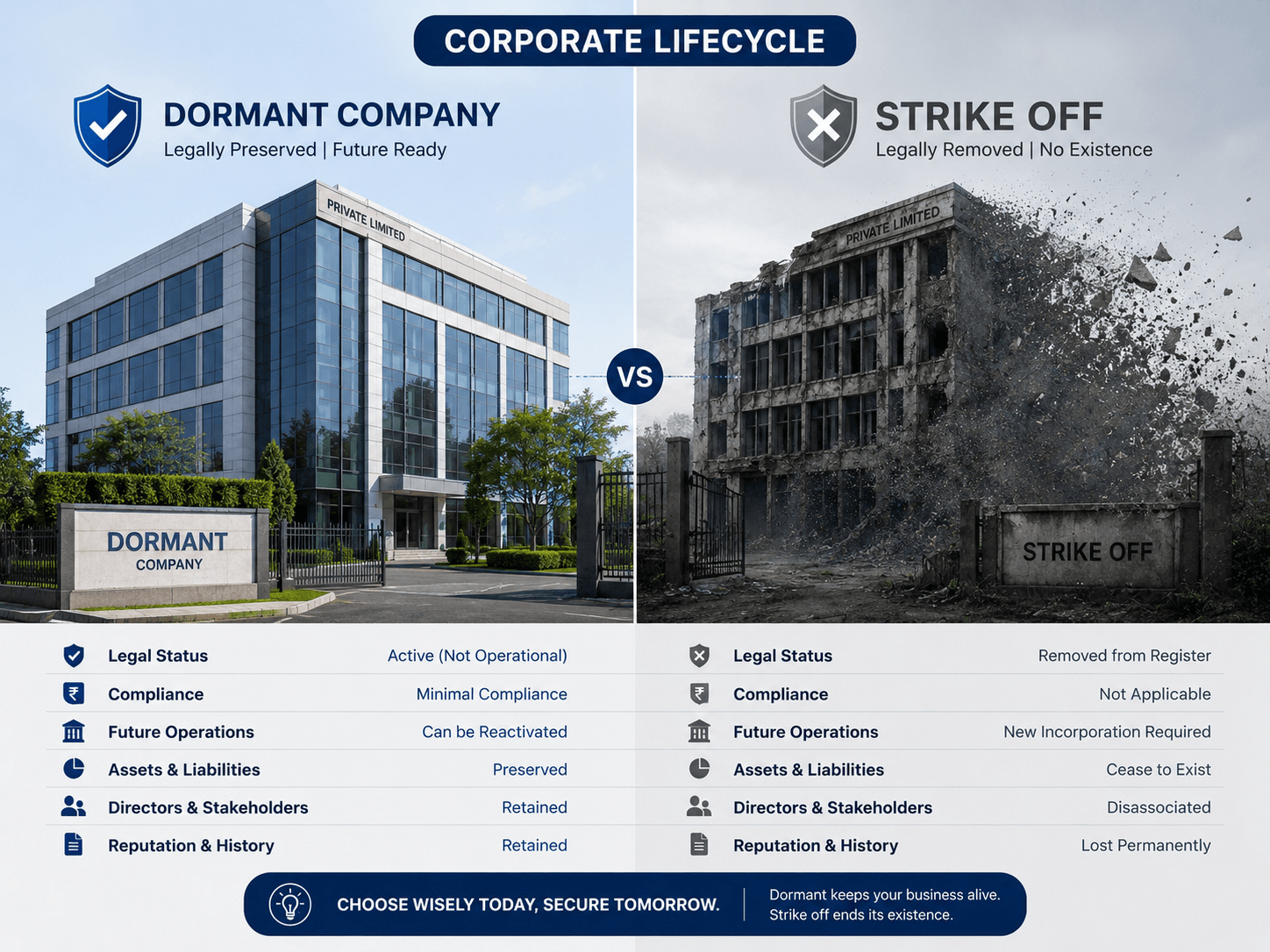
Dormant Company v. Strike Off: Two Completely Distinctive Paths
There are many entrepreneurs who wrongly perceive the two terms as synonymous with each other.
This is not the case.
| Parameter | Dormant Company | Status as Strike Off |
|---|---|---|
| Legal entity | Company remains | Company dissolves |
| Register of Companies | Registered in dormant companies register | Company removed from ROC |
| Restarting the business | Possibility at any time after activation | Requiring restoration or a new setup |
| Obligations | Minimized ongoing compliance | Compliance terminated after dissolution |
| Corporate identity | Intact | Lost |
| Future financing options | Retained | Lost |
| Holding assets/IP | Possibility | Impossible |
| Liabilities to Directors | Continued | Terminated after closure process |
In cases where revival might be considered in the future, the former is preferred over winding down.
Cases When a Business Would Prefer to Have the Status of a Dormant Company
A dormant company is not something reserved only for failed companies.
It serves many purposes in many cases.
Businesses That Are Still Underfunded
A business could have stopped its operations due to failure to receive enough funds during the planned funding rounds, yet it would still need to maintain:
- company structure
- shareholding structure
Expansion Plan Postponement
Companies venturing into new states or industries may form firms before starting their operations.
Dormancy is a useful strategy for retaining the firm without paying hefty annual compliance fees.
Idle Subsidiaries
Corporate houses often retain subsidiaries for potential restructuring or investment purposes.
Operational Halt
Some firms choose to halt their operations temporarily due to:
- regulatory delays
- legal disputes
- economic recession
- internal restructuring
Dormant company status will allow continuity without dissolution.
Who Can Apply for Dormant Company Status According to ROC Rules?
According to Section 455 and the Companies (Miscellaneous) Rules, 2014, firms can apply if they fulfill certain conditions.
Basic Criteria for Dormant Company Application
The company must ideally:
- not be engaged in any considerable accounting activities
- not be conducting active business
- not be undergoing any inspection or investigation
- not have outstanding statutory dues
- not have been filing defaults extensively
- not be listed on any stock exchange
Criteria of Inactive Company
Inactive companies are generally those firms which:
- have not conducted any business operations for at least two consecutive financial years, or
- have not engaged in considerable accounting activities
For dormancy, the ROC needs to approve the application.
Actual ROC Procedure for Dormant Company Registration
This process follows a more formalized procedure provided that there are no problems with filings and other documentation.
The directors approve the motion relating to dormant company registration.
There must be a special resolution from the shareholders.
To make the application, the companies typically have to:
- Fulfill their outstanding obligations
- Solve the issues related to statutory dues and liabilities
- Cure the default status before registering
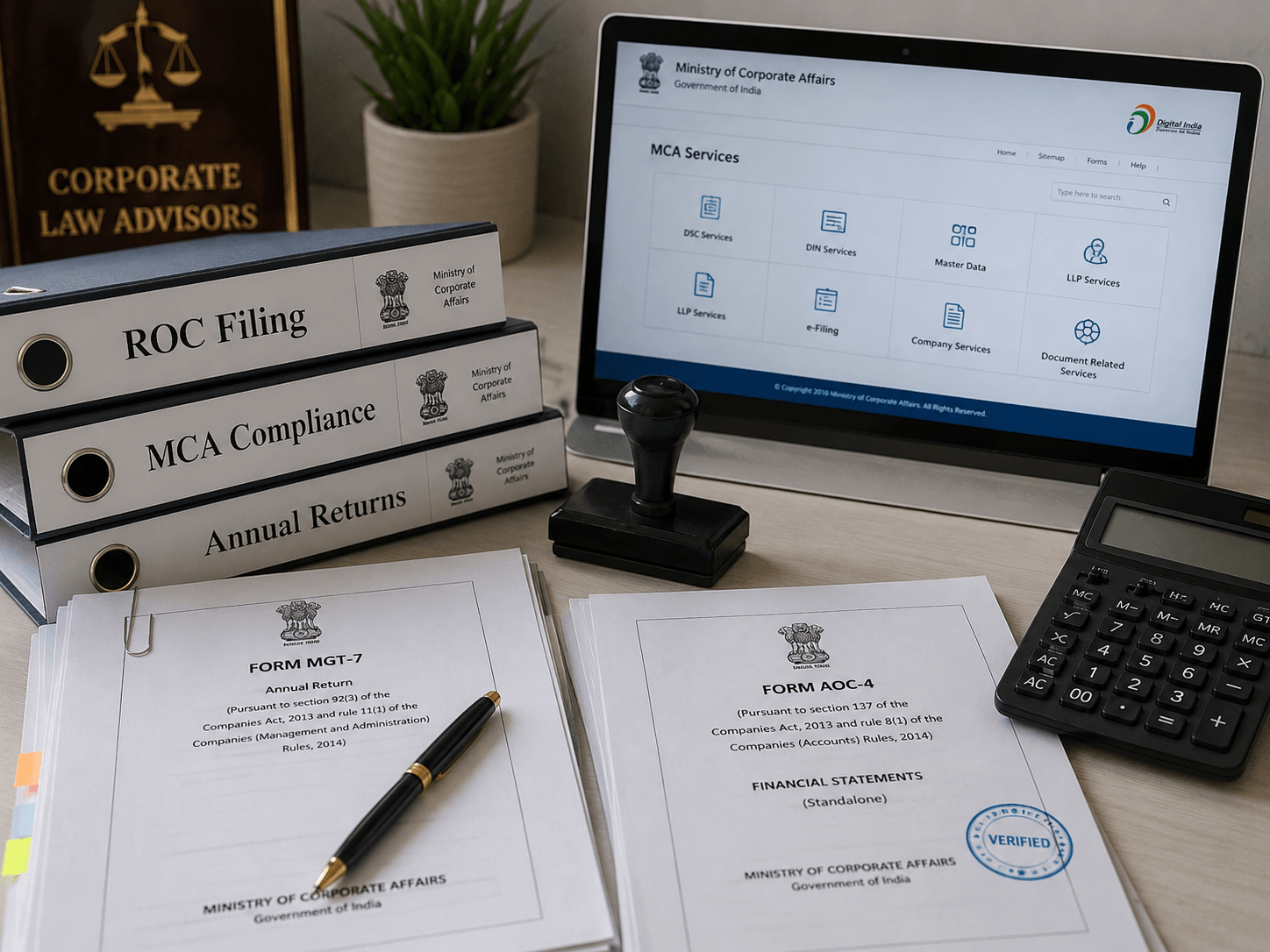
The companies file e-Form MSC-1 at the Ministry of Corporate Affairs.
Provided everything is in order, the ROC grants approval as a dormant company and registers it on the dormant list.
Financial Risks That Are Ignored By Businesses With Dormant Companies
Business owners often fail to appreciate the risks involved with partial compliance.
Dormant company registration should not be considered a “set and forget” process.
Common Financial & Legal Risks
This is the most frequent issue.
Even failing to file returns on dormant companies may lead to:
- penalties
- fees
- strike-off proceedings
Inactive companies tend to ignore:
- notifications via email
- direct communications between directors
- compliance notifications
This poses the risk of escalation.
Outstanding:
may hinder dormant company status.
An inactive company is not necessarily a dormant company. Without proper registration, regular ROC compliance must continue.
Risks Involved If a Business Remains Inactive But Not Dormant
Here, founders find themselves facing unnecessary compliance challenges.
In case a business stays inactive without registering as a dormant company, prolonged compliance issues will persist.
Additional filing costs under MCA rules can grow significantly.
Director Disqualification Risk Heightened
Continual breaches of filing obligations may affect directors as per Companies Act compliance requirements.
Backlogged compliance costs may increase significantly when reviving non-compliant companies compared to maintaining dormant compliance from inception.
The ROC may initiate strike-off procedures in cases of prolonged non-compliance. After striking off, restoration becomes legally and financially complex.
Reasons Why Certain Businesses Opt for Dormant Status Over Strike-off
Let us take an illustration.
Imagine a tech startup registered in 2024 that releases its first SaaS product.
By 2026, the following occurs:
- investment talks stall temporarily
- the startup ceases all activities
- core staff members leave
- revenue drops to zero
Nonetheless, the founders wish to maintain:
- product intellectual property rights
- corporate name
- investment structure
- flexibility for eventual relaunch
They achieve the following by doing so:
- lessen compliance obligations
- retain the corporation legally
- resume operations through company activation
From experience, many companies find professional analysis by advisory firms such as JackRabbit Consultants useful in deciding between dormant status or strike-off procedures based on future intentions.
How Dormancy Facilitates Business Sustainability
The dormancy state may be more about future flexibility than current inaction.
Maintaining the Brand Identity
The incorporated brand identity might be known in the market or associated with trademarks.
Preserving the Organizational Structure
The firm may maintain its:
- SHAREHOLDER STRUCTURE
- BOD STRUCTURE
- INCORPORATION CONTINUITY
- HISTORICAL EXISTENCE
Ease of Future Re-Acquisition
When compared to establishing a new business later, the reactivation of a dormant business might prove simpler.
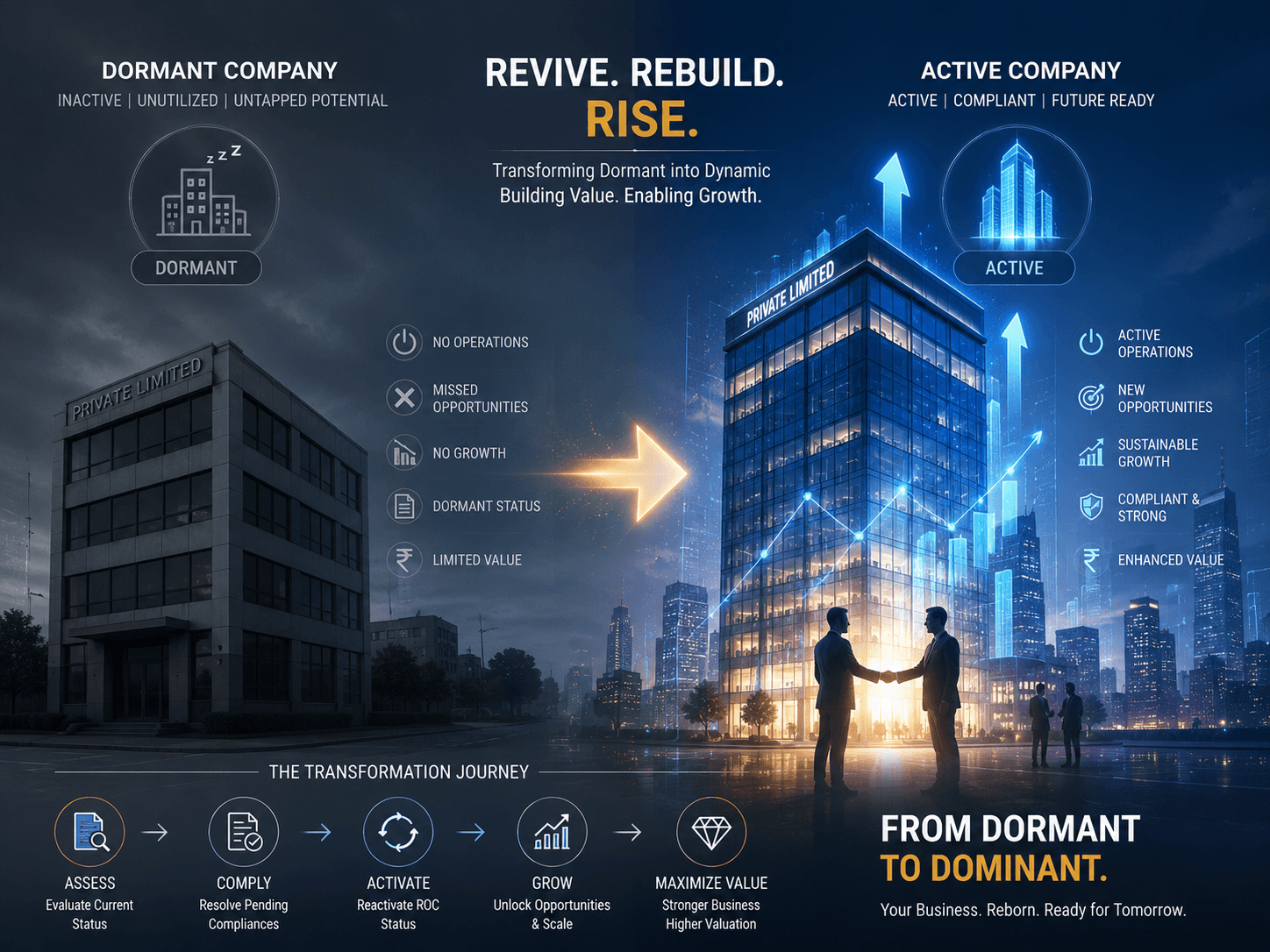
Strategic Decisions for Dormant Company Compliance in 2026
Not all dormant companies should be wound up straight away.
In many instances, the designation of a dormant company offers a systematic approach to maintaining the corporate structure without placing undue compliance burden or cost.
But the designation of a dormant company can only be useful where organizations know:
- the criteria involved
- REOC requirements
- duty to file
- revival process
- compliance challenges ahead