
Payroll Compliance Is No Longer Just Salary Processing
Salaries are processed each month in minutes.
However, many organizations find their payroll issues months later during an EPFO audit, income tax notice, employee resignation issue, or financial audit.
A young organization can process its payroll accurately from an operational perspective, but still be affected by:
- pension fund delay
- ESIC applicability mistake
- salary TDS mismatch
- non-compliant salary structure
- wrong payroll entries
The loss is rarely immediate.
Instead, it occurs gradually from:
- interest accruals
- department fines
- employee grievances
- tax issues
- compliance notices
Payroll compliance for India’s future in 2026 is no longer limited to human resources operations. It affects taxation, legal compliance, audit preparation, and risk management.
Payroll Is Not Only HR Activity – It Is a Financial Compliance Process
Many small and medium-sized organizations are considering payroll compliance as an operational task.
In actuality, the truth is entirely different.
Every time a salary is paid, many statutory responsibilities arise concurrently:
- PF contributions
- ESIC eligibility
- Salary tax deductions
- Payroll processing
- Employee tax filing
- Statutory document retention
Processing payroll will impact the following areas financially:
| Area of Payroll | Financial Implications |
|---|---|
| PF deduction | Liability of the statutory |
| ESIC contributions | Conformity to social security |
| TDS on salaries | Liability of income tax |
| Payslips | Accounting and proof for employees |
| Payroll documents | Legally and financially compliant |
| Salary structure | Liability of taxation for long term |
Payroll discrepancies can only be detected when:
- Employees complain about discrepancies
- Auditors ask for the documents
- Tax authorities scrutinize
- Organizations apply for fund-raising or due diligence
That is the reason why many organizations are now treating payroll compliance India guidelines as financial compliance instead of HR compliance.
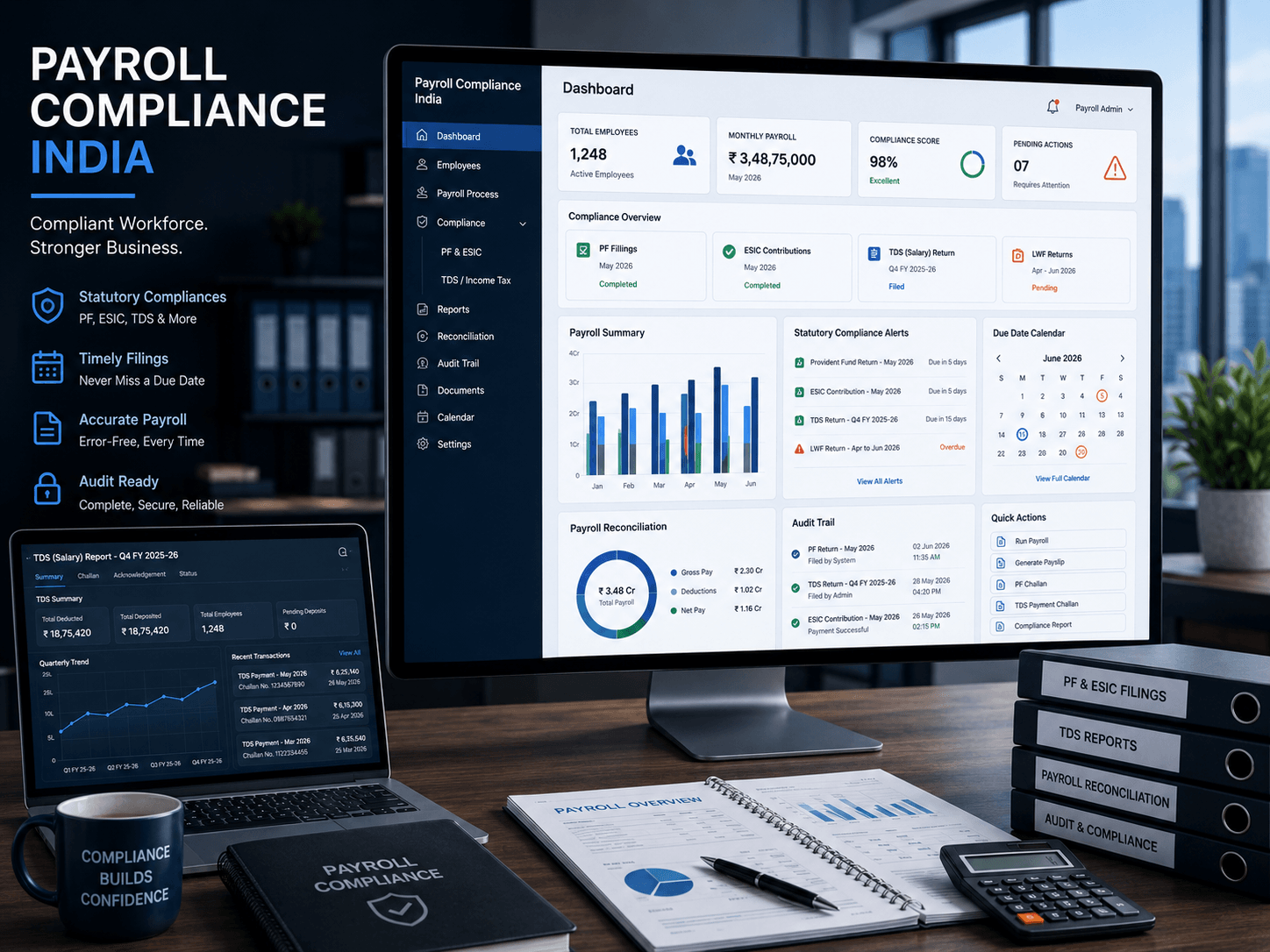
Learning about the Core Payroll Compliance Requirements
In India, payroll compliance takes place within several legal frameworks at one point.
Core Components of Indian Payroll Compliance
| Component | Compliance Purpose |
|---|---|
| PF (EPF) | Retirement benefits for employees |
| ESIC | Medical insurance for employees |
| Salary TDS | Tax deduction compliance |
| Professional Tax | Local employment tax |
| Payslips | Evidence of salaries paid |
| Payroll Registers | Statutory auditing purposes |
| Form 130 | Filing of employee tax returns |
| Salary Structure | Optimization for taxes/statutes |
Organizations often do wrong not because they have missed some legal framework, but because payroll calculations require compliance with more than one law at a time.
For instance,
- The salary structure that lowers PF can lead to liabilities to the EPFO later on.
- HRA calculations could cause inconsistencies in TDS deductions.
- Inefficient policies concerning reimbursements will get caught up in tax audits.
Systems that evaluate payroll processes from the perspective of professional compliance help organizations recognize such inconsistencies. Many expanding organizations outsource their compliance needs to firms such as JackRabbit Consultants.
PF Compliance: Where Most Start-Up Firms Fail
What Makes PF Compliance Hazardous?
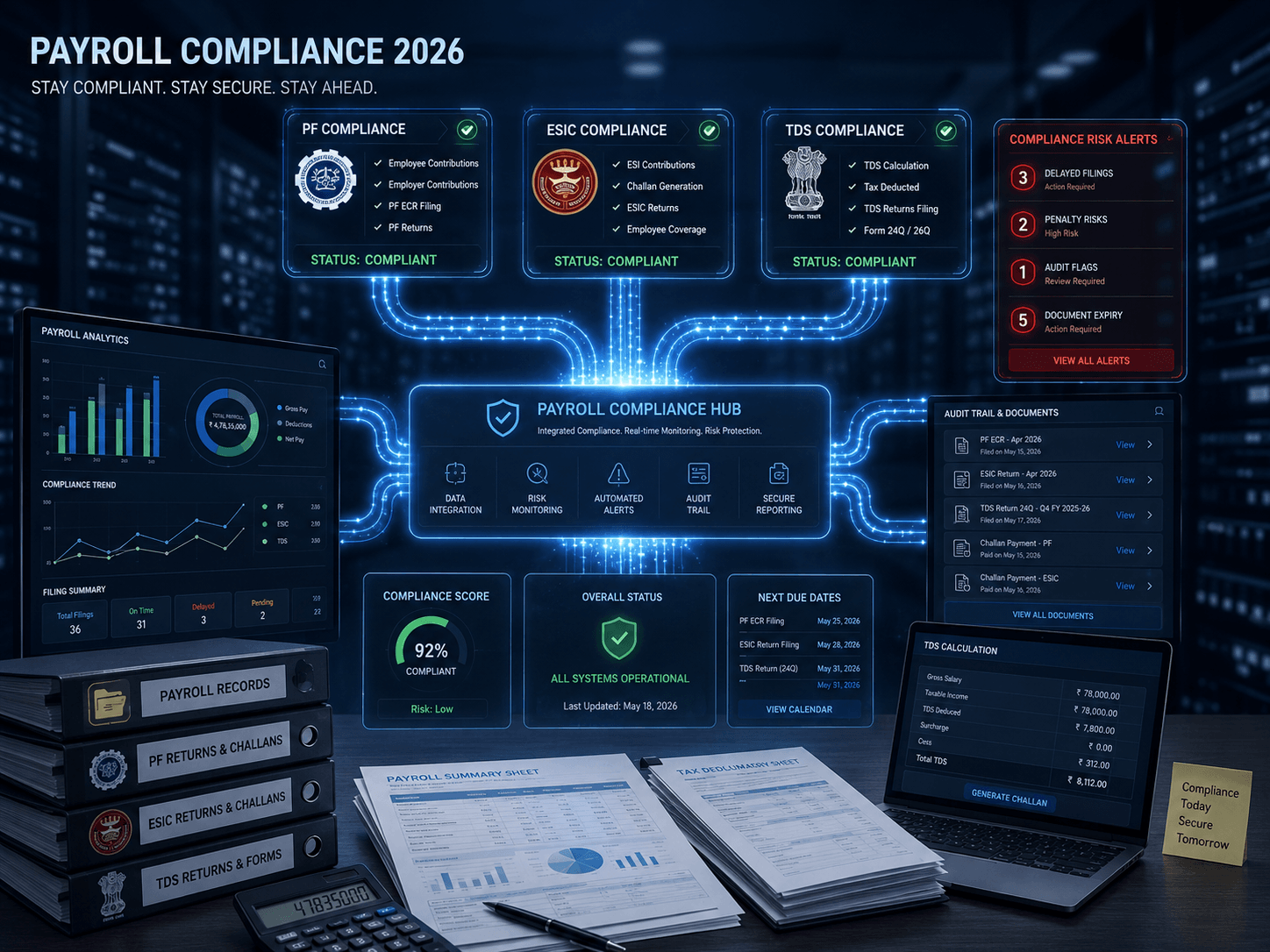
As per the EPF scheme, qualifying organizations are expected to:
- Be registered in EPFO
- Deduct employees’ PF contribution
- Contribute employer’s PF
- Submit their ECR report each month
- Maintain employee details meticulously
This does not mean that firms are deliberately not complying with regulations.
The actual problem lies in wrong payroll management.
Typical Errors in PF Compliance
| Error in PF | compliance risk |
|---|---|
| Delayed contributions | Interest & penalty |
| Basic salary structure wrong | PF obligations |
| Omitting qualifying employees | Back payment |
| Improper wage calculation | EPFO litigation |
| Misclassifying contractor employees | High compliance notices |
Contributions towards PF are typically tied to the calculation of basic wages and DA.
Companies are known for their attempts to minimize legal obligations by manipulating figures for basic salary and allowances.
They expose themselves to future risks.
Practical Risk
A company would be able to cut down on PF costs through such practices for a while.
But if the EPFO were to inspect, it might end up with the company having to pay for:
- past due PF contributions
- interest on delayed payments
- penalties
- compensation
Such situations arise more frequently with fast-growing startup organizations.
Common ESIC Compliance Issues Companies Overlook
Compliance with ESIC requirements takes a lower priority when compared to PF or TDS.
Still, non-compliance issues related to ESIC can disrupt business operations significantly.
Common ESIC Compliance Issues
- inadequate tracking of employee eligibility
- delays in registering for ESIC
- failure to deposit ESIC monthly contributions
- not updating payroll systems about wage thresholds
- incorrect designation of employees
Where Companies Fail Operationally
It’s not unusual that within some companies:
- the process of maintaining payroll is manual
- HR and accounting departments do not coordinate
- salaries are revised without updating the system
As a consequence, employees who qualify for ESIC benefits could stay outside of coverage.
Risk Factors for Employers
| Risk Factor | Result |
|---|---|
| Non-Registration | Warnings from the department |
| Late Payment | Consequences and interest |
| Failure of employee cover | Back payment demands |
| Inappropriate salary reporting | Compliance problems |
Companies running factory, warehouse, retail, and labour intensive business models face increased ESIC scrutiny owing to their employee size and turnover.
Tax Problems Caused by Small Salary TDS Mistakes
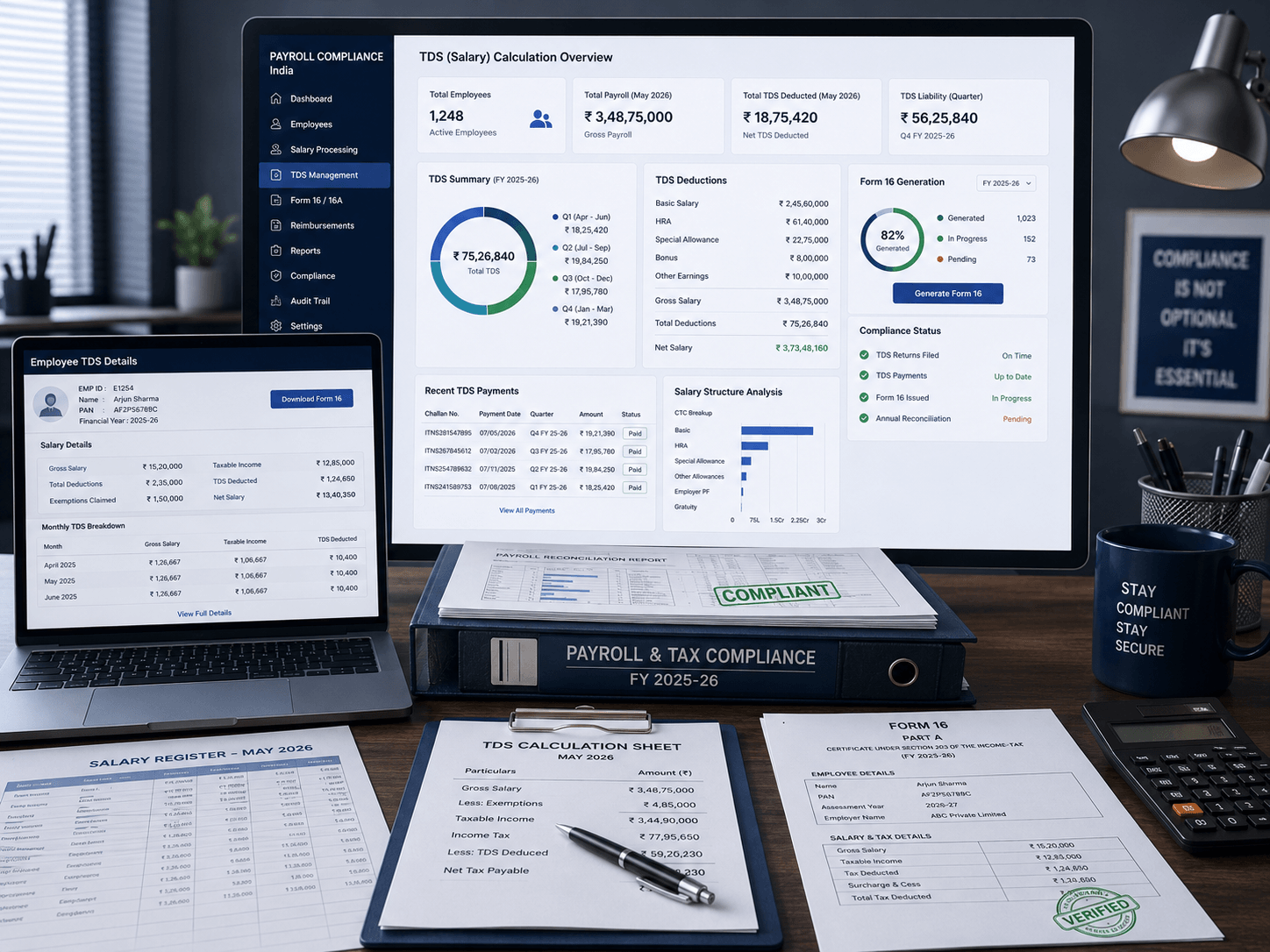
Salary TDS errors constitute the most prevalent payroll compliance challenges in India.
It hardly ever involves an absence of the tax amount.
It is rather about incorrect computation.
Common Salary TDS Errors
| Error | Consequence |
|---|---|
| Tax Slab Calculation Error | Disputes among employees |
| Delaying the deposit of TDS | Consequences and interest |
| Failure to apply correct exemptions | Tax warnings |
| Discrepancies in Form 16 | Error while filing taxes |
| Inaccurate PAN details | Failure in returning |
2026 Payroll TDS Rules Businesses Need to Monitor
Income-tax Act restructuring for April 2026 will lead to changes in many procedural and reporting references.
Most payroll software systems would require:
- salary TDS rule updates
- returns workflow changes
- reporting format revisions
- compliance map modifications
Outdated payroll systems can cause inconsistencies with filing.
How Wrong Salary Structures Cause Compliance Issues in the Future
It is one of the payroll matters that get easily ignored.
A salary structure might be tax effective in the beginning, but it will cause statutory compliance challenges in the future.
Salary Structure Pitfalls
Unfeasible Allowances
Allowances may be too high and have very low basic salary structures.
Faulty Reimbursements
Without documentation, reimbursements are taxable risks during the assessment process.
Lack of Documentation
Tax breaks given by businesses usually do not have supporting documents.
Misinterpretation of Salary Components
Incorrect calculation of:
- HRA
- LTA
- reimbursements
- variable pay
- special allowances
may lead to TDS issues regarding salaries in the future.
Payroll compliance in 2026 needs to use payroll systems based on documentation rather than salary calculations.
Consequences of Ignoring Payroll Compliance
Non-compliance with payroll compliance usually does not result in shutting down a business immediately.
It results in financial leakage.
Financial Consequences
- Interest Liabilities
- Statutory Penalties
- Retroactive Recovery Demands
- Audit Qualifications
- Tax Disputes
Operational Consequences
- Employee Dissatisfaction
- Confrontations on Resignation
- Delayed Due Diligence
- Equity Investor Concerns
- Compliance Backlog
Impact on Company Repute
If employees come to know:
- PF Deposits are missing
- Form 130 Details are incorrect
- Inconsistencies in Salary Deductions
trust falls apart very quickly.
It becomes highly unfavorable for start-ups and scale-ups looking for talented employees.
Case Study: A Business Reality of Ignoring Payroll Compliance
A small start-up with only 18 employees starts its payroll manually using Excel Sheets.
As it hires rapidly, the following consequences arise:
- Salary Structures Become Inconsistent
- PF Deductions are Delayed
- ESIC Eligibility is Overlooked
- TDS Calculation Approximates
Initially, there are no issues.
But eventually,
- an employee leaves and verifies their PF record
- difference is found
- grievances are forwarded to the authority
- non-compliance notices are issued
In such scenarios, the firm needs to:
- Reconcile Old Payroll Entries
- Calculate Retroactive Liabilities
- Conduct Interest and Damage Payments
- Deal with Employee Issues Simultaneously
All these operational challenges far exceed the initial cost of compliance.
That’s why most expanding companies conduct payroll audits systematically under the guidance of consultants like JackRabbit Consultants.
Wherein Manual Payroll Processing Systems Become Unfeasible?
A manual payroll processing system may be feasible in the case of smaller teams.
However, payroll complexity escalates more rapidly than the number of employees.
Payroll Processing via Spreadsheets: Issues
| Issue of Manual Payroll | Systemic Issue of the Process |
|---|---|
| Miscalculations in formula calculations | Erroneous deductions |
| Failure to meet deadlines | Legal penalties |
| No audit trails | Disputes arising from noncompliance |
| Scattered documents | Dissimilarities among the data |
| Manually updating the taxes | Illegally processed Tax Deduction at Source |
The Scaling-Up Problem
When an organization scales up,
- there are multiple salary adjustments,
- increasing compliance dates,
- a variety of employee classification, and
- complex statutory reporting.
At this level, the payroll processing system turns into a finance management system.
How to Create a Compliant Payroll System?
A good payroll system stresses consistency, reconciliation, and documentation.
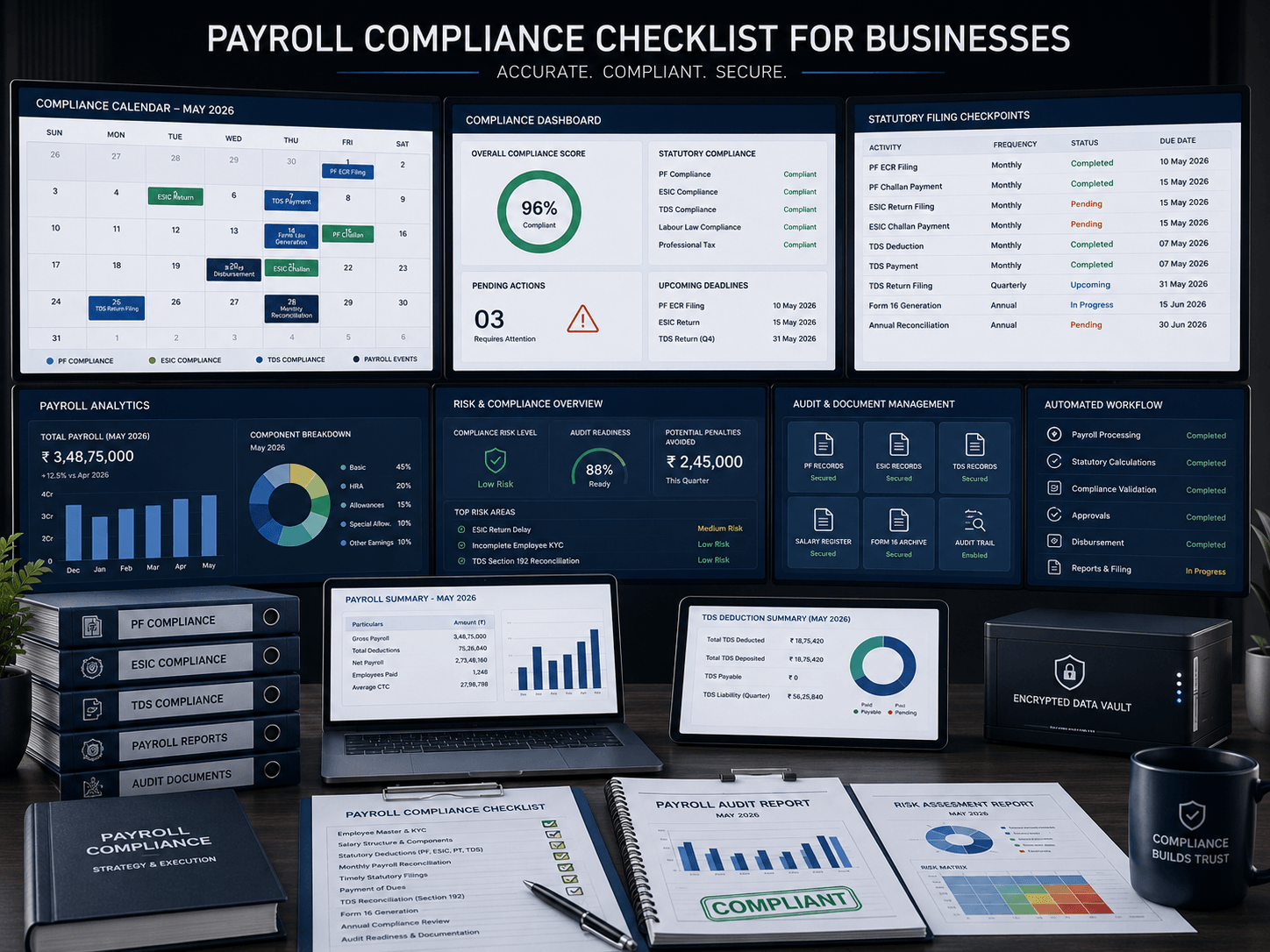
Checklist for Practical Payroll Compliance For Businesses
1. Keep Payroll Compliance Schedule
Monitor:
- dates to pay PF
- dates of ESIC filing
- TDS deposits
- returns quarterly
- issues of Form 130
2. Do Month-end Payroll Reconciliation
Reconcile:
- payroll compliance and bank entries
- payroll compliance and statutory deductions
- payroll compliance and returns filed
3. Ensure Salary Structure Is Not Aggressive
4. Document Properly
Documents to keep include:
- reimbursement receipts
- detailed exemptions declaration
- declarations
- tax proof of employees
5. Have Payroll Compliance Checks Quarterly
Regular checks will enable businesses to detect:
- hidden payroll compliance issues
- mis-filings
- any deductions mismatches
It has been observed that businesses can close most gaps in their payroll compliance through systematic checks done with the help of JackRabbit Consultants and payroll compliance professionals.
Checklist for Payroll Compliance in 2026
| Area of Compliance | Key Requirement |
|---|---|
| PF | Make payment before due date |
| ESIC | Classify eligible employees properly |
| TDS | Deduct and deposit TDS correctly |
| Salary Structure | Avoid illegal structure |
| Payroll Documents | Document everything properly |
| Form 130 | Reconcile with payroll and TDS records |
| Employee Details | Maintain up-to-date details |
| Payroll Software | Update the software for 2026 compliance |
Payroll Compliance Is Now a Fundamental Financial Control Process
Payroll compliance is not just about timely salary payments anymore.
With increasing business size, payroll affects:
- taxation
- statutory compliance
- trust among employees
- audit preparedness
- business stability
Financial risks have evolved from unpaid dues to incorrect payroll management.
Organizations that develop a payroll process structure at an early stage will usually prevent:
- backdated liabilities
- compliance issues
- downstream disruptions
- employee escalation concerns
By 2026, payroll compliance regulations in India will be more integrated with finances, tax compliance, and statutory compliance. Organizations that view payroll compliance through a strategic lens are in a much better position to grow sustainably.