
What Does It Mean If My GSTIN Gets Canceled?
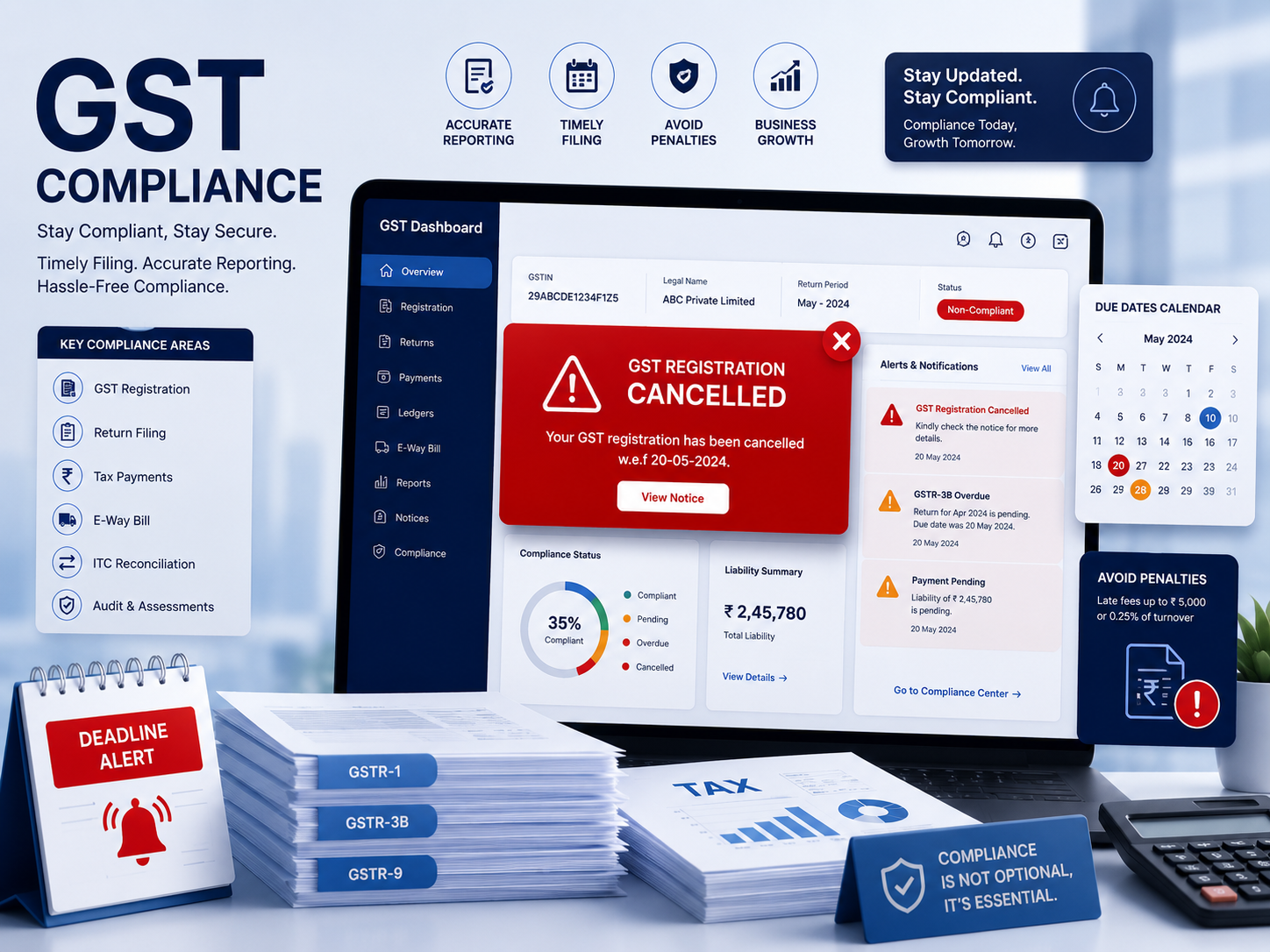
Your GSTIN status gets flagged as “cancelled” or “inactive”.
You are unable to submit your returns.
Your customers cannot claim Input Tax Credit (ITC).
It is no longer a simple glitch. Your business operations are directly affected.
- Voids your sales invoices
- Potential hesitation among buyers to proceed with purchases
- Creates immediate compliance risks for you
An invalidated GSTIN essentially cuts off your business from the mainstream economy. Many companies recognize this problem only when their clients reject invoices or face late payments.
Why Is GST Registration Getting Revoked With Increasing Frequency In 2026
GST revocation has gained traction and momentum in the past few years.
Some of the main reasons behind this include:
- Non-filing of GST returns consistently
- Difference between GST filing (GSTR-1 and GSTR-3B)
- Classified as an inactive or non-operational business entity
- More scrutiny and analysis based on data collection by GST authorities
Unlike previous years, cancellations have become more streamlined and automatic through the backend system process.
GST Cancellation Versus Suspension: What Is The Difference?
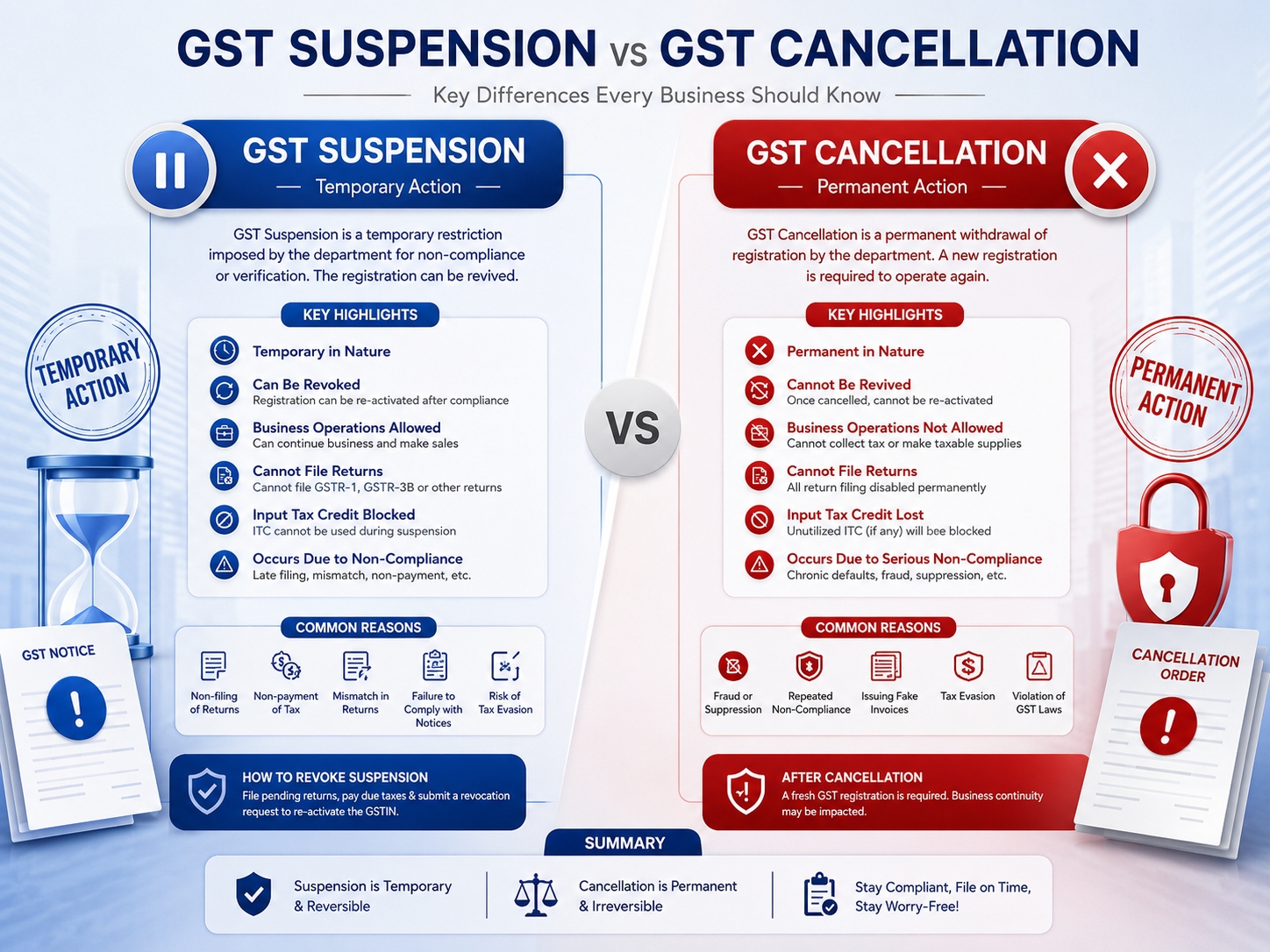
| Criteria | Suspension | Cancellation |
|---|---|---|
| Nature | Temporary measure | Permanent measure |
| Grounds | Verification ongoing or mismatch | Severe non-compliance or default |
| Business Operation | Limited | Stopped |
| Filing of Returns | Not permitted during suspension | Not permitted after cancellation |
| Impact on ITC | Temporarily affected | Entirely blocked |
Main take-away point:
Suspension acts as a warning stage. Cancellation is an enforcement action.
Main Reason GSTIN Registration Gets Cancelled
Businesses fail to identify their grounds. Here are some reasons why it occurs frequently:
- Non-filing of returns for 6 or more months
It is the most common reason. It automatically gets flagged by the system.
- Misleading or incorrect registration information
Misinformation related to the address, false invoices, and false business records.
- Abuse of voluntary cancellation provision
Businesses apply for registration cancellation but still continue their operations.
- Non-operational status of the business
The business registration may get canceled by authorities upon discovering its non-operational status.
Cancellation power of the authorities under Section 29 of CGST Act is very broad.
Is It Possible To Activate The Rejected GSTIN?
It is possible to reactivate a cancelled GSTIN through a revocation application within the specified period, if certain requirements are met.
As per Section 30 of the CGST Act, revocation can take place in case of:
- Cancellation was done by the tax officer (suo-moto)
- Certain conditions have been fulfilled
Conditions that need to be met include:
- Completion of pending returns
- Payment of taxes, interest and penalties
- Submission of the application within the stipulated period
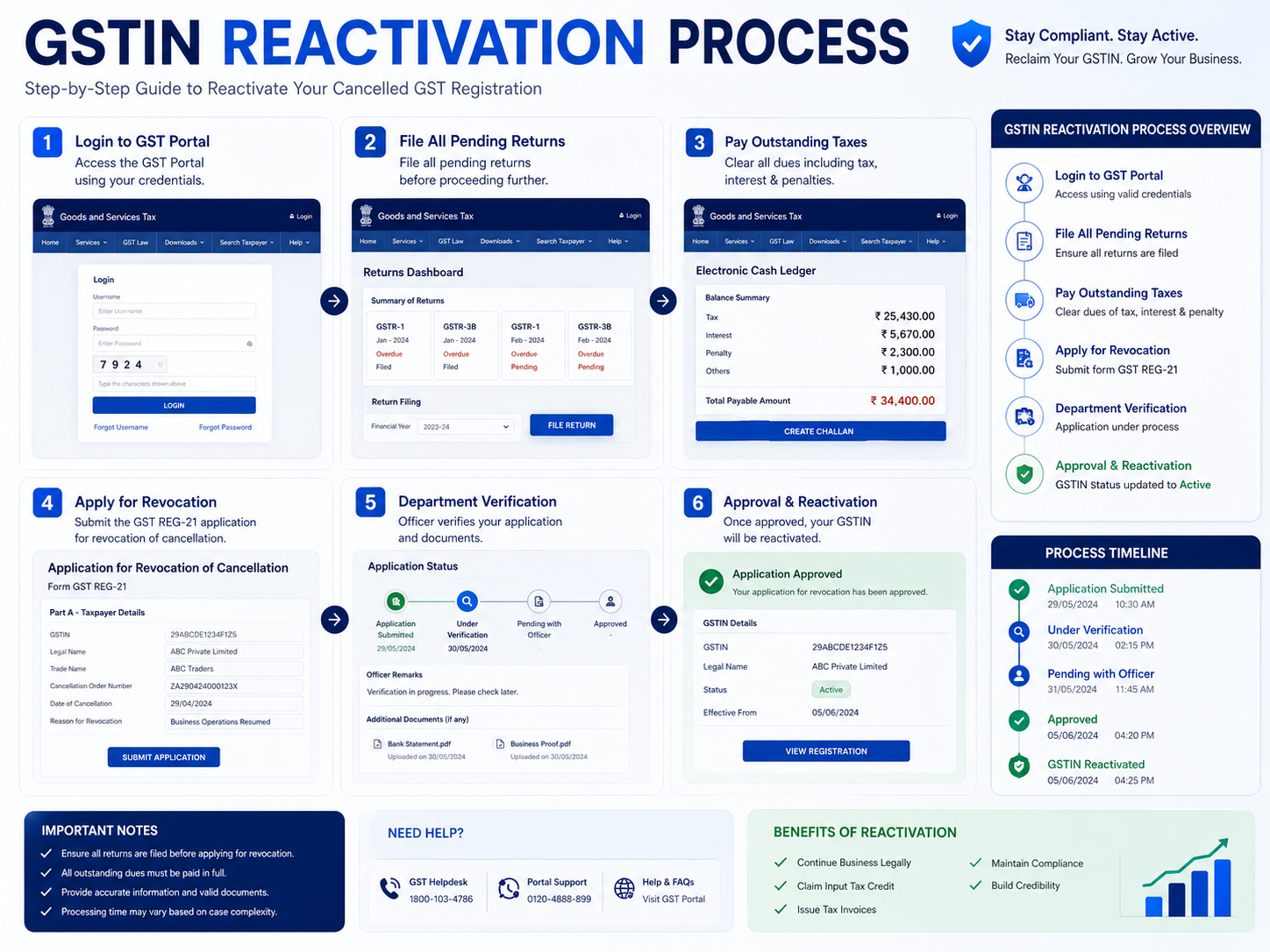
Steps For The Process Of GSTIN Revocation
These are the steps for reactivating GSTIN:
-
Login Into GST Portal
Enter the account on the portal.
-
File Request for Revocation (GST REG-21)
Make the request mentioning the reason for non-compliance.
-
Filing Of All Pending Returns
A must requirement before granting approval.
-
Payment of All Outstandings
This should include payment of taxes, interest, penalties, etc.
-
Submit Supporting Documents
Proofs like evidence of conducting business.
-
Process By The Officer
The officer can either approve it or issue a notice.
-
Responding To Notice (If Any)
It is important to respond to the notice if any is received.
Businesses that follow the correct procedure will get approvals quickly.
Most often, timely responding to GST notices and expert advice from JackRabbit Consultants help to avoid further cancellation.
Time Period to Challenge Revoke GST
The usual period for challenging GST revocation would be 30 days since the date of cancellation order, extendable for 30 + 30 days.
Period Breakup:
- Typical Deadline – 30 Days
- May get extended for 30 Days by Additional Commissioner
- Additional 30 Days’ extension by Commissioner
In case of missing deadlines:
- The revocation process will become tough through the portal
- Finding legal recourse (High Court) may become necessary
- Extreme situations may demand GST registration renew
Some recent High Court decisions in 2025-2026 have been somewhat lenient, but going to court should never be a business practice.
Practical Case Study: How Companies lose their clients due to GST revocation
Let us look at this scenario:
- The supplier has his GSTIN number revoked due to non-filing
- The client cannot receive any input tax credit from him
- The client then discontinues dealings with him immediately
What happens?
- Loss of business turnover
- Harm to relationships within the business circle
- Erosion of credibility in the market
Common Reasons for Failing GST Reactivation Process
There are several common reasons why GST reactivation requests are rejected:
- Sending incomplete forms
- Taking notice of none of the show cause notice letters
- Late submission beyond deadline periods
- Filling in wrong or inaccurate forms
A badly managed reactivation process may result in a failure to reactivate the GST, pushing companies into further trouble.
Tips on Avoiding GST Revocation Process in the First Place
Avoidance is practical rather than theoretical.
Important steps include:
- Regular GST filing (even NIL)
- Reconciliation every month
- Maintaining organized business records
- Scheduling compliance deadlines ahead of time
Companies tend to bypass GST revocation troubles with the help of compliance procedures and professional support from JackRabbit Consultants.
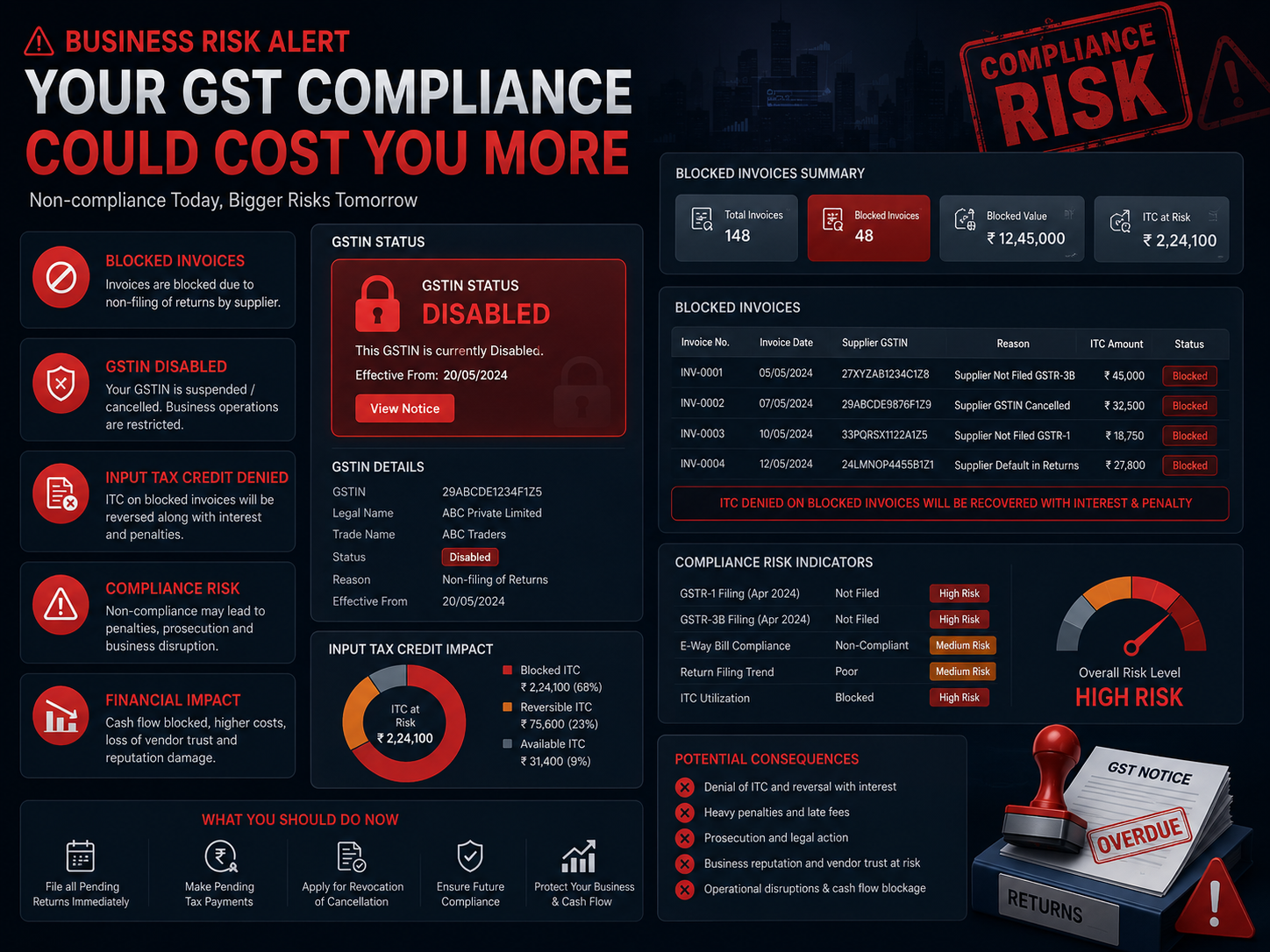
Handling of GST Notices Prior to Cancellation
Most cases of cancellation arise from a show-cause notice (SCN).
Typical Notice Procedure:
- REG-17: SCN
- REG-18: Cancellation of registration
- REG-19: Proceeding to be quashed
Importance of responding:
Failure to respond to a notice implies that you have been non-compliant.
GST notices ignored are the major causes of GST registration cancellations.
Recommended course of action:
- Respond to notice within 7 working days
- Present appropriate documentation
- If required, seek for hearing
A well-structured and prompt response greatly reduces the chances of having your GST registration cancelled.
GST compliance is more than filing returns; it affects business operations directly.