

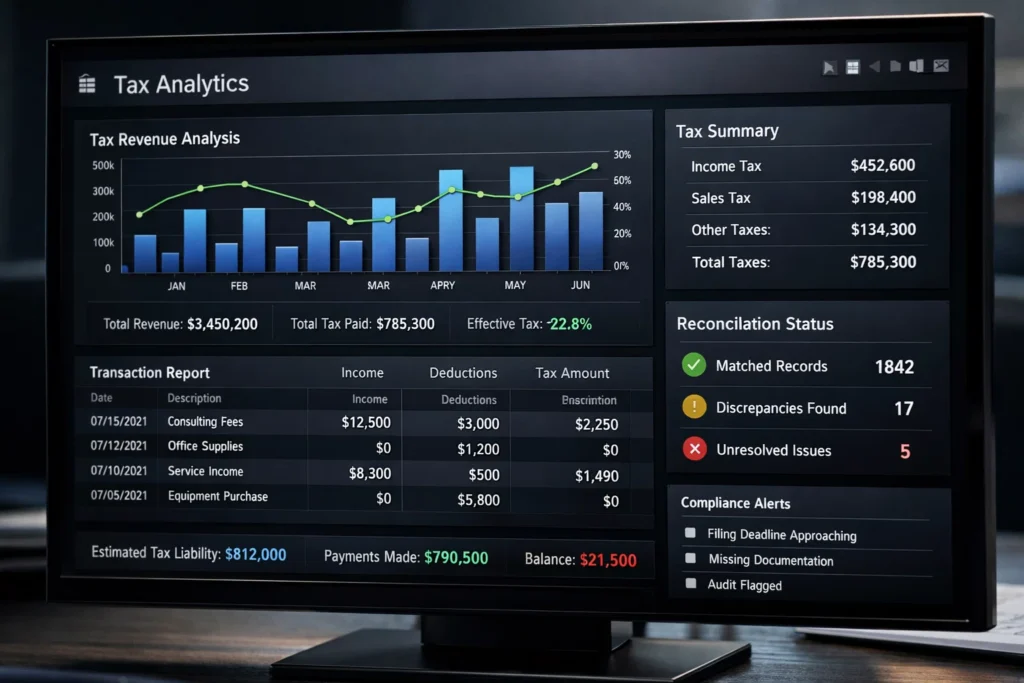
In 2026, the process of GST reconciliation is no longer limited to mere accounting activities. Instead, it is an integral part of compliance control. The GST system, with its reliance on data matching, automated processing, and data analytics, enables tax authorities to identify inconsistencies between returns in a systematic and near-real-time manner.
In the context of the Central Goods and Services Tax Act, 2017, businesses must ensure that the information reported in their GST returns is accurate, consistent, and substantiated with underlying documentation. Inconsistencies between returns, including GSTR-1, GSTR-3B, and GSTR-2B, can result in compliance actions.
The introduction and operationalization of GSTR-1A, enhanced ITC validation with GSTR-2B, and e-invoicing have made the process of GST reconciliation in 2026 a formal and periodic exercise.
What is GST Reconciliation ?
GST reconciliation is the process of matching financial records and GST return filings in a systematic manner so that the entire data is accurate and complete.
This includes the following:
- Matching outward supplies with GSTR-1
- Matching tax liability with GSTR-3B
- Matching Input Tax Credit (ITC) with GSTR-2B
- Validating amendments and corrections through GSTR-1A
From a compliance point of view, reconciliation is a mandatory process and is related to :
- Accuracy of tax liability
- Availing Input Tax Credit as per Section 16 of the CGST Act
- Avoiding mismatches in the GST system
Firms like JackRabbit, a financial consultant in Gurugram, help businesses in designing a reconciliation process that is in line with the accounting records as well as the validations in the GST system.
Legal And System Framework Behind GST Reconciliation
In order to understand reconciliation, businesses must understand the legal logic behind it.
1. ITC Eligibility (Section 16 – CGST Act)
In order to claim ITC, the following conditions must be satisfied:
- invoice must be present
- goods/services must have been received
- supplier must have filed the return
- tax must have been actually paid to the government
Thus, GSTR-2B reconciliation assumes immense importance as it shows the claimed ITC based on supplier data.
2. Matching Concept (System-Based Validation)
Although the facility of invoice matching, i.e., GSTR-2, is not available, the GST system undertakes data comparison based on:
- GSTR-1 vs. GSTR-3B
- GSTR-2B vs. claimed ITC
- E-invoices vs. sales data
These comparisons form the basis for risk identification and notice issuance.
3. Role of GSTR-1A
GSTR-1A facilitates:
- correction after filing of outward supplies
- prior alignment before comparison of final liability
- reduction of mismatches between GSTR-1 & GSTR-3B
The proper utilization of GSTR-1A has now become a viable compliance tool.
Many businesses have already started using structured reconciliation mechanisms with the help of expert consultants like JackRabbit – Financial Consultants, located in Gurugram, who assist businesses in aligning the financial data with the system validations of GST.

Important GST Returns for Reconciliation
| Return | Legal Role | Reconciliation Purpose |
| GSTR-1 | Section 37 | Verify outward supply data |
| GSTR-1A | Amendment Mechanism | Correct reporting errors |
| GSTR-3B | Section 39 | Confirm tax liability & payment |
| GSTR-2B | ITC statement | Validate ITC eligibility |
Additionally, annual returns:
- GSTR-9 – Annual return containing data from all returns
- GSTR-9C – Reconciliation of financial statements and GST for certain taxpayers
Step-by-Step GST Reconciliation Process
Step 1: Data Extraction and Preparation
The following data is required to be extracted by businesses:
- Sales register
- Purchase register
- Tax liability reports
- GST return report
Data standardization is necessary to avoid reconciliation issues due to differing formats.
For instance, businesses that have a large number of transactions tend to rely on automated systems and/or hire financial consultants to assist them with standardizing the extraction process.
JackRabbit assists businesses in automating this process using structured data templates.
Step 2: Outward Supply Reconciliation (GSTR-1 vs Books)
In this step, it is necessary to ensure that:
- All invoices have been accounted for
- GST rates have been correctly applied
- Taxable value matches
Any mismatch here will flow into GSTR-3B differences.
Step 3: Reviewing Amendments through GSTR-1A
Businesses need to:
- Identify any missing or incorrect invoices
- Update the records through GSTR-1A
- Ensure proper alignment before finalizing tax liabilities
Step 4: Tax Liability Reconciliation (GSTR-1 vs GSTR-3B)
This step checks:
- If the tax paid matches the tax reported
- If any tax liability has been underreported
If the two do not match, it becomes a primary reason for GST notices.
Step 5: ITC Reconciliation (Books vs GSTR-2B)
This is the most critical area.
Businesses need to:
- Ensure ITC is reflected in GSTR-2B
- Verify the vendor has filed their return
- Confirm the ITC conditions are met
If any business claims excess ITC, it may lead to reversal along with interest under Section 50.
JackRabbit helps businesses by providing vendor tracking systems and ITC validation tools.
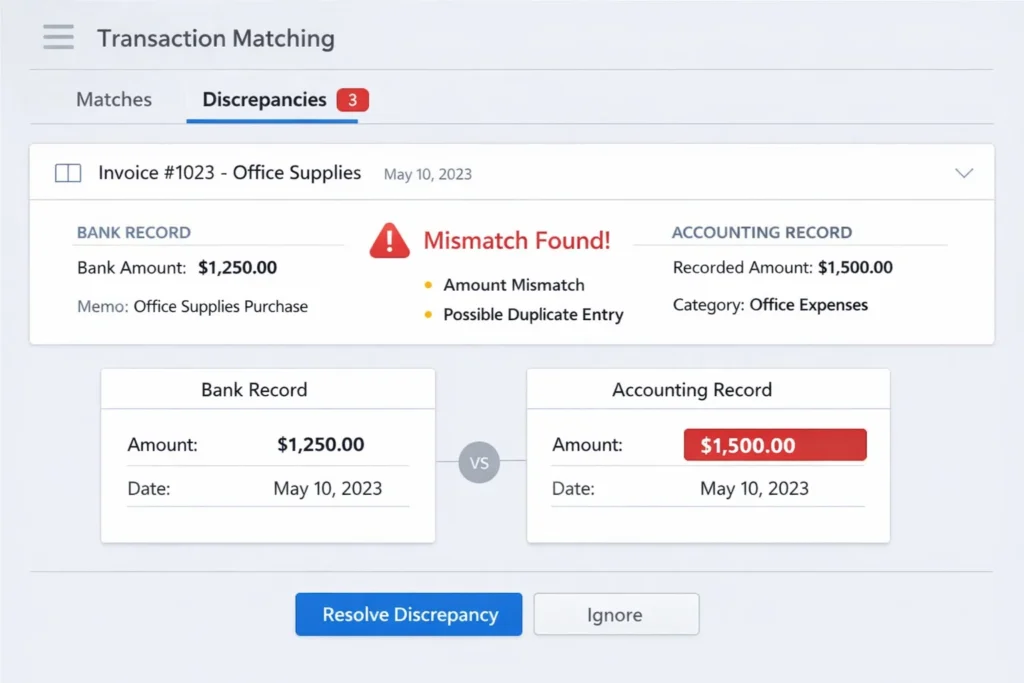
Step 6: Identification of Mismatches
Commonly found mismatch types:
- Value mismatch
- Timing differences
- Invoices not received
- Duplicate reporting
- Non-compliance by vendor
Step 7: Corrective Actions
Corrective actions:
- Amendments through GSTR-1A
- Adjustments for ITC and payment of additional tax
Timely correction will help avoid penalties.
Step 8: Documentation and Audit Trail
Documentation required:
- Reconciliation statements
- Invoices
- Correspondence with vendors
This becomes important during departmental audits.
Illustrative Example
Given:
- Sales in books: ₹10,00,000
- Sales in GSTR-1: ₹10,50,000
- Tax paid through GSTR-3B: Based on ₹9,80,000
- Issues: ₹50,000 excess outward supply and ₹20,000 tax under-reporting
- This would result in system mismatch, which might lead to scrutiny.
ITC case:
- ITC claimed: ₹1,50,000
- ITC in GSTR-2B: ₹1,20,000
- ₹30,000
GST Reconciliation and GST Notices
GST notices arise in India for reasons such as:
- Mismatch in GSTR-1 and GSTR-3B
- Excess ITC claims in comparison to GSTR-2B
- Errors in amendments
- Divergence in e-invoicing data
GST notices fall under the category of compliance verification as per the CGST act.
A structured process of reconciliation helps minimize such risks.
Common Errors Observed in GST Reconciliation
- Incorrect ITC Claims
- Mismatch in GSTR-1 and GSTR-3B
- Vendor Non-Compliance
- Delay in Amendments
- Duplicate and Missing Invoices
- Error in Classification of Transa
Best Practices for GST Reconciliation
Businesses must ensure the following best practices are adopted for the GST reconciliation process:
- Reconciliation must be done every month, not yearly.
- ERP must be aligned to the GST return format.
- Continuous monitoring of GSTR-2B must be done.
- Vendor compliance must be tracked.
- Adjustments must be documented.
Many growing businesses are outsourcing the job to experts like JackRabbit to ensure the job is done perfectly.
Role of Financial Consultants in GST Reconciliation
GST reconciliation is no longer an elementary accounting job. It requires the following expertise:
- Knowledge of GST laws.
- System-level data validation.
- Standardization of processes.
JackRabbit – financial consultants in Gurugram help the business in the following ways:
- Designing the reconciliation process.
- Automation of the process.
- ITC compliance.
- Audit preparedness.
Conclusion
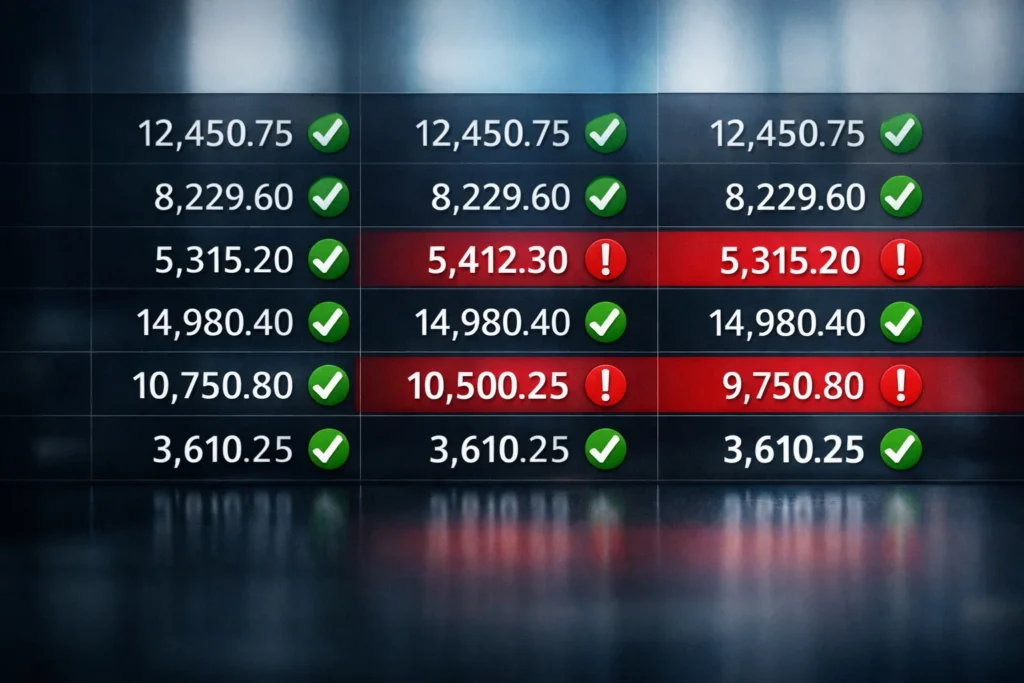
The GST reconciliation in 2026 is a significant compliance activity for organizations, backed by legal provisions, system validations, and data analytics. Organizations must ensure that their financial records and GST returns are in sync at all times to avoid any legal complications.
A structured approach to GST reconciliation is essential for timely identification and resolution of differences to avoid any regulatory scrutiny in the near future. With the growing convergence of GST systems and increasing compliance scrutiny, organizations must follow disciplined and sound internal control practices.
Organizations that follow a sound approach to GST reconciliation, either in-house or with the help of professional advisory services, are in a better position to maintain compliance and ensure smooth business operations in a dynamic GST environment.