

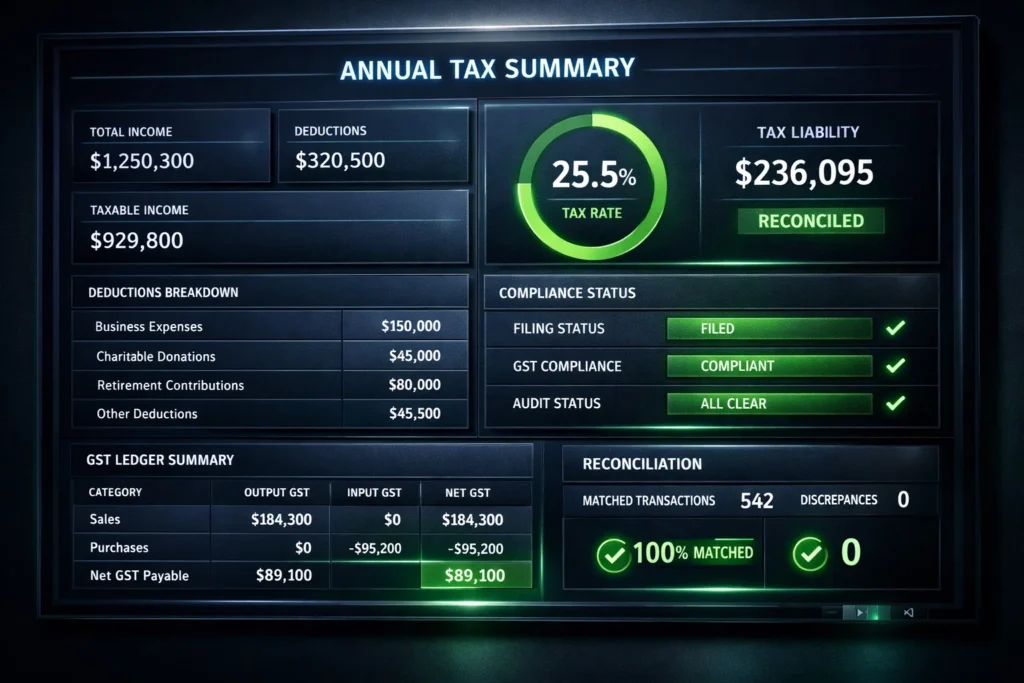
Goods and Services Tax (GST) compliance in India goes beyond the filing of monthly and quarterly returns. At the end of every financial year, eligible taxpayers are required to file GST Annual Return 2026 containing their outward supplies, inward supplies, input tax credit (ITC), and tax payment.
For Financial Year 2025-26 (to be filed in 2026), knowledge of the applicability and format of GSTR-9 and GSTR-9C is essential to ensure compliance under the GST law.
What is GSTR-9?
GSTR-9 is an annual return to be filed by registered taxpayers under the GST law. The GST Annual Return 2026 complete guide explains the applicability, structure, and filing requirements in detail. This annual return contains information furnished in the following returns:
- GSTR-1 (Outward supplies)
- GSTR-3B (Monthly/Quarterly Summary Return)
It contains a summary of information regarding:
- Total outward supplies
- Total inward supplies
- Input tax credit (ITC) availed and reversed
- Tax paid during the financial year
- Demand and refunds (if any)
Who is Required to File GSTR-9?
GSTR-9 is applicable for:
- Regular taxpayers registered under the GST
- Composition taxpayers (through GSTR-9A)
- E-commerce operators
However, the following categories may not be required to file GSTR-9:
- Input Service Distributors
- Casual taxable persons
- Non-resident taxable persons
Such categories may not be required to file GSTR-9, depending on notifications issued under the GST Act.
Turnover Threshold for FY 2025-26
Filing GSTR-9 is based on the turnover threshold limits as notified by the government from time to time.
Taxpayers with low turnover may be exempted from filing GSTR-9, depending on notifications received.
While calculating the turnover, the aggregate turnover is computed using the PAN base and the entire country. For a multi-branch business, the turnover calculation is a complex task.

What is GSTR-9C?
GSTR-9C is a reconciliation statement, which needs to be filed by taxpayers whose turnover exceeds the prescribed threshold limit (as prescribed under the GST Act).
GSTR-9C includes:
- Reconciliation of turnover reported in the audited financial statement
- Reconciliation of tax paid under GST returns
- Reconciliation of input tax credit
Earlier, GSTR-9C required certification by a Chartered Accountant or Cost Accountant. Currently, taxpayers self-certify the reconciliation statement as per the Act. At JackRabbit, advisory assignments typically involve detailed reconciliation analysis, risk identification, and compliance review to help businesses file GSTR-9C with confidence and statutory clarity.
Due Date for Filing
Annual Return (GSTR-9) and reconciliation statement (GSTR-9C), if applicable, have to be filed by:
31st December following the end of the relevant financial year
(Note: GST Council has the authority to extend the due date.)
Key Areas Requiring Careful Reconciliation
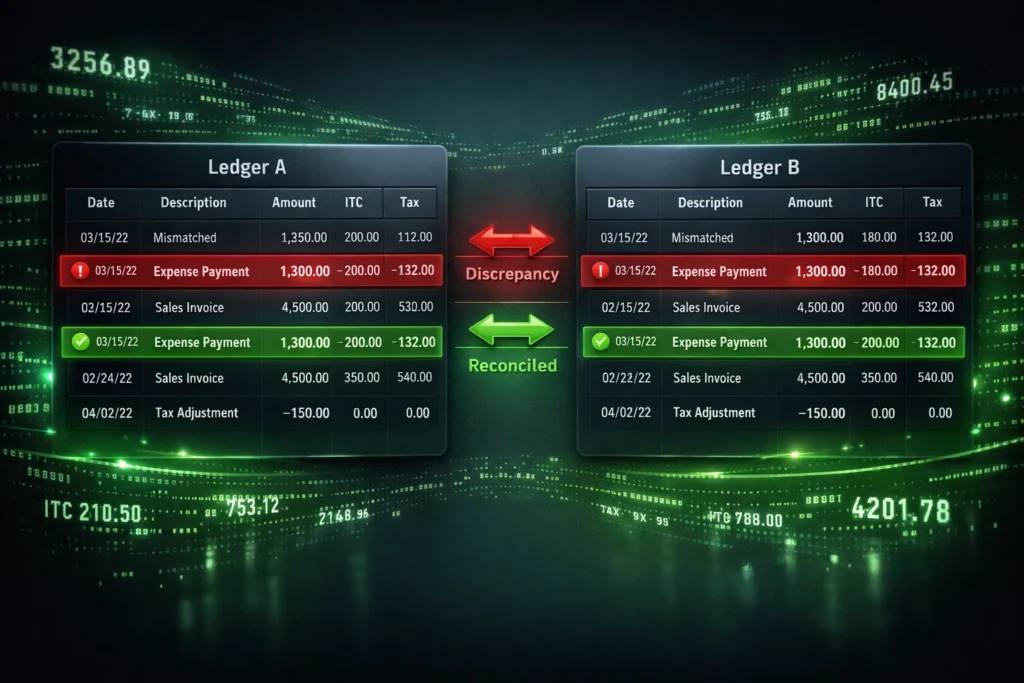
Annual return filing is not just a matter of consolidating data, but it demands a thorough comparison of:
- GSTR-1 vs GSTR-3B
- ITC as per books vs ITC as per GSTR-2B
- Turnover as per audited financials vs GST turnover
- RCM liabilities
- Credit reversals under Rule 42/43 (if applicable)
Any discrepancies noted during the reconciliation process may attract a tax liability, including interest.
Additionally, for businesses that operate in more than one state in India, the reconciliation process becomes more complicated and needs to be documented.
Common Issues Observed During Annual GST Filing
Common issues that businesses face while filing their annual GST return include:
- Mismatch in ITC as per books vs ITC as per GSTR-2B
- Under-reporting or over-reporting of turnover
- Mistake in B2B and B2C supplies
- Failure to account for credit notes
- Mistake in RCM
- Mismatch in data due to amendments in subsequent months
Late Fees and the Consequences of Non-Filing
If the GSTR-9 return is not filed within the stipulated due date, the following consequences may be faced:
- Late fees will be levied, subject to the prescribed limit.
- Future returns will not be filed smoothly.
- The department may subject the taxpayer to scrutiny.
- Compliance notices may be raised.
Monitoring of annual GST compliance will help minimize the risk of avoidable penalties.
Practical Compliance Approach for Businesses
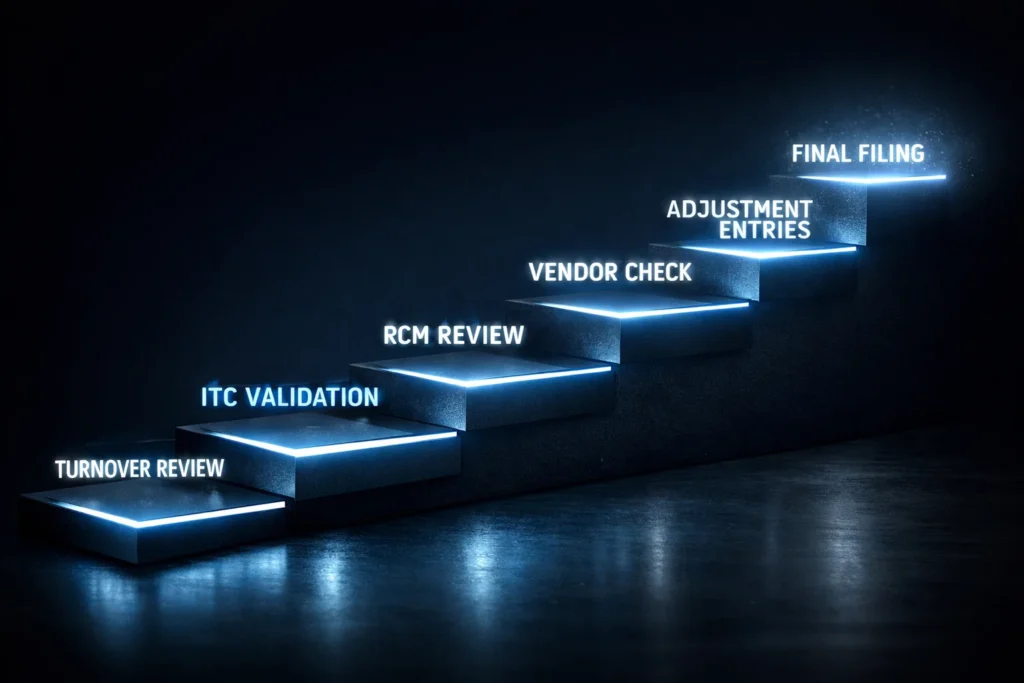
A GST annual compliance approach for businesses can be broadly divided into the following steps:
- Year-End Turnover Reconciliation
- Validation of Credit for GSTR-2B
- Vendor Compliance
- Review of RCM Applicability
- Adjustment Entries
- Documentation backup for future assessments
Businesses with high transaction values, interstate supplies, and multiple GST registrations must start the reconciliation process early to meet the deadline.
Advisory Perspective
GST annual return filing involves reconciliation between statutory returns and financial records. For businesses in commercial centers like Gurugram and India, it is critical to ensure accurate information in the GSTR-9 and GSTR-9C to avoid future disputes.
At JackRabbit , our financial and GST advisory services usually include structured reconciliation reviews, ITC verification, and compliance validation in line with the current GST provisions. This helps businesses in accurate filing of annual returns with documentary evidence for future scrutiny, if needed.
Conclusion
GSTR-9 and GSTR-9C play a significant role in the annual compliance of the GST regime in India.
The process of filing GSTR-9 and GSTR-9C, while consolidating the data that has already been furnished, demands a high level of diligence and knowledge of the law.
Before filing the annual return for FY 2025-26, businesses should:
- Verify Turnover
- Reconcile ITC
- Reconcile RCM Transactions
- Reconcile Discrepancies in Returns and Books of Accounts