

Introduction
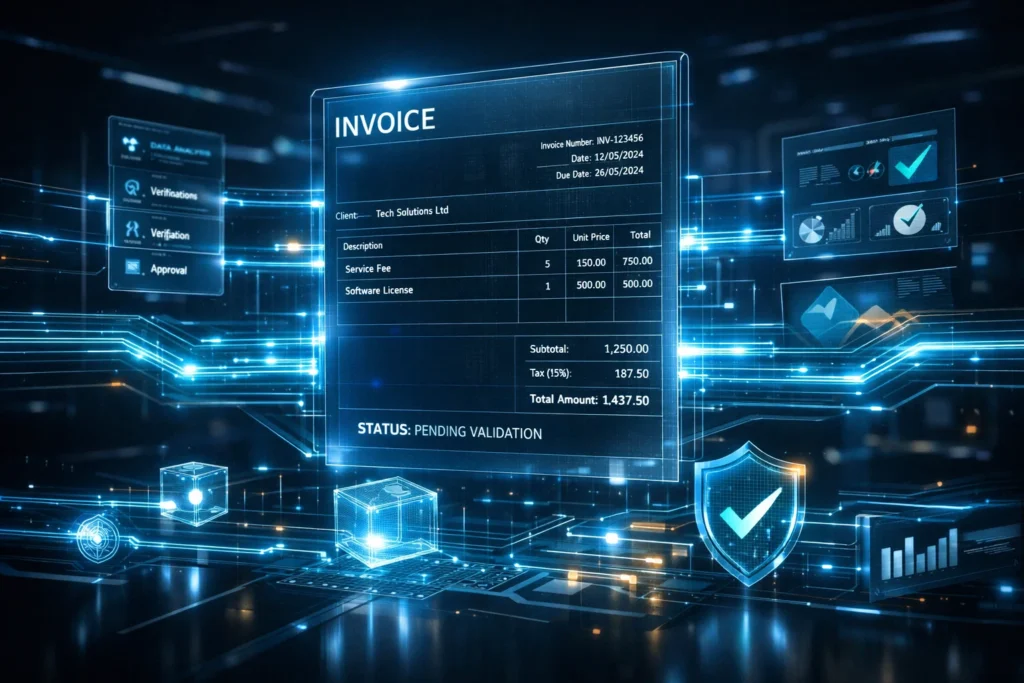
With the introduction of e-invoices under the Goods & Services Tax (GST), the manner in which business operations are handled in India has undergone tremendous changes. One of the most vital regulations introduced recently is that of the 30-day IRN rule. The regulation plays a significant role in how businesses submit their invoices to the IRP.
It is important for every business owner or entrepreneur to familiarize himself/herself with this new regulation.
In this article, we will learn all about how an IRN works, the importance of the 30-day IRN rule, the potential problems and implications thereof on GST.
At Jackrabbit Consultants, we work closely with businesses to ensure smooth IRN generation and GST compliance under evolving e-invoicing rules.
What is IRN in E-Invoicing?
IRN (Invoice Reference Number) is a unique number generated for every invoice uploaded to the Invoice Registration Portal (IRP).
Key Points:
- Generated by the IRP system.
- Based on:
- Supplier GSTIN
- Invoice number
- Financial year
- Ensures invoice authenticity and uniqueness.
- Acts as proof that the invoice is officially recorded under GST.
Why IRN Matters :
- Prevents duplicate invoices.
- Enables real-time reporting to GST systems.
- Supports automated return filing.
- Ensures transparency in tax reporting.

What is the 30-Day IRN Rule?
The 30-Day IRN Rule madates that businesses must generate an IRN with in 30 days from the date of invoice issuance.
Explanation:
For instance, if today you have generated an invoice, then you need to upload that invoice on IRP system and issue IRN within 30 days; otherwise, it will not allow for any IRN generation
This time limit applies based on the taxpayer category notified under GST and is not universally applicable to all e-invoicing entities.

Applicability of the 30-Day IRN Rule
The relevance of the 30-day IRN requirement is distinct from regular threshold criteria for e-invoicing and must be comprehended appropriately. The rule currently applies to:
Companies Which Are Covered Under This Rule:
- The IRN generation time limit of 30 days is relevant for:
- Those companies whose annual turnover exceeds ₹100 crore (can be updated by the government).
Applicable for:
- Business to business invoices
- Export invoices
- Debit notes
- Credit notes (wherever applicable)
Not Applicable To :
- B2C sales invoices
- Some entities who have exemption (example: banks, SEZ unit in specified situations, etc.)
Significant Point :
- Currently, e-invoicing is applicable for entities having turnover above ₹10 crore.
- Whereas, 30-day IRN requirement is limited to specified higher turnover levels only.
- Applicability of e-invoicing vs. 30-day IRN time limit – Both are different issues
Note :
Business entities need to stay updated on notifications regarding GST as the 30-day IRN provision may apply to lower turnover limits in future.
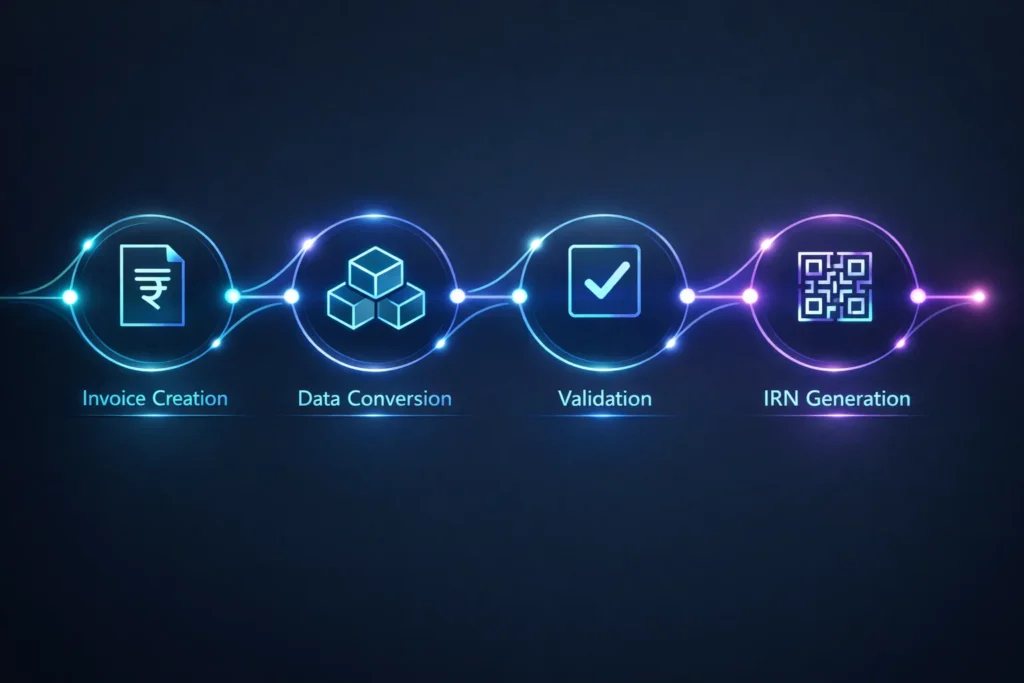
IRN Generation Process (Step-by-Step)
To gain insight into the generation of IRN, one needs to understand the process flow.
Step-by-Step Flow:
1.Invoice Creation
- Created in ERP or accounting software.
2. Conversion of JSON Format
- Invoice information converted into JSON format.
3. Upload to IRP
- Sent to IRP (invoice Registration Portal)
4. Validation
- System invalidates invoice information for accuracy and duplicate invoices.
5. IRN Generation
- IRN Created
- QR code added
- Digital signature applied
6. Response Back to Businesses
- Returned invoice with QR code and IRN attached.
Important:
This entire process must be completed within the prescribed time limit (currently 30 days for applicable taxpayers) from the invoice date.
Why the 30-Day IRN Rule Was Implemented?
This rule was implemented by the government for the following reasons:
1. Enhance Real-Time Reporting
- To avoid late filing of invoices
- Ensures that GST data reflects real-time transaction data
2.Prevents Tax Evasion
- Because it stops backdating of invoices
- It prevents manipulations in the invoice timeline
3. Ensuring Compliance And Auditing
- It improves auditing process
What Will Happen in Case of Missing the 30-day Deadline?
That is when the rule really comes into play.
System-based Impact:
- Your invoices cannot be uploaded through IRP
- There is no way an IRN can be generated
Practical Implications:
1.Invalid Invoices
- Because it lacks IRN, the invoice does not become valid under GST
2. Problems with Input Tax Credits
- The buyer will not be able to claim input tax credits
- Causes issues in dispute with clients
3. Revenue Recognition Problems
- Accounting mismatch between books and GST Records.
4. Penalties And Notices
- Possible GST penalties
- Increased scrutiny during audits
The invoice may be treated as non-compliant under e-invoicing provisions, which can affect its validity for GST purposes.

Compliance Risks Business Must Understand
High Risk Areas :
Delayed Invoices Upload
- Manual process takes longer time
Incorrect Entries
- Error will result in rejection and resubmission
Poor ERP and IRP Integration
- Slows down the process of generating IRN
Processing Many Invoices at Once
- Businesses with high volume invoices face challenges
Based on our experience at Jackrabbit Consultants, many businesses struggle with delayed IRN generation due to manual workflows and lack of system integration.
Effectiveness of GST on Business
1. Process Transformation
- Business should make changes by:
- Moving toward real-time or near real-time invoicing
- Urging invoice upload automation
2. Heavy Reliance on Technology
- ERP system needs to be IRP integrated
- Automation through API is important
3. Higher Compliance Disciplines
- Timelines require strict compliance procedures
- Dedicated processes/workflow to automate e-invoice generation
4. Working With Vendors and Clients
- Buyers depend on timely IRN for ITC.
- Delays can affect business relationships
Best Practices for Compliance Assurance
1. IRN Generation Automation
- ERP integration with IRP API
- Limit manual processes
2. Invoicing Uploading Process
- Avoid late-night invoice uploading in bulk
- Conduct daily/next day reporting
3. Deadline Setting Internally
- Maintain T+5/T+7 internal deadline
- Prevent delays until the 30th day deadline
4. Rejecting Invoice Monitoring System
- Take note of rejected invoices
- Make necessary changes
5. Employee Training Programs
- Proper training on :
- The significance of IRNs
- The consequences of deadlines
- Proper data entry process
Common Errors to Avoid
- Dependence on last date of the month to generate IRN
- Misconception that IRN generation could be done anytime
- Negligence towards IRN rejection cases
- Failure to update the company’s ERP
- Confusion about applicability threshold
Example Scenario: Practical Understanding
Case :
- Date of invoice: 1st March 2026
- Last date to generate IRN: 30th March 2026
Situation:
- Business attempts to upload the invoice on 5th April 2026
Result:
- The IRP rejects the invoice
- The invoice becomes non-compliant
- The buyer can’t make an ITC claim
Implications for Buyers
As we have discussed previously, the impact of the IRN rule applies to buyers too:
- The validity of the IRN determines the eligibility to claim the tax
- The delay in IRN creates problems in purchase accounting
- Buyers may prefer sellers who have robust compliance mechanisms
Future Prospect of IRN Rules
There is an evolving trend toward:
- Tighter deadlines
- Low turnover threshold
- Greater automation
- Ecological compliance system
The GST system is evolving. Business should be prepared for:
- Increased coverage of applicability rules for e-invoicing
- Strict validations
- Tolerating less delay
Conclusion
The 30-day IRN rule is a major compliance requirement that directly impacts how businesses manage invoicing under GST. It is not just a procedural update but a structural shift toward real-time tax reporting .
Businesses that adapt through automation ,disciplined processes ,and system integration will face minimal disruption .However , those relying on manual or delayed workflows risk operational inefficiencies , compliance failures and financial consequences.
To stay compliant and competitive ,businesses must treat IRN generation as a time-sensitive ,critical function -not a back-office task.